

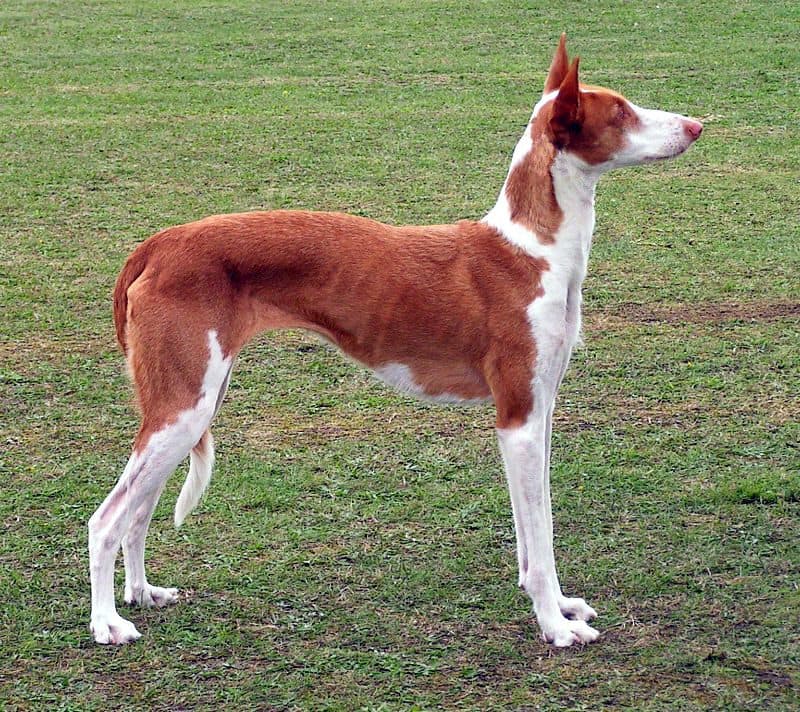
Podenco Ibicenco
A slender Ibizan sighthound-podenco. Large erect ears. An exceptionally agile hunter. Sensitive, reserved, loyal character. Mass abandonment after the hunting season in the Balearic Islands.
Foto: Wikipedia Commons · CC BY-SA
Ideal for
- ✓Active families
- ✓Homes with a very well-fenced garden (it jumps)
- ✓Anyone adopting from a shelter
Reconsider if
- ×Homes with small animals
- ×Flats without room to sprint
- ×Extreme climates without a coat
Notify me when a Podenco Ibicenco is up for adoption
We'll only email you when a verified rescue posts one available. No spam, unsubscribe in 1 click.
We'll only use your email for this alert. More info in our privacy policy.
Is the Podenco Ibicenco a good match for you?
Indicative rating from 1 (low) to 5 (high).
💶 Estimated cost of ownership
50-90 €/month
Food 25-40 €, sandfly protection 8-15 €, veterinary provision 15-25 €, coat/padded bed and deworming 5-10 €.
History and origin
An ancient breed from Ibiza (related to dogs of Ancient Egypt). A rabbit hunter using sight, hearing and scent. Traditionally discarded once it no longer hunts.
An Iberian native breed with a strong presence in Spanish rescue shelters after each hunting season. Adopting a podenco is one of the greatest opportunities to make a real difference in animal rescue. Recognised by the FCI within Group 5 (spitz and primitive types).
Temperament and character
Sensitive, reserved, loyal to its family. Shy with strangers if not socialised. Very high prey drive. Independent. Needs daily mental stimulation — scent games, food-stuffed Kongs and short trick sessions channel its energy better than physical exercise alone. Responds best to positive reinforcement: physical punishment breeds fear, anxiety and reactivity — coercive methods are NOT recommended by veterinary behaviourists. Sensitive to its family's mood: it picks up on tension and mirrors it.
Living together
Children: fine with respectful ones. Other dogs: sociable with those its own size. Cats/rabbits: prey.
Life stages of the Podenco Ibicenco
Each stage has its own care priorities. Life expectancy: 11-14 años.
Puppy
0-1 year
Socialisation and exercise in secure spaces (strong hunting instinct); caution with anaesthetics in sighthounds.
Young
1-2 years
Great need for running and jumping; protection from the cold due to its scant body fat; adjusted diet.
Adult
2-8 years
Maintaining lean muscle; dental care and periodic general check-ups.
Senior
8+ years
Monitoring of mobility and weight; geriatric check-ups; gentle adapted exercise.
Care
Exercise: 90-120 min/day split across at least 2 sessions. Off-lead time in a secure area is essential for high-energy breeds.
Brushing: 2-3 times/week; intensive during the moulting seasons (spring and autumn).
Feeding: quality food matched to life stage (puppy/adult/senior) and size. Weight control: obesity is the leading preventable cause of joint problems.
Vet: annual check-up with preventive blood work from age 5 (age 7 in giant breeds); twice a year from age 8.
Exercise 1.5 h/day + off-lead sprints. A coat in winter. Fencing of at least 2 m. Training with patience. Early socialisation.
Care in detail
🍽️ Nutrition
Quality food for an active medium-sized breed. They are lean by build: don't overfeed by mistaking their silhouette for being underweight.
✂️ Grooming
Minimal. Short coat, weekly brushing. Look after the pressure points due to their low body fat and give them a coat in winter.
🎓 Training
Sensitive, reserved and independent; many arrive from hunting without socialisation. Patience, positive reinforcement and gradual socialisation with people and environments.
🏃 Exercise
1.5 h/day plus sprints off-lead in a secure area. Extremely high energy and an exceptional jumper: it needs a daily outlet.
Breed-specific health
Few hereditary diseases (a native breed with little inbreeding). Anaesthetic sensitivity. Hypothyroidism. Life expectancy 11-14 years. Life expectancy of 11-14 years with proper care. Pre-breeding tests recommended in responsible kennels (hip dysplasia + cardiac + ophthalmology according to the breed's conditions). When adopting, ask the shelter for a vet report on the dog's current condition.
Common diseases in dogs
Learn the symptoms, prevention and when to see the vet. Reviewed indicative information that does not replace a veterinary consultation.
Screening and prevention for the Podenco Ibicenco
Recommended tests and screenings
- ✓Leishmania test (endemic areas)
- ✓Complete blood count and biochemistry
- ✓Thyroid panel (hypothyroidism)
- ✓Pre-anaesthetic panel (sensitivity due to low body fat)
- ✓General physical examination
Prevention
Sandfly protection in leishmania areas, a coat in winter (low body fat), high fencing (they jump over 2 m) and off-lead only in a secure area due to their extremely high prey drive. A native breed with little inbreeding: few hereditary conditions.
Check-up schedule
Annual check-up with leishmania screening in endemic areas; every six months in seniors.
Warning signs
- !Skin lesions, flaking or hair loss (leishmania)
- !Weight loss or lethargy
- !Lameness after intense running
- !Abnormal cold sensitivity or shivering
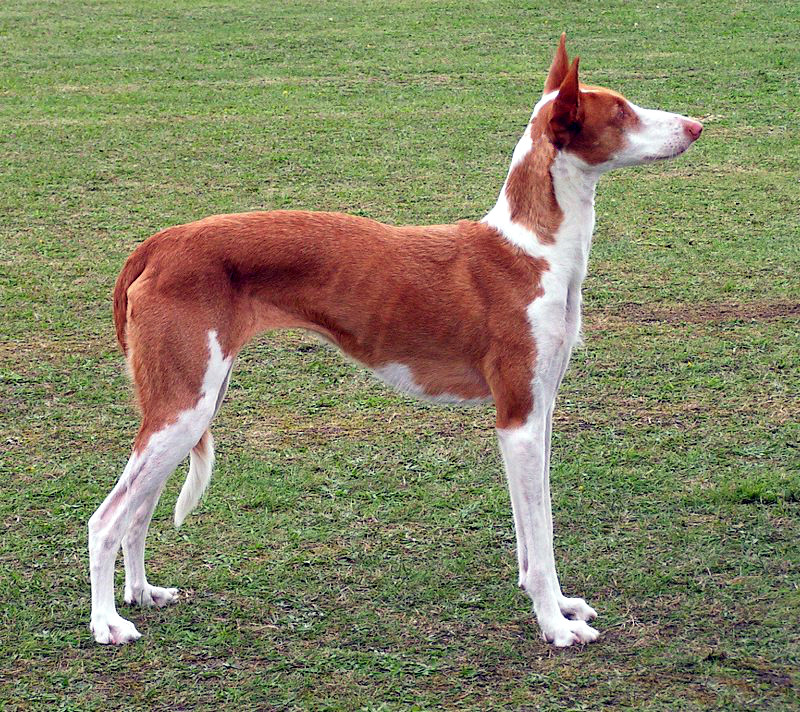
Podenco Ibicenco gallery
Frequently asked questions about the Podenco Ibicenco
How long does a Podenco Ibicenco live?
▾
How much does a Podenco Ibicenco weigh?
▾
Where does the Podenco Ibicenco breed come from?
▾
How much exercise does a Podenco Ibicenco need?
▾
Is the Podenco Ibicenco good with children?
▾
Who is the Podenco Ibicenco NOT recommended for?
▾
What health problems does the Podenco Ibicenco have?
▾
Can it live with cats or rabbits?
▾
Why does it need such high fencing?
▾
Is it a healthy breed?
▾
Is it a good choice to adopt?
▾
Related and similar breeds
Learn more about dogs
Practical veterinary guides to support your Podenco Ibicenco.
Sources and references
Content compiled from official breed standards and leading veterinary sources.
Want to adopt a podenco ibicenco?
There are podenco ibicencos in rescue shelters looking for a family. Filter by breed in the catalogue.