


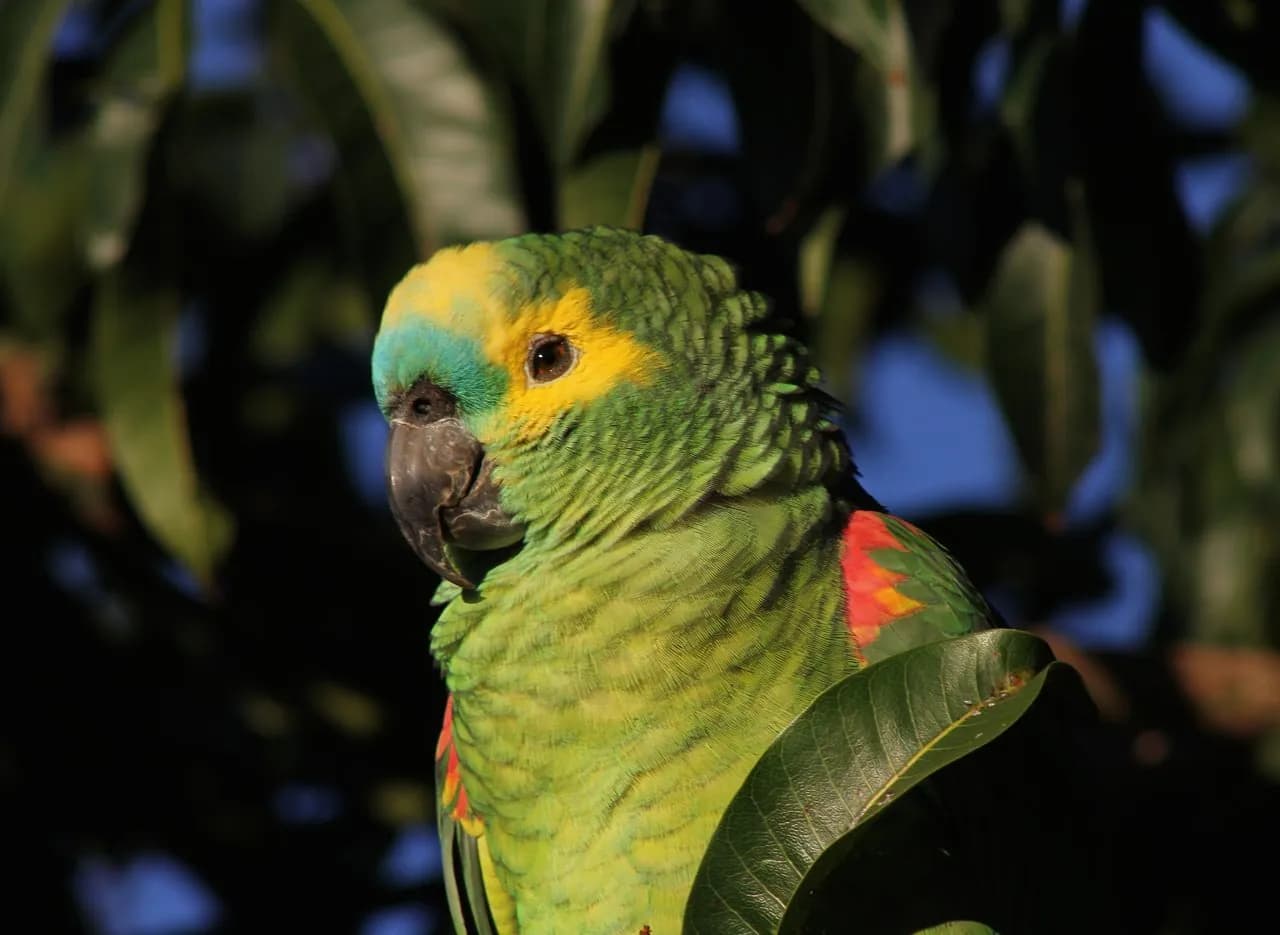
Amazonas Frente Azul
A medium-to-large parrot. Talks well. Needs intense daily interaction. A decades-long commitment.
Foto: Wikipedia Commons · CC BY-SA
Mizuu editorial teamupdated on October 14, 2026Not yet reviewed by a vet. Are you a vet? Review itReport an error
Ideal for
- Families with time for daily interaction
- Spacious homes (large birds require a room)
- Those who accept a decades-long commitment (parrots live a long time)
Reconsider if
- ×Homes without time to socialise
- ×Those who cannot tolerate noise (all parrots vocalise)
- ×Homes without space for flight
Let me know when there are birds for adoption
We only write when a verified shelter posts one. One email a day at most.
Is the Amazonas Frente Azul a good match for you?
Indicative rating from 1 (low) to 5 (high).
Estimated cost of ownership
45-90 €/month
Food 20-35 €/month; recurring destruction toys; avian vet (check-up + blood work) and unexpected costs. A large, sturdy cage as a high initial investment.
History and origin
A South American Amazon parrot with a blue front, highly prized as a pet for its speaking ability; long-lived and prone to obesity in captivity.
Temperament and character
Intelligence varies by species. Parrots form strong bonds with their humans. They need daily mental stimulation · NOT just a cage.
Living together
Children: depends on the species + individual character. **Other birds:** better in a pair/group (except for territorial species). **Older pets:** avoid — a real risk of predation.
Life stages of the Amazonas Frente Azul
Each stage has its own care priorities. Life expectancy: 40-60 años.
Chick
0-4 months
Hand-rearing, slow weaning, bone development
Juvenile
4 months-4 years
Socialisation, pelleted diet, flight exercise
Adult
4-30 years
Obesity and fatty liver, hormonal behaviour, enrichment
Senior
30-60 years
Atherosclerosis, arthritis, renal/hepatic function
Care
Cage: at least twice the size of the bird with its wings spread. A dedicated room is better.
Feeding: SEEDS are NOT a complete diet. A combination of pellets + fresh fruit/vegetables daily.
Free flight: at least 1-2 hours/day out of the cage in a safe area.
Veterinary care: an avian specialist vet (exotics vet). Annual check-up.
Care in detail
Nutrition
A pellet base with leafy greens and vegetables daily, fruit in moderation. Watch fats given its tendency to put on weight. Avoid avocado, chocolate, salt and caffeine.
Grooming
Regular baths or showers. Beak and nails are kept in check with branches and toys; do not clip wings without veterinary assessment.
Training
Intelligent and a good talker with daily dedication and positive reinforcement. It can show hormonal aggression during the breeding season, so learn to interpret its signals.
Exercise
2 hours a day out of the cage with supervised flight or climbing and plenty of enrichment with foraging toys.
Breed-specific health
Aspergillosis (fungal), psittacosis (chlamydiosis), feather problems from stress/deficiencies. Life expectancy 40-60 years with proper care. Before adopting a large parrot, consider that you will live with it throughout your adult life.
Health predispositions for this breed
Conditions this breed is more predisposed to. Knowing about them helps with prevention and early detection. A predisposition does not mean the animal will develop them.
Common diseases in birds
Learn the symptoms, prevention and when to see the vet. Indicative information that does not replace a veterinary consultation.
Screening and prevention for the Amazonas Frente Azul
Recommended tests and screenings
- DNA sexing (monomorphic species)
- Chlamydia psittaci PCR (psittacosis)
- PBFD and polyomavirus PCR
- PDD/bornavirus screening
- Blood count, biochemistry and crop cytology
- CITES II documentation and legal registration
Prevention
Pellets with daily vegetables to avoid hypovitaminosis A and obesity/fatty liver, weight control, quarantine of new birds and an environment free of fumes and Teflon.
Check-up schedule
Annual check-up with an avian vet and control blood work; two visits a year in obese or older birds.
Warning signs
- !Fluffed-up plumage and listlessness
- !Rapid or wheezing breathing
- !Persistent regurgitation
- !Feather plucking
- !Being overweight and difficulty flying
Amazonas Frente Azul gallery

Frequently asked questions about the Amazonas Frente Azul
How long does a Amazonas Frente Azul live?
▾
How much does a Amazonas Frente Azul weigh?
▾
Where does the Amazonas Frente Azul breed come from?
▾
How much exercise does a Amazonas Frente Azul need?
▾
Is the Amazonas Frente Azul good with children?
▾
Who is the Amazonas Frente Azul NOT recommended for?
▾
What health problems does the Amazonas Frente Azul have?
▾
Does it need paperwork?
▾
Is it very noisy?
▾
Does it need a lot of attention?
▾
How long does it live?
▾
Learn more about birds
Practical veterinary guides to support your Amazonas Frente Azul.
Sources and references
Content compiled from official breed standards and leading veterinary sources.
- WikipediaAmazona aestiva ↗
- World Parrot TrustBlue-fronted Amazon - Parrot Encyclopedia ↗
Want to adopt a amazonas frente azul?
There are amazonas frente azuls in Spanish rescue shelters looking for a family. Filter by breed in the catalogue.

