

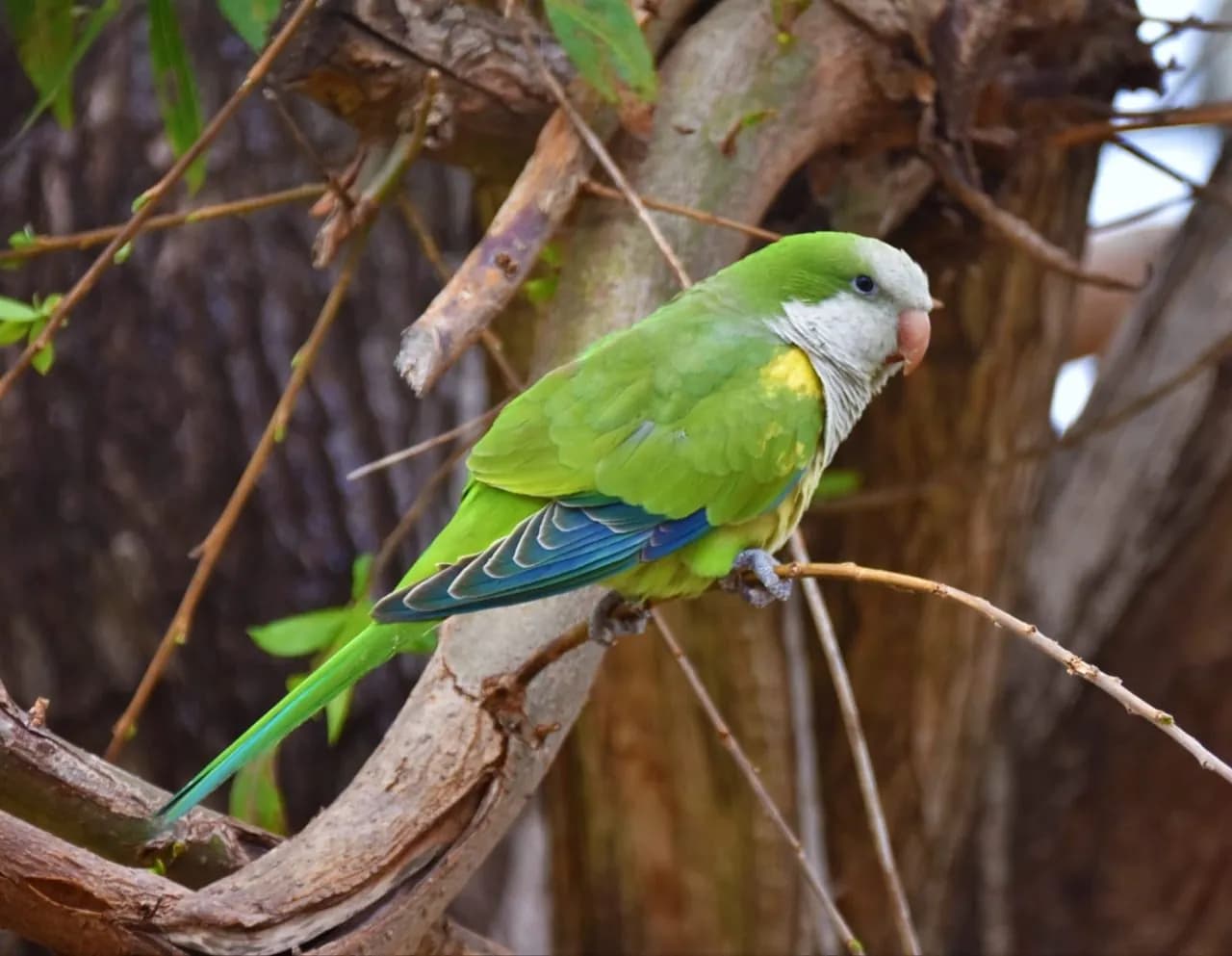
Cotorra Argentina (Monje)
The only parakeet that builds communal nests. In the UK it has colonised parks. A regulated invasive species.
Foto: Wikipedia Commons · CC BY-SA
Ideal for
- ✓Families with time for daily interaction
- ✓Spacious flats (large birds need a room)
- ✓Anyone who accepts a decades-long commitment (parrots live a long time)
Reconsider if
- ×Households with no time to socialise the bird
- ×Anyone who cannot tolerate noise (all parrots vocalise)
- ×Flats with no space for flight
Notify me when a Cotorra Argentina (Monje) is up for adoption
We'll only email you when a verified rescue posts one available. No spam, unsubscribe in 1 click.
We'll only use your email for this alert. More info in our privacy policy.
Is the Cotorra Argentina (Monje) a good match for you?
Indicative rating from 1 (low) to 5 (high).
💶 Estimated cost of ownership
30-60 €/month
Pellets, fruit and vegetables: 18-30 €/month. Toys and gnawing/nesting material: 6-12 €/month. Pro-rated annual avian vet: 8-18 €/month. Separately: the initial large cage and, above all, checking the legality of ownership.
History and origin
The only parrot that builds large communal stick nests; native to South America and today an invasive species in many European cities, including across the UK.
Temperament and character
Intelligence varies by species. Parrots form strong bonds with their humans. They need daily mental stimulation · NOT just a cage.
Living together
Children: depends on the species + individual temperament. **Other birds:** best kept in a pair/group (except territorial species). **Larger pets:** avoid — a real risk of predation.
Life stages of the Cotorra Argentina (Monje)
Each stage has its own care priorities. Life expectancy: 15-30 años.
Chick
0-2 months
Rearing, weaning and growth
Juvenile
2-12 months
Moult, socialisation, balanced diet
Adult
1-15 years
Weight control, hepatic lipidosis, managing aggression
Senior
15-30 years
Liver/kidney and joint monitoring
Care
Cage: at minimum twice the size of the bird with its wings spread. A dedicated room is better.
Feeding: SEEDS are NOT a complete diet. A combination of pellets + fresh daily fruit/vegetables.
Free flight: at least 1-2 hours/day outside the cage in a safe area.
Vet: an avian specialist vet (exotic vet). Annual check-up.
Care in detail
🍽️ Nutrition
A pellet base with varied fruit and vegetables; seeds only as a treat. It is very prone to hepatic lipidosis, so it is best to limit fatty seeds (sunflower).
✂️ Grooming
Frequent bathing, nail and beak care. It loves manipulating twigs (it builds nests); offer it safe material to gnaw on.
🎓 Training
Intelligent, manageable and a good talker: it learns words and tricks with positive reinforcement. Very social, it needs daily interaction.
🏃 Exercise
A spacious cage plus 1-3 hours of daily flight; plenty of enrichment, as it is very active and a keen builder.
Breed-specific health
Aspergillosis (fungal infection), psittacosis (chlamydiosis), feather problems caused by stress/deficiencies. Life expectancy 15-30 years with proper care. Before adopting a large parrot, bear in mind you will share your whole adult life with it.
🩺 Health predispositions of this breed
Conditions this breed is more predisposed to. Knowing about them helps with prevention and early detection. A predisposition does not mean the animal will develop them.
Common diseases in birds
Learn the symptoms, prevention and when to see the vet. Reviewed indicative information that does not replace a veterinary consultation.
Screening and prevention for the Cotorra Argentina (Monje)
Recommended tests and screenings
- ✓DNA sexing
- ✓PCR for PBFD (circovirus) and polyomavirus
- ✓PCR/serology for psittacosis (Chlamydia psittaci)
- ✓Faecal Gram stain, blood count and monitoring for hepatic lipidosis
Prevention
A pellet-based diet with fruit and vegetables (it is prone to hepatic lipidosis), daily flight and toys, quarantine of new birds and an annual avian check-up. ALWAYS verify the legal situation before acquiring one.
Check-up schedule
Annual avian check-up with weighing and liver monitoring; watch the plumage for feather plucking.
Warning signs
- !Persistent screaming and feather plucking
- !Overweight or lethargy (hepatic lipidosis)
- !Ruffled feathers and apathy
- !Abnormal droppings
- !Laboured breathing
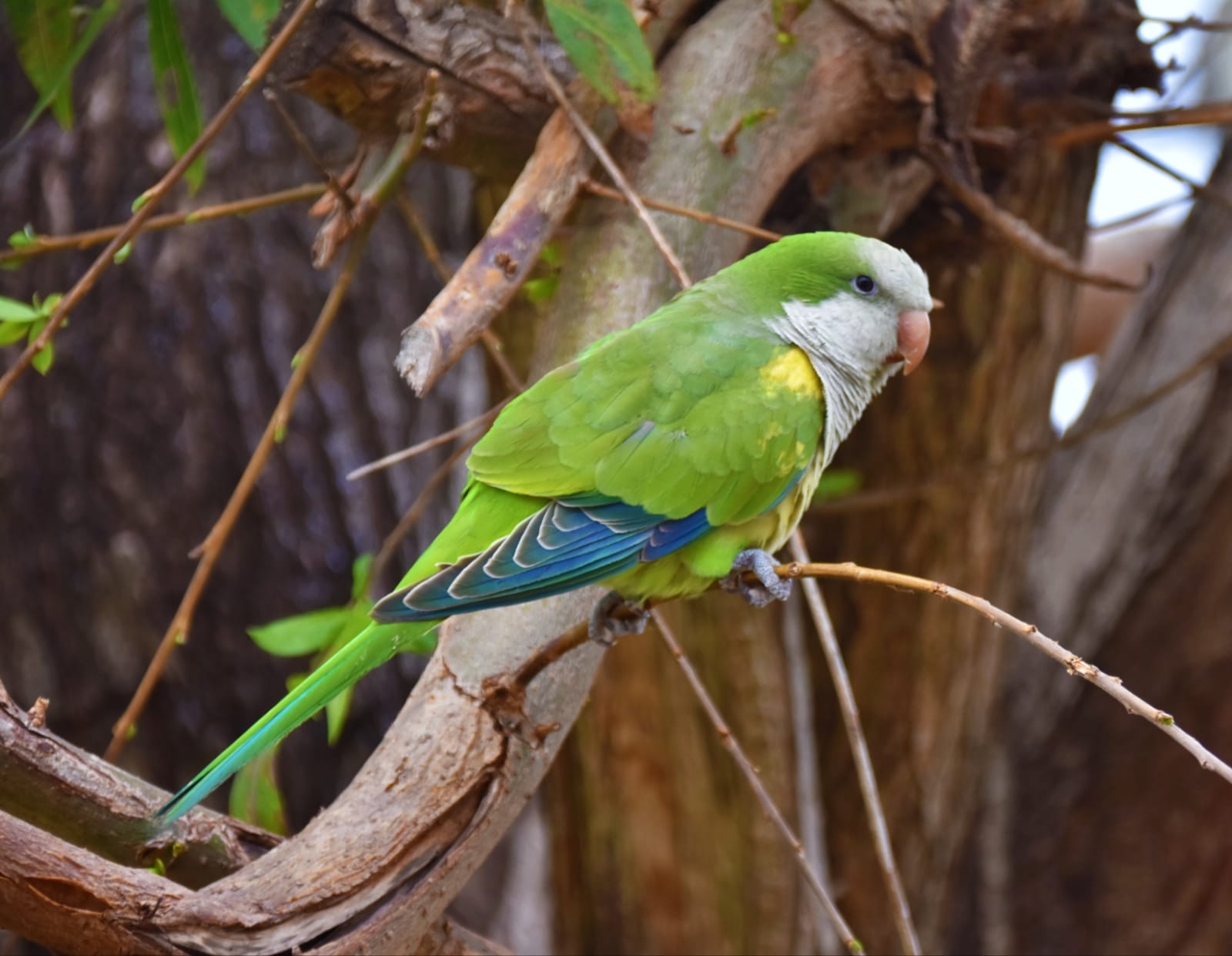
Cotorra Argentina (Monje) gallery
Frequently asked questions about the Cotorra Argentina (Monje)
How long does a Cotorra Argentina (Monje) live?
▾
How much does a Cotorra Argentina (Monje) weigh?
▾
Where does the Cotorra Argentina (Monje) breed come from?
▾
How much exercise does a Cotorra Argentina (Monje) need?
▾
Is the Cotorra Argentina (Monje) good with children?
▾
Who is the Cotorra Argentina (Monje) NOT recommended for?
▾
What health problems does the Cotorra Argentina (Monje) have?
▾
Is it legal to keep a monk parakeet in the UK?
▾
Why is it considered invasive?
▾
Is it the same as the Quaker?
▾
Does it talk well?
▾
Is it very noisy?
▾
Learn more about birds
Practical veterinary guides to support your Cotorra Argentina (Monje).
Sources and references
Content compiled from official breed standards and leading veterinary sources.
- WikipediaMyiopsitta monachus ↗
- SEO/BirdLifeMonk parakeet - invasive species ↗
- World Parrot TrustMonk Parakeet - Parrot Encyclopedia ↗
Want to adopt a cotorra argentina (monje)?
There are cotorra argentina (monje)s in rescue shelters looking for a family. Filter by breed in the catalogue.