

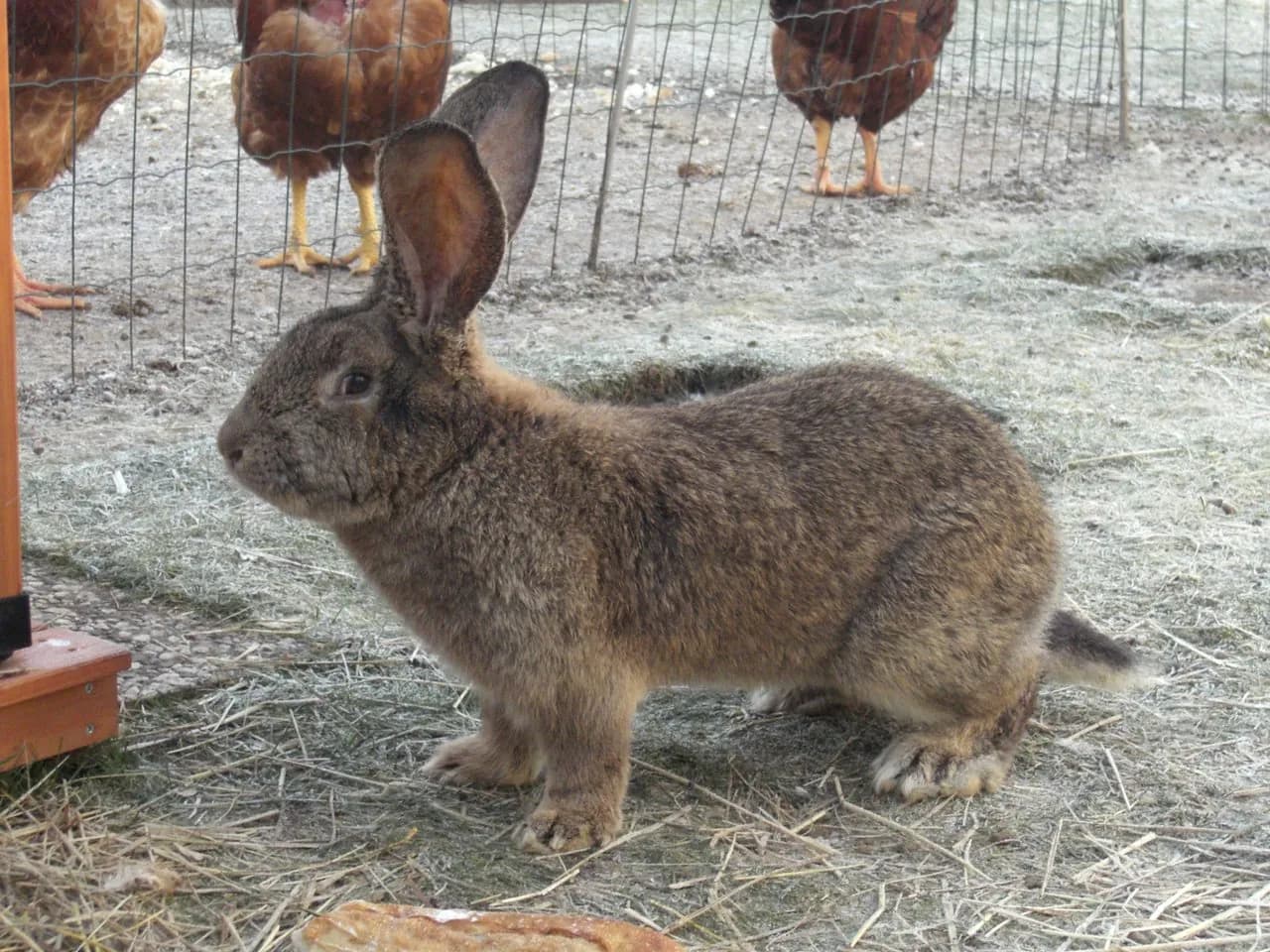
Gigante de Flandes
One of the largest breeds in the world. Docile, patient temperament. Needs plenty of space and an abundant diet.
Foto: Wikipedia Commons · CC BY-SA
Ideal for
- ✓Families with time for daily care
- ✓Homes with space for a free-roaming area
- ✓Those looking for a quiet pet
Reconsider if
- ×Homes with loose prey-driven dogs
- ×Young, rough children (rabbits are easily frightened)
- ×Life 100% in a cage (cruel · they need 4 h/day out)
Notify me when a Gigante de Flandes is up for adoption
We'll only email you when a verified rescue posts one available. No spam, unsubscribe in 1 click.
We'll only use your email for this alert. More info in our privacy policy.
Is the Gigante de Flandes a good match for you?
Indicative rating from 1 (low) to 5 (high).
💶 Estimated cost of ownership
55-90 €/month
Hay and vegetables 28-45 € (large size = more consumption), substrate/bedding 8-14 €, exotics-vet/vaccine provision 12-22 €, accessories 5-10 €.
History and origin
Recognised by ARBA. Originating in Belgium. One of the largest breeds in the world.
Temperament and character
Timid by nature (a prey animal). Gains confidence with patience. Sociable with other neutered rabbits. NOT a loner — a pair is always better.
Living together
Children: with respectful ones from age 8 (no rough handling). **Other rabbits:** yes (neutered, gradual introduction). **Dogs:** avoid hunting/prey-driven dogs. **Cats:** possible, supervise.
Life stages of the Gigante de Flandes
Each stage has its own care priorities. Life expectancy: 5-8 años.
Kit
0-4 months
Mother's milk and transition to hay; rapid bone growth, avoid excess pellets
Junior
4-12 months
Grass hay ad libitum, introduce vegetables; monitor weight and joints
Adult
1-4 years
Unlimited hay, limited pellets and vegetables; weight control, ample space and soft flooring
Senior
4 years onwards
Soft diet if there is dental wear; check heart, joints and feet; frequent vet visits
Care
Space: at least 4 h/day out of the cage in a safe area. Cage = for resting/night-time only.
Feeding: 80% quality hay (Timothy/Italian Ryegrass), 15% fresh vegetables, 5% quality pellets (limit these).
Brushing: 2-3 times/week (daily during moults + long-haired breeds).
Vet: exotics vet (NOT a regular vet — different anatomy/pharmacology). Annual myxomatosis + RHD vaccine. Neutering at 4-6 months (prevents uterine cancer in 80%+ of unspayed females).
Care in detail
🍽️ Nutrition
80% quality hay, 15% fresh vegetables and 5% specific pellets. Because of its giant size it eats more; hay should always be freely available.
✂️ Grooming
Brush 2-3 times a week, more during moults. Its large size makes self-grooming difficult: help it, especially in the areas it cannot reach.
🎓 Training
Docile and patient; it is not trained like a dog but will take to the litter tray and a routine. Handle carefully due to its weight. Best with a companion (neutered): it is not a loner.
🏃 Exercise
At least 4 h/day out in a large, safe area. It needs more space than a small rabbit; the cage is only for resting.
Breed-specific health
Common conditions in rabbits: GI stasis (digestive shutdown · EMERGENCY), dental malocclusion (check every 6 months), encephalitozoonosis. Life expectancy 5-8 years with appropriate care.
🩺 Health predispositions of this breed
Conditions this breed is more predisposed to. Knowing about them helps with prevention and early detection. A predisposition does not mean the animal will develop them.
Common diseases in rabbits
Learn the symptoms, prevention and when to see the vet. Reviewed indicative information that does not replace a veterinary consultation.
Screening and prevention for the Gigante de Flandes
Recommended tests and screenings
- ✓Dental/malocclusion check by an exotics vet
- ✓Monitoring for gastrointestinal stasis
- ✓Screening for encephalitozoonosis (E. cuniculi)
- ✓Inspection of the footpads (pododermatitis due to its weight)
- ✓Weight and locomotor system control
Prevention
Diet based on unlimited hay, ample space (this is a giant breed: it needs more room than an ordinary rabbit), a soft resting surface to prevent sores on the feet, annual vaccination (myxomatosis and RHD) and neutering at 4-6 months. An exotics vet is essential.
Check-up schedule
Six-monthly check-up with an exotics vet; annual vaccination.
Warning signs
- !Stopping eating or passing droppings (GI stasis, EMERGENCY)
- !Sores or scabs on the footpads (pododermatitis)
- !Drooling or difficulty chewing (malocclusion)
- !Head tilt or loss of balance (encephalitozoonosis)
Frequently asked questions about the Gigante de Flandes
How long does a Gigante de Flandes live?
▾
How much does a Gigante de Flandes weigh?
▾
Where does the Gigante de Flandes breed come from?
▾
How much exercise does a Gigante de Flandes need?
▾
Is the Gigante de Flandes good with children?
▾
Who is the Gigante de Flandes NOT recommended for?
▾
What health problems does the Gigante de Flandes have?
▾
How heavy does it get?
▾
Is it a good pet despite its size?
▾
How long does it live?
▾
Does it need special foot care?
▾
Learn more about rabbits
Practical veterinary guides to support your Gigante de Flandes.
Sources and references
Content compiled from official breed standards and leading veterinary sources.
- WikipediaFlemish Giant (Wikipedia ES) ↗
- American Rabbit Breeders AssociationARBA ↗
- British Rabbit CouncilBritish Rabbit Council ↗
Want to adopt a gigante de flandes?
There are gigante de flandess in rescue shelters looking for a family. Filter by breed in the catalogue.