

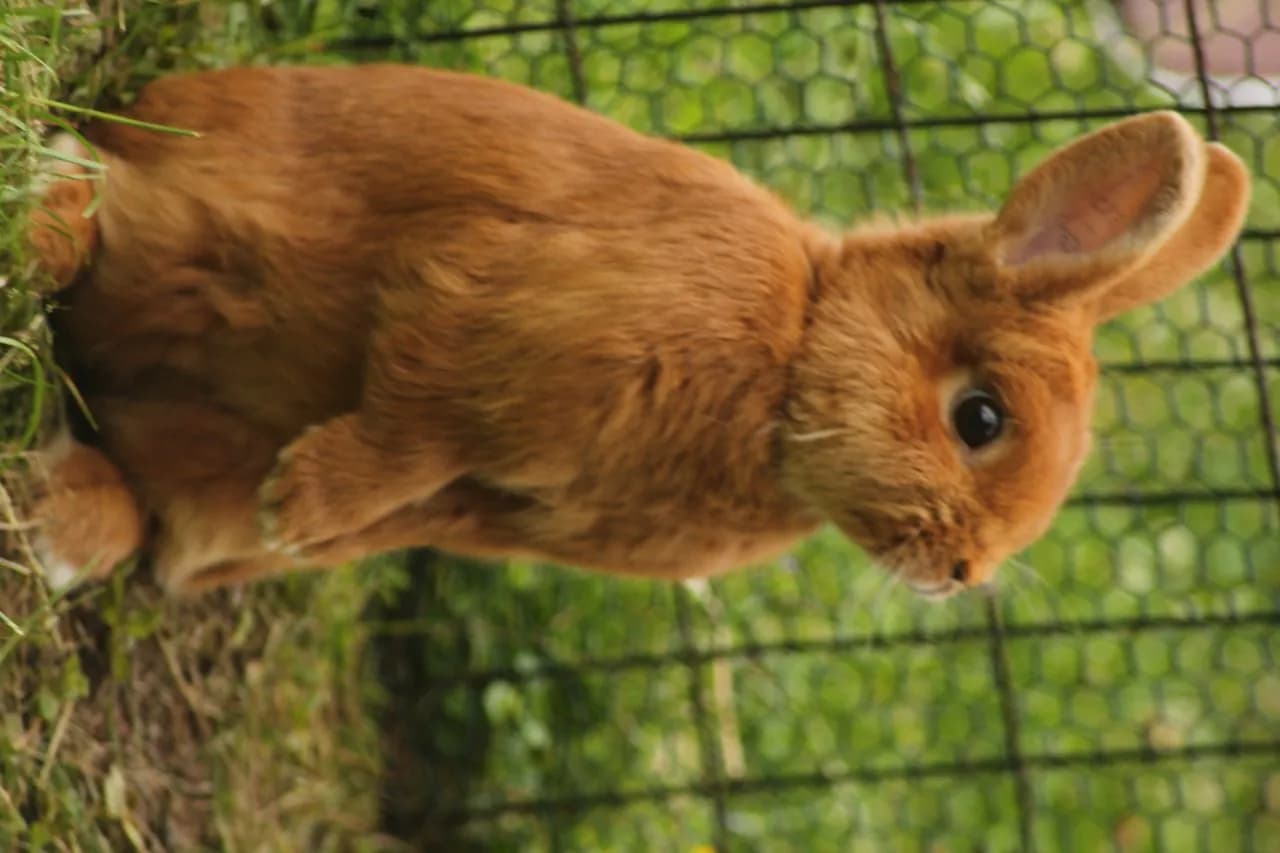
Thrianta
Unique vivid red-orange coat. Created in honour of the Dutch royal House of Orange.
Foto: Wikipedia Commons · CC BY-SA
Ideal for
- ✓Families with time for daily care
- ✓Homes with space for a free-roam area
- ✓Anyone wanting a quiet pet
Reconsider if
- ×Homes with loose hunting dogs
- ×Rough young children (rabbits are easily frightened)
- ×Life 100% in a cage (cruel · they need 4 h/day out)
Notify me when a Thrianta is up for adoption
We'll only email you when a verified rescue posts one available. No spam, unsubscribe in 1 click.
We'll only use your email for this alert. More info in our privacy policy.
Is the Thrianta a good match for you?
Indicative rating from 1 (low) to 5 (high).
💶 Estimated cost of ownership
35-60 €/month
Hay 10-15 € + vegetables 12-18 € + pellets 6-10 € + bedding 8-12 € + amortised vet/vaccination ~10 €.
History and origin
Created in the Netherlands by H. Andreae in 1938; prized for its intense red-orange colour, earning it the nickname 'the fire of the fancy'.
Temperament and character
Naturally timid (a prey animal). Gains confidence with patience. Sociable with other neutered rabbits. NOT a solitary pet — a companion is always better.
Living together
Children: with respectful children from 8 years (no rough handling). **Other rabbits:** yes (neutered, gradual introductions). **Dogs:** avoid hunting breeds. **Cats:** possible, supervise.
Life stages of the Thrianta
Each stage has its own care priorities. Life expectancy: 5-8 años.
Kit
0-4 months
Gradual weaning and development of the intense red colour; prevention of coccidiosis and diarrhoea
Junior
4-12 months
Growth of the glossy coat; socialisation and neutering
Adult
1-5 years
Maintenance with ad libitum hay and weight control
Senior
5+ years
Dental and digestive monitoring; digestible diet and check-ups
Care
Space: at least 4 h/day out of the cage in a safe area. Cage = rest/overnight only.
Feeding: 80% quality hay (Timothy/Italian Ryegrass), 15% fresh vegetables, 5% quality pellets (limit these).
Grooming: 2-3 times/week (daily during moults + for long-haired breeds).
Vet: exotics vet (NOT a general vet — different anatomy/pharmacology). Annual myxomatosis + RHD vaccination. Neutering at 4-6 months (prevents uterine cancer in 80%+ of unspayed females).
Care in detail
🍽️ Nutrition
80% hay, 15% leafy greens, 5% limited quality pellets. Constant fresh water. Avoid excess pellets and fruit (obesity).
✂️ Grooming
Short, dense, intense red coat: brush 2-3 times a week, daily during moults. Nails every 4-6 weeks.
🎓 Training
Very docile and sociable; ideal for litter training and calm handling with positive reinforcement. Support the hindquarters when picking up.
🏃 Exercise
3-4 h daily out of the cage in a safe area. Foraging toys and tunnels.
Breed-specific health
Common rabbit conditions: GI stasis (a digestive shutdown · EMERGENCY), dental malocclusion (check every 6 months), encephalitozoonosis. Life expectancy 5-8 years with proper care.
🩺 Health predispositions of this breed
Conditions this breed is more predisposed to. Knowing about them helps with prevention and early detection. A predisposition does not mean the animal will develop them.
Common diseases in rabbits
Learn the symptoms, prevention and when to see the vet. Reviewed indicative information that does not replace a veterinary consultation.
Screening and prevention for the Thrianta
Recommended tests and screenings
- ✓Six-monthly dental check (malocclusion)
- ✓Annual faecal test (coccidiosis, E. cuniculi)
- ✓Weight monitoring and abdominal palpation
- ✓E. cuniculi serology if neurological signs appear
Prevention
Annual myxomatosis + RHDV1/RHDV2 vaccination. Neutering at 4-6 months (prevents uterine tumours). Unlimited hay for dental wear.
Check-up schedule
Annual check-up with an exotics vet; six-monthly for seniors.
Warning signs
- !Anorexia or no faeces for >12 h (GI stasis)
- !Drooling, watery eyes or weight loss (dental problem)
- !Head tilt or incoordination
- !Diarrhoea or soft faeces stuck to the rear
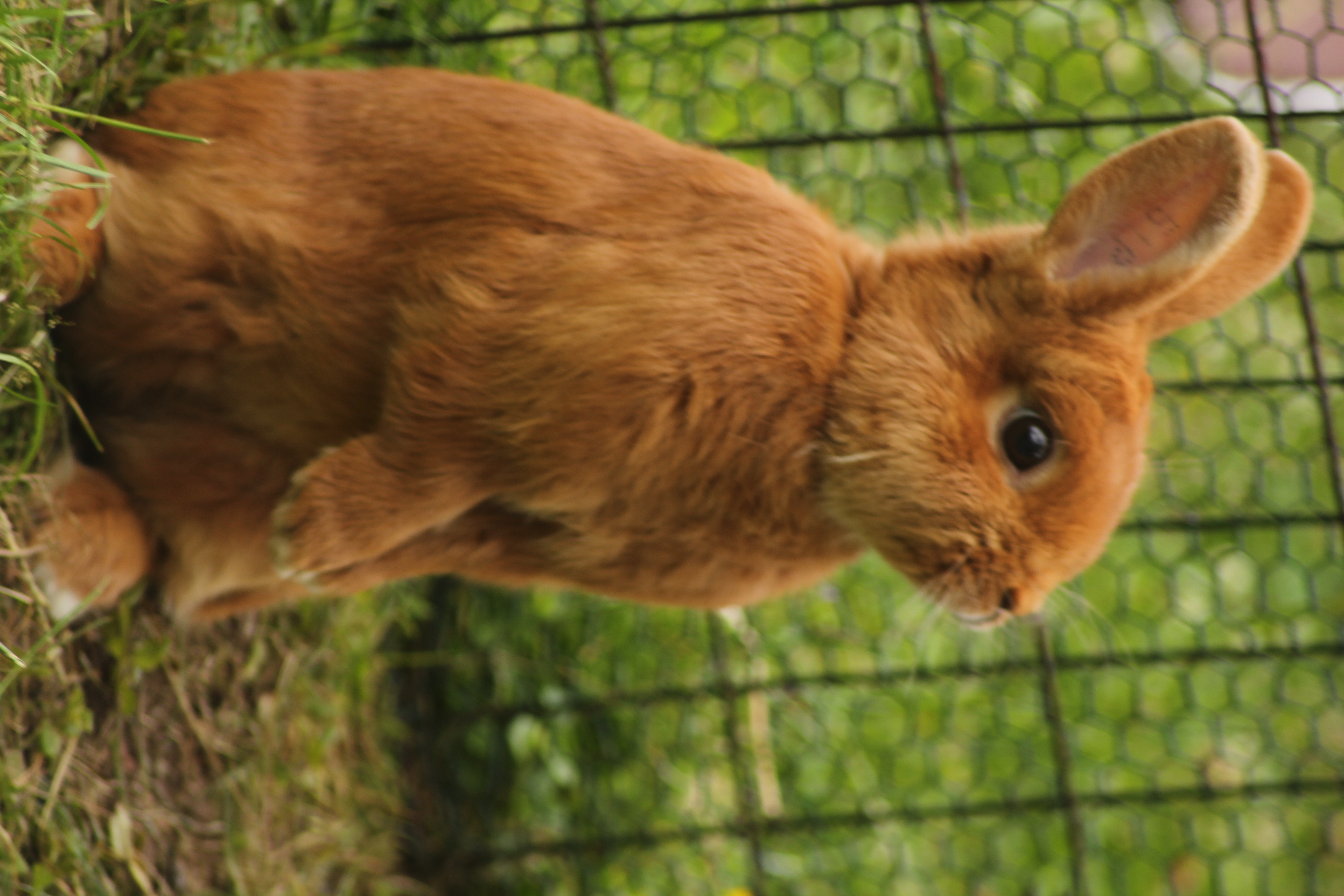
Thrianta gallery
Frequently asked questions about the Thrianta
How long does a Thrianta live?
▾
How much does a Thrianta weigh?
▾
Where does the Thrianta breed come from?
▾
How much exercise does a Thrianta need?
▾
Is the Thrianta good with children?
▾
Who is the Thrianta NOT recommended for?
▾
What health problems does the Thrianta have?
▾
Is it a good breed for families?
▾
Does the red colour fade over time?
▾
Does it need the company of another rabbit?
▾
How long does it live?
▾
Learn more about rabbits
Practical veterinary guides to support your Thrianta.
Sources and references
Content compiled from official breed standards and leading veterinary sources.
- WikipediaThrianta ↗
- British Rabbit CouncilBRC Breed Standards ↗
Want to adopt a thrianta?
There are thriantas in rescue shelters looking for a family. Filter by breed in the catalogue.