


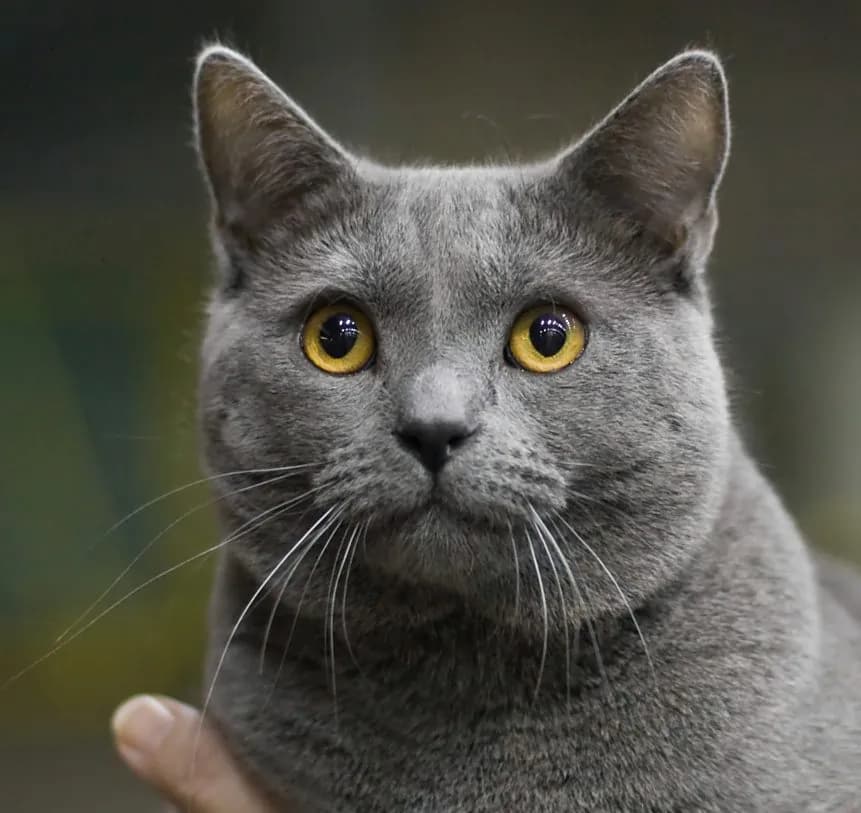
Cartujo (Chartreux)
A French blue-grey cat. Distinctive rounded cheeks — "the smiling cat". A quiet, serene temperament.
Foto: Wikipedia Commons · CC BY-SA
Mizuu editorial teamupdated on October 14, 2026Not yet reviewed by a vet. Are you a vet? Review itReport an error
Ideal for
- Families with time to give affection
- Flats
- Anyone wanting a sociable cat
Reconsider if
- ×Homes where it would be alone for many hours
Let me know when there are cats for adoption
We only write when a verified shelter posts one. One email a day at most.
Is the Cartujo (Chartreux) a good match for you?
Indicative rating from 1 (low) to 5 (high).
Estimated cost of ownership
40-70 €/month
Mid- to high-range food (22-38 €), litter (8-12 €), prorated preventive vet care (10-16 €) and accessories (5-8 €). Separately: annual check-up (40-60 €). A hardy, economical breed.
History and origin
An ancient French breed with a woolly blue-grey coat, traditionally associated with the Carthusian monks; it ranks among the most recognised natural breeds in Europe.
Temperament and character
Typical of its breed. Sociable or reserved depending on the individual. Early neutering (4-6 months) is the best preventive measure.
Living together
Children: good with respectful ones. **Other cats:** sociable if raised together from a young age. **Dogs:** possible if the dog is calm.
Life stages of the Cartujo (Chartreux)
Each stage has its own care priorities. Life expectancy: 12-15 años.
Kitten
0-6 months
Socialisation, vaccination and deworming; a robust, slow-developing breed.
Junior
6 months-3 years
Prolonged maturation up to age 4-5; neutering, weight control and a dental routine.
Adult
3-10 years
Weight control, joint and patella monitoring, urinary health and annual check-up.
Senior
11+ years
Six-monthly check-ups, kidney function, joint health (hip/patella) and dental care.
Care
Brushing: according to coat type (short = weekly · semi-long = 2-3 times · long = daily).
Litter tray: One litter tray per cat plus one extra (N+1 rule), in quiet spots away from food.
Feeding: quality wet plus dry food.
Vet: annual check-up plus blood work from age 7.
Care in detail
Nutrition
Quality dry and wet food in controlled portions: this is a calm cat that puts on weight easily. Wet food helps prevent urinary problems.
Grooming
A dense, woolly double coat that tends to mat: brush 2-3 times a week, daily during moulting. Do not shave this insulating coat.
Training
Serene, quiet and observant; it learns routines calmly. A very good hunter despite its phlegmatic air.
Exercise
Low to medium energy: moderate daily play is enough. A placid cat, ideal for quiet homes.
Breed-specific health
Health tests recommended for this breed: Assessment for patellar luxation; Screening echocardiography for hypertrophic cardiomyopathy (HCM); Hip dysplasia radiography in affected lines; Urinary monitoring (predisposition to struvite stones). Life expectancy 12-15 years.
Health predispositions for this breed
Conditions this breed is more predisposed to. Knowing about them helps with prevention and early detection. A predisposition does not mean the animal will develop them.
Common diseases in cats
Learn the symptoms, prevention and when to see the vet. Indicative information that does not replace a veterinary consultation.
Screening and prevention for the Cartujo (Chartreux)
Recommended tests and screenings
- Assessment for patellar luxation
- Screening echocardiography for hypertrophic cardiomyopathy (HCM)
- Hip dysplasia radiography in affected lines
- Urinary monitoring (predisposition to struvite stones)
Prevention
Early neutering, weight control (a calm breed prone to weight gain), good hydration with a wet diet to protect the urinary tract, and regular brushing of its woolly coat.
Check-up schedule
Annual check-up with joint assessment; blood work and preventive urinary monitoring from age 7-8.
Warning signs
- !Lameness or the kneecap slipping (patella)
- !Difficulty or pain when urinating, blood in the urine (stones)
- !Weight gain and inactivity
- !Laboured breathing or lethargy (heart disease)
Cartujo (Chartreux) gallery

Frequently asked questions about the Cartujo (Chartreux)
How long does a Cartujo (Chartreux) live?
▾
How much does a Cartujo (Chartreux) weigh?
▾
Where does the Cartujo (Chartreux) breed come from?
▾
How much exercise does a Cartujo (Chartreux) need?
▾
Is the Cartujo (Chartreux) good with children?
▾
Who is the Cartujo (Chartreux) NOT recommended for?
▾
What health problems does the Cartujo (Chartreux) have?
▾
Is it true that it hardly meows?
▾
How does it differ from the Russian Blue or the British Shorthair?
▾
Does it gain weight easily?
▾
How do I care for its coat?
▾
Is it a good flat cat?
▾
Learn more about cats
Practical veterinary guides to support your Cartujo (Chartreux).
Sources and references
Content compiled from official breed standards and leading veterinary sources.
Do you have a Cartujo (Chartreux)?
Add them to Mizuu and we will remind you what is due for their breed and age: Assessment for patellar luxation, check-ups and vaccines.
Add my Cartujo (Chartreux)Free. Create your account in a minute and come back here.
Want to adopt a cartujo (chartreux)?
There are cartujo (chartreux)s in Spanish rescue shelters looking for a family. Filter by breed in the catalogue.

