

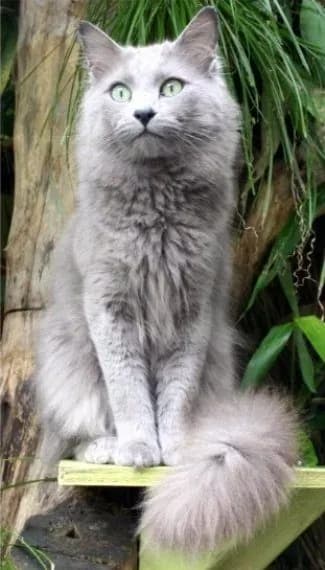
Nebelung
Semi-long-haired version of the Russian Blue. Same elegant and reserved character.
Foto: Wikipedia Commons · CC BY-SA
Ideal for
- ✓Families with time for cuddling
- ✓Flats
- ✓Those looking for a sociable cat
Reconsider if
- ×Households where it is left alone for many hours
Notify me when a Nebelung is up for adoption
We'll only email you when a verified rescue posts one available. No spam, unsubscribe in 1 click.
We'll only use your email for this alert. More info in our privacy policy.
Is the Nebelung a good match for you?
Indicative rating from 1 (low) to 5 (high).
💶 Estimated cost of ownership
45-75 €/month
Food (with emphasis on wet food) 22-32 €, litter 10-15 €, vet and vaccinations pro-rated 12-18 €, antiparasitics 4-6 €, contingency fund 8-12 €.
History and origin
The Nebelung is an American semi-long-haired breed developed in the 1980s, related to the Russian Blue, with which it shares the blue, silver-tipped coat.
Temperament and character
Character typical of its breed. Sociable or reserved depending on the individual. Early neutering (4-6 months) is the best preventive measure.
Living together
Children: good with respectful ones. **Other cats:** sociable if raised together from a young age. **Dogs:** possible if calm.
Life stages of the Nebelung
Each stage has its own care priorities. Life expectancy: 15-18 años.
Kitten
0-6 months
Early socialisation, vaccination, deworming and growth diet; getting used to brushing the semi-long coat.
Junior
6 months-2 years
Neutering, transition to an adult diet, weight control and dental routine; stimulation for its reserved character.
Adult
3-10 years
Weight maintenance (tendency to obesity), annual check-up, regular brushing and attention to the urinary tract.
Senior
11+ years
Six-monthly check-ups, monitoring of renal and cardiac function, joint and dental health, and calorie adjustment.
Care
Brushing: according to coat (short = weekly · semi-long = 2-3 times · long = daily).
Litter tray: N+1 litter trays (rule 70).
Feeding: quality wet + dry food.
Vet: annual check-up + blood work from 7 years of age.
Care in detail
🍽️ Nutrition
Quality food with a good proportion of wet food to encourage hydration and prevent urinary problems. Portion control; it tends to be fussy and set in its routine with food.
✂️ Grooming
Semi-long, double and silky coat: brushing 2-3 times a week, daily during moulting, to avoid knots. Dental hygiene and checks of the ears and nails.
🎓 Training
Intelligent but reserved and wary of strangers. It needs early and patient socialisation. It responds to positive reinforcement in a calm and predictable environment; it dislikes noise and change.
🏃 Exercise
Medium energy. It enjoys playing with its trusted person and watching from high places. It is not hyperactive, but it needs daily stimulation and a serene environment.
Breed-specific health
Hypertrophic cardiomyopathy (HCM) is common in many breeds — genetic testing recommended. PKD in Persian and derived breeds. Life expectancy 15-18 years.
🩺 Health predispositions of this breed
Conditions this breed is more predisposed to. Knowing about them helps with prevention and early detection. A predisposition does not mean the animal will develop them.
Common diseases in cats
Learn the symptoms, prevention and when to see the vet. Reviewed indicative information that does not replace a veterinary consultation.
Screening and prevention for the Nebelung
Recommended tests and screenings
- ✓Echocardiography for hypertrophic cardiomyopathy (HCM)
- ✓Blood work and ultrasound of the urinary tract (predisposition to stones/crystals)
- ✓Renal profile prior to breeding
- ✓Dental check
- ✓Weight control
Prevention
Early neutering, vaccination and deworming. Plenty of wet food to prevent urinary stones, a calm environment and patient socialisation from kittenhood due to its reserved character.
Check-up schedule
Annual check-up with cardiac auscultation; renal and urinary blood work from 7 years of age. Cardiac screening recommended before breeding.
Warning signs
- !Straining or pain when urinating, blood in the urine (stones/cystitis)
- !Lethargy or rapid breathing (heart)
- !Increased thirst and urination (kidney)
- !Withdrawal or stress in response to changes or noise
- !Bad breath or inflamed gums
Frequently asked questions about the Nebelung
How long does a Nebelung live?
▾
How much does a Nebelung weigh?
▾
Where does the Nebelung breed come from?
▾
How much exercise does a Nebelung need?
▾
Is the Nebelung good with children?
▾
Who is the Nebelung NOT recommended for?
▾
What health problems does the Nebelung have?
▾
Is the Nebelung the same as the Russian Blue?
▾
Is it a suitable cat for families with young children?
▾
How much brushing does it need?
▾
What health problems should I watch for?
▾
Is it affected by being left alone or by changes?
▾
Learn more about cats
Practical veterinary guides to support your Nebelung.
Sources and references
Content compiled from official breed standards and leading veterinary sources.
Want to adopt a nebelung?
There are nebelungs in rescue shelters looking for a family. Filter by breed in the catalogue.