


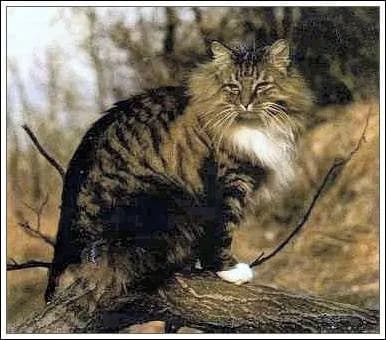
Bosque de Noruega
A historic Viking cat. Double coat adapted to extreme cold. A skilled hunter. An excellent climber. Similar to the Maine Coon.
Foto: Wikipedia Commons · CC BY-SA
Mizuu editorial teamupdated on October 14, 2026Not yet reviewed by a vet. Are you a vet? Review itReport an error
Ideal for
- Families with time to give affection
- Flats
- Anyone looking for a sociable cat
Reconsider if
- ×Homes where it would be left alone for many hours
Let me know when there are cats for adoption
We only write when a verified shelter posts one. One email a day at most.
Is the Bosque de Noruega a good match for you?
Indicative rating from 1 (low) to 5 (high).
Estimated cost of ownership
55-90 €/month
Quality food for a large cat (35-55 €), litter and healthcare prevention/insurance (20-35 €). Initial investment in a tall, sturdy cat tree; higher spend on grooming/accessories during moults.
History and origin
A natural long-haired Scandinavian breed adapted to Norway's cold climate, present in Viking mythology and officially recognised by the FIFe in the 1970s.
Temperament and character
Character typical of its breed. Sociable or reserved depending on the individual. Early neutering (4-6 months) is the best preventive measure.
Living together
Children: good with respectful ones. **Other cats:** sociable if raised together from a young age. **Dogs:** possible if calm.
Life stages of the Bosque de Noruega
Each stage has its own care priorities. Life expectancy: 14-16 años.
Kitten
0-6 months
Vaccination, deworming and a growth diet; a slow-maturing breed that requires sustained nutritional support.
Junior
6 months-3 years
Prolonged growth up to 4-5 years; neutering, weight control and brushing of the dense double coat.
Adult
3-10 years
Cardiac check (auscultation/echo), weight control, frequent brushing and annual check-up.
Senior
11+ years
Six-monthly check-ups, cardiac and renal monitoring, joint health and coat management.
Care
Brushing: according to coat (short = weekly · semi-long = 2-3 times · long = daily).
Litter tray: One litter tray per cat plus one extra (N+1 rule), in quiet spots away from food.
Feeding: quality wet + dry.
Vet: annual check-up + blood work from 7 years of age.
Care in detail
Nutrition
Quality food for a large cat, portioned to prevent excess weight despite its good appetite. Combining wet and dry food supports hydration. A feeding bowl suited to its size and slow growth (matures at around 4-5 years).
Grooming
Double, water-resistant coat: brushing 2-3 times a week, daily during the spring and autumn moults, which are heavy. Unlike finer-coated breeds it is less prone to matting, but a comb is needed for the dense undercoat.
Training
A sociable, calm and well-balanced cat, easy to integrate with children, dogs and other cats. A great climber: it appreciates tall, sturdy vertical structures. Spacious N+1 litter trays, interactive play and early socialisation. Early neutering (4-6 months).
Exercise
Medium energy with a strong climbing and hunting instinct: it needs tall cat trees, high shelves and daily play. It is athletic and enjoys spaces where it can climb and observe from above.
Breed-specific health
Health tests recommended for this breed: Genetic/echocardiographic test for Hypertrophic Cardiomyopathy (HCM); Genetic test for Glycogen Storage Disease type IV (GSD IV, GBE1 deficiency); Hip dysplasia radiography; Genetic test for Pyruvate Kinase Deficiency (PK-Def); Renal monitoring in seniors. Life expectancy 14-16 years.
Health predispositions for this breed
Conditions this breed is more predisposed to. Knowing about them helps with prevention and early detection. A predisposition does not mean the animal will develop them.
Common diseases in cats
Learn the symptoms, prevention and when to see the vet. Indicative information that does not replace a veterinary consultation.
Screening and prevention for the Bosque de Noruega
Recommended tests and screenings
- Genetic/echocardiographic test for Hypertrophic Cardiomyopathy (HCM)
- Genetic test for Glycogen Storage Disease type IV (GSD IV, GBE1 deficiency)
- Hip dysplasia radiography
- Genetic test for Pyruvate Kinase Deficiency (PK-Def)
- Renal monitoring in seniors
Prevention
Obtain from a breeder who tests the parents for GSD IV and HCM (glycogenosis is severe and specific to the breed). Regular brushing of the double coat, intensive during seasonal moults. Keep a healthy weight for a large breed and protect the joints. Early neutering.
Check-up schedule
Annual veterinary check-up with cardiac screening (HCM) as scheduled; preventive blood work from 7 years of age. In kittens from untested lines, assess their condition for possible GSD IV.
Warning signs
- !Laboured breathing, lethargy or exercise intolerance (HCM)
- !Severe muscle weakness, tremors or collapse in kittens (GSD IV)
- !Lameness or difficulty jumping (hip dysplasia)
- !Pale gums, weakness or lethargy (anaemia from PK-Def)
- !Mats in the coat, especially in friction areas
Frequently asked questions about the Bosque de Noruega
How long does a Bosque de Noruega live?
▾
How much does a Bosque de Noruega weigh?
▾
Where does the Bosque de Noruega breed come from?
▾
How much exercise does a Bosque de Noruega need?
▾
Is the Bosque de Noruega good with children?
▾
Who is the Bosque de Noruega NOT recommended for?
▾
What health problems does the Bosque de Noruega have?
▾
How does it differ from the Maine Coon?
▾
How much coat care does it need?
▾
Does it cope well with heat?
▾
Is it a sociable cat and good with children?
▾
What genetic diseases should I be aware of?
▾
Learn more about cats
Practical veterinary guides to support your Bosque de Noruega.
Sources and references
Content compiled from official breed standards and leading veterinary sources.
Do you have a Bosque de Noruega?
Add them to Mizuu and we will remind you what is due for their breed and age: Genetic/echocardiographic test for Hypertrophic Cardiomyopathy (HCM), check-ups and vaccines.
Add my Bosque de NoruegaFree. Create your account in a minute and come back here.
Want to adopt a bosque de noruega?
There are bosque de noruegas in Spanish rescue shelters looking for a family. Filter by breed in the catalogue.

