


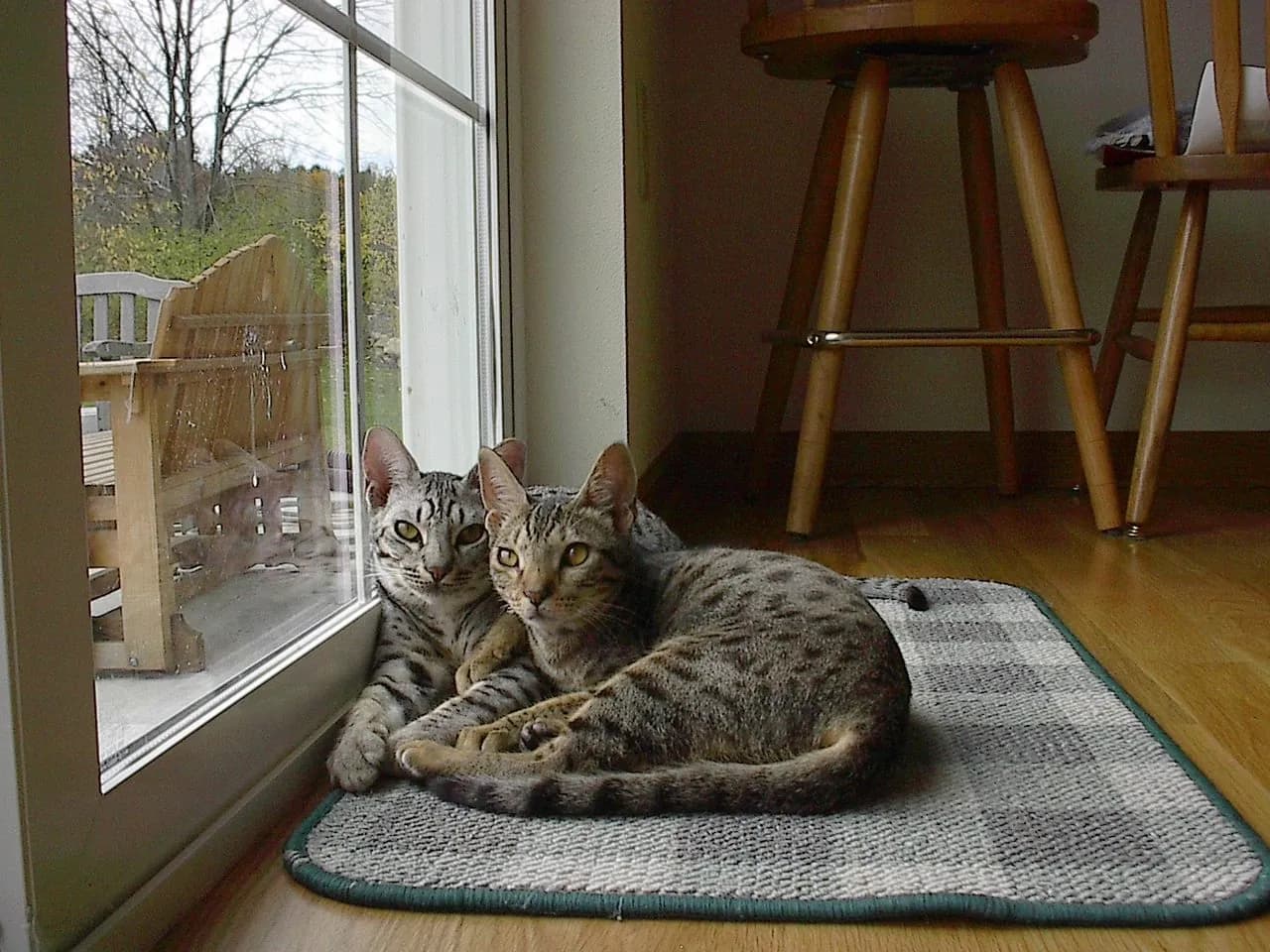
Ocicat
The look of a small ocelot with no wild blood. An Abyssinian × Siamese × American cross. Sociable, active.
Foto: Wikipedia Commons · CC BY-SA
Mizuu editorial teamupdated on October 14, 2026Not yet reviewed by a vet. Are you a vet? Review itReport an error
Ideal for
- Families with time for petting
- Flats
- Anyone looking for a sociable cat
Reconsider if
- ×Homes where it would be alone for many hours
Let me know when there are cats for adoption
We only write when a verified shelter posts one. One email a day at most.
Is the Ocicat a good match for you?
Indicative rating from 1 (low) to 5 (high).
Estimated cost of ownership
45-75 €/month
Premium food 22-32 €, litter 10-15 €, veterinary care and vaccines prorated 12-18 €, parasite treatments 4-6 €, toys/enrichment and a contingency fund 8-12 €.
History and origin
An American breed with a wild, spotted appearance but entirely domestic genetics, created in the 1960s from the cross between the Siamese, the Abyssinian and the American Shorthair.
Temperament and character
Temperament typical of its breed. Sociable or reserved depending on the individual. Early neutering (4-6 months) is the best preventive measure.
Living together
Children: good with respectful children. **Other cats:** sociable if raised together from a young age. **Dogs:** possible if calm.
Life stages of the Ocicat
Each stage has its own care priorities. Life expectancy: 12-18 años.
Kitten
0-6 months
Socialisation, vaccination and deworming; an active, sociable breed that tolerates being alone poorly.
Junior
6 months-2 years
Neutering, adult diet, plenty of exercise and a dental routine.
Adult
3-10 years
Cardiac check, weight control, eye monitoring and annual check-up.
Senior
11+ years
Six-monthly check-ups, cardiac, renal and visual monitoring, joint and dental health.
Care
Grooming: according to coat (short = weekly · semi-long = 2-3 times · long = daily).
Litter tray: One litter tray per cat plus one extra (N+1 rule), in quiet spots away from food.
Feeding: quality wet + dry food.
Veterinary care: annual check-up + blood work from age 7.
Care in detail
Nutrition
Premium food rich in animal protein to match its high activity level, combined with wet food. Portion control; it is athletic and muscular, but boredom can lead it to overeat.
Grooming
Minimal: its short, satin coat only needs a weekly brush, which enhances its spotting. Dental hygiene and routine checks of nails and ears.
Training
Very intelligent and sociable, almost 'dog-like'. It learns tricks, walking on a harness and fetching objects with positive reinforcement. It needs constant mental stimulation to avoid boredom.
Exercise
Very high energy. It requires several sessions of active play a day, tall towers, interactive toys and company. Without enough activity it develops destructive behaviour and vocalisation.
Breed-specific health
Health tests recommended for this breed: Echocardiography for hypertrophic cardiomyopathy (HCM); Genetic test for pyruvate kinase deficiency (PK-Def); Genetic test/electroretinography for progressive retinal atrophy (PRA); Screening for renal amyloidosis (Siamese/Abyssinian lineage); Regular dental examination. Life expectancy 12-18 years.
Health predispositions for this breed
Conditions this breed is more predisposed to. Knowing about them helps with prevention and early detection. A predisposition does not mean the animal will develop them.
Common diseases in cats
Learn the symptoms, prevention and when to see the vet. Indicative information that does not replace a veterinary consultation.
Screening and prevention for the Ocicat
Recommended tests and screenings
- Echocardiography for hypertrophic cardiomyopathy (HCM)
- Genetic test for pyruvate kinase deficiency (PK-Def)
- Genetic test/electroretinography for progressive retinal atrophy (PRA)
- Screening for renal amyloidosis (Siamese/Abyssinian lineage)
- Regular dental examination
Prevention
Early neutering, vaccination and deworming. Genetic screening for PK-Def and PRA before breeding. Dental hygiene, a quality diet and plenty of environmental enrichment given its very active nature.
Check-up schedule
Annual check-up with cardiac auscultation; renal and hepatic blood work from age 7. Cardiac and genetic screening recommended in breeding animals.
Warning signs
- !Lethargy, weakness or exercise intolerance (heart/PK-Def)
- !Pale gums or anaemia (pyruvate kinase deficiency)
- !Stumbling or difficulty seeing at night (PRA)
- !Increased thirst/urination (kidney)
- !Bad breath or inflamed gums
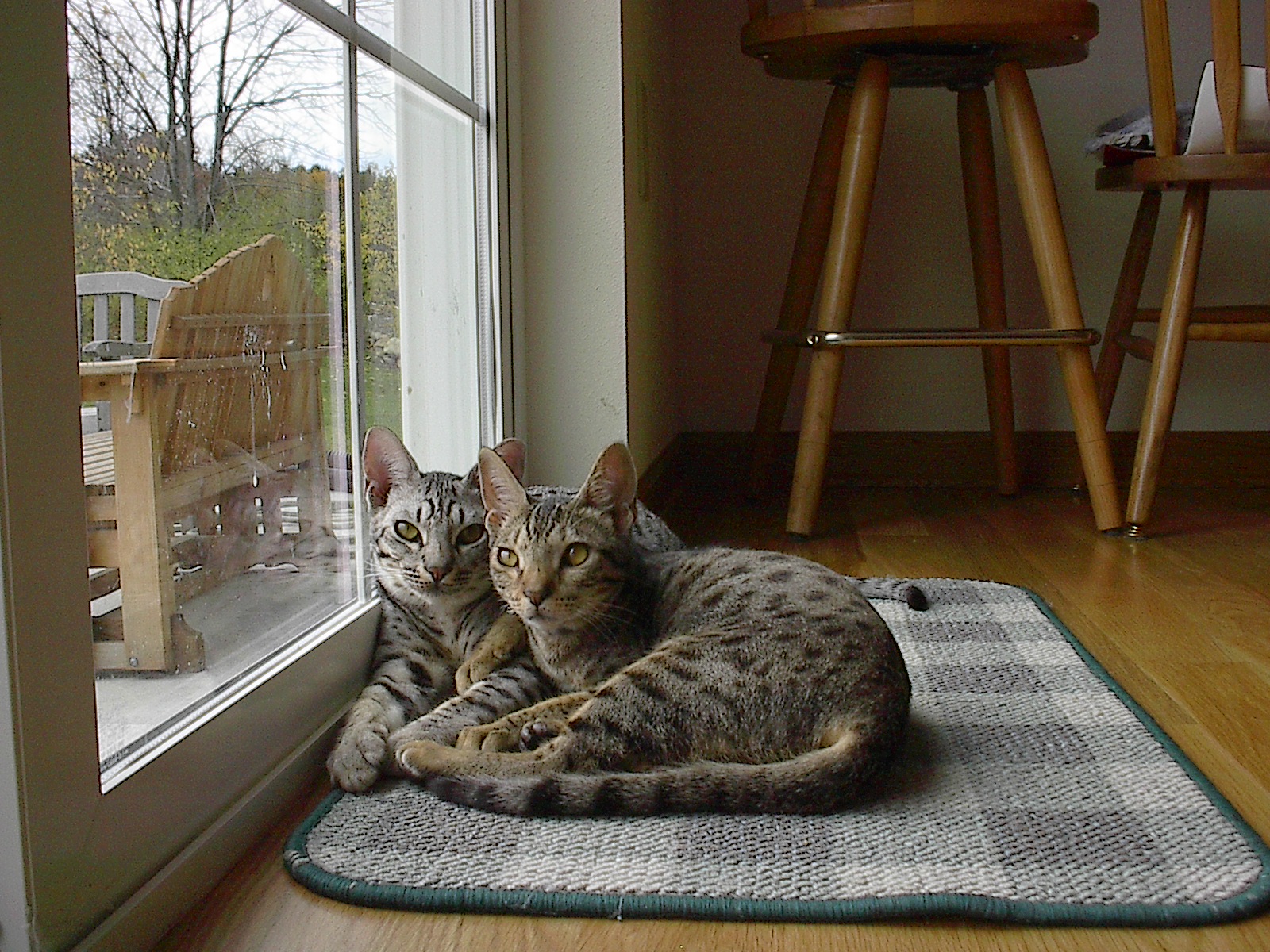
Ocicat gallery
Frequently asked questions about the Ocicat
How long does a Ocicat live?
▾
How much does a Ocicat weigh?
▾
Where does the Ocicat breed come from?
▾
How much exercise does a Ocicat need?
▾
Is the Ocicat good with children?
▾
Who is the Ocicat NOT recommended for?
▾
What health problems does the Ocicat have?
▾
Does the Ocicat have wild blood?
▾
Is it a very active cat?
▾
Can it learn tricks or walk on a harness?
▾
What health tests should I ask the breeder for?
▾
Does it get on well with children and other animals?
▾
Learn more about cats
Practical veterinary guides to support your Ocicat.
Sources and references
Content compiled from official breed standards and leading veterinary sources.
Do you have a Ocicat?
Add them to Mizuu and we will remind you what is due for their breed and age: Echocardiography for hypertrophic cardiomyopathy (HCM), check-ups and vaccines.
Add my OcicatFree. Create your account in a minute and come back here.
Want to adopt a ocicat?
There are ocicats in Spanish rescue shelters looking for a family. Filter by breed in the catalogue.

