

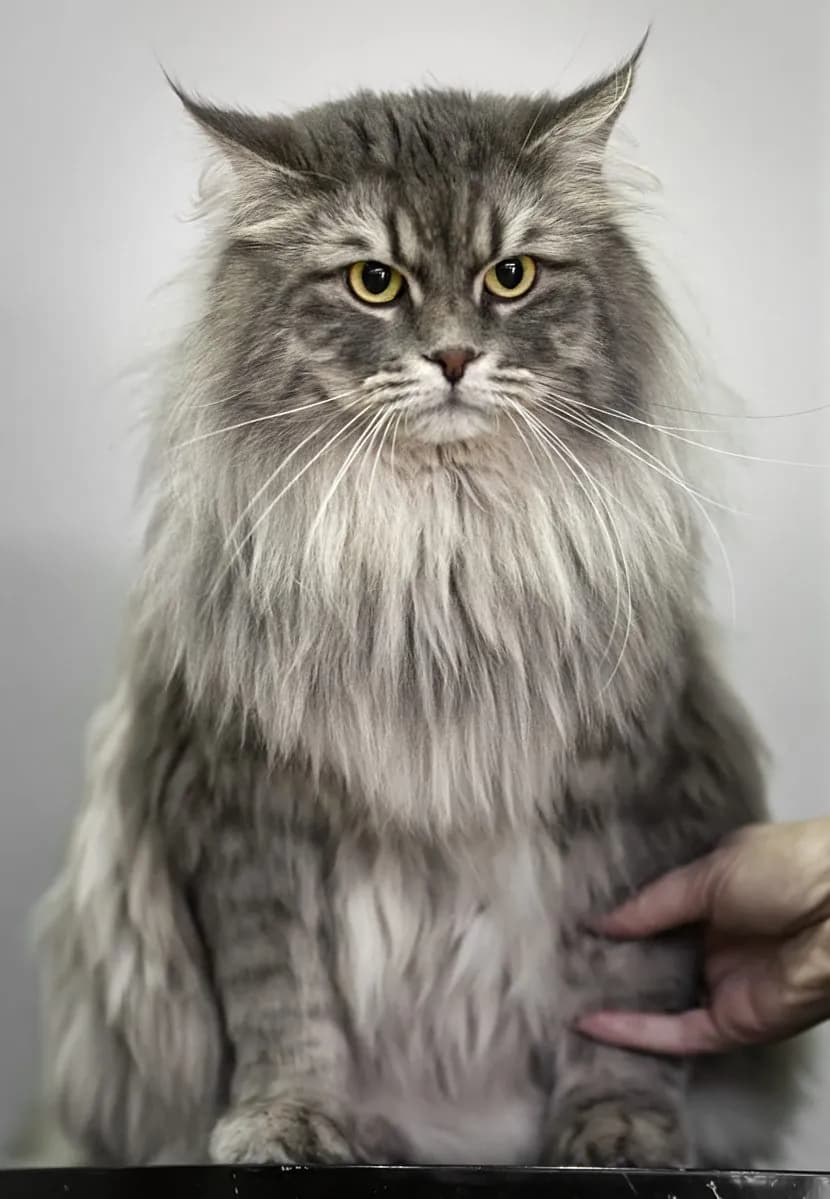
Siberiano
An ancient Russian cat adapted to extreme cold. Dense triple coat. Hypoallergenic (less Fel d1 protein). Sociable.
Foto: Wikipedia Commons · CC BY-SA
Ideal for
- ✓Families with time to stroke it
- ✓Flats
- ✓Those looking for a sociable cat
Reconsider if
- ×Homes where it would be alone for many hours
Notify me when a Siberiano is up for adoption
We'll only email you when a verified rescue posts one available. No spam, unsubscribe in 1 click.
We'll only use your email for this alert. More info in our privacy policy.
Is the Siberiano a good match for you?
Indicative rating from 1 (low) to 5 (high).
💶 Estimated cost of ownership
50-80 €/month
Food (large breed) 25-35 €, litter 12-16 €, vet and vaccines pro-rated (includes cardiac screening) 12-20 €, antiparasitics 5-7 €, grooming and a contingency fund 8-12 €.
History and origin
A natural Russian longhaired breed originating from the forests of Siberia, popularly reputed to be hypoallergenic because of its lower production of the Fel d 1 protein.
Temperament and character
Typical of its breed. Sociable or reserved depending on the individual. Early neutering (4-6 months) is the best preventive measure.
Living together
Children: good with respectful ones. **Other cats:** sociable if raised together from a young age. **Dogs:** possible if calm.
Life stages of the Siberiano
Each stage has its own care priorities. Life expectancy: 11-15 años.
Kitten
0-6 months
Socialisation, vaccination, deworming and a growth diet; a robust, slow-developing breed.
Junior
6 months-3 years
Prolonged maturation up to 5 years; neutering, weight control and brushing of the triple coat.
Adult
3-10 years
Cardiac check-up, weight control, regular brushing and annual check-up.
Senior
11+ years
Six-monthly check-ups, cardiac and renal monitoring, joint and dental health.
Care
Brushing: according to coat (short = weekly · semi-long = 2-3 times · long = daily).
Litter tray: N+1 trays (decision 70).
Feeding: quality wet + dry food.
Vet: annual check-up + blood work from 7 years of age.
Care in detail
🍽️ Nutrition
Quality food for large breeds with a good protein content, plus wet food for hydration. Portion control; it is a large, muscular cat, but excess weight overloads its heart.
✂️ Grooming
Its dense triple coat requires brushing 2-3 times a week and daily during the two annual moults (spring and autumn), which are heavy. Occasional bathing; ear and nail checks.
🎓 Training
Intelligent, well-balanced and sociable, almost 'dog-like'. It learns to fetch objects and to use a harness with positive reinforcement. It tolerates children and other animals well and bonds closely with its family.
🏃 Exercise
Medium energy. It is agile, a climber and a good hunter; it enjoys play, heights and water. Daily play and structures to climb are enough, without being hyperactive.
Breed-specific health
Hypertrophic cardiomyopathy (HCM) is common in many breeds — genetic testing recommended. PKD in Persian and derived breeds. Life expectancy 11-15 years.
🩺 Health predispositions of this breed
Conditions this breed is more predisposed to. Knowing about them helps with prevention and early detection. A predisposition does not mean the animal will develop them.
Common diseases in cats
Learn the symptoms, prevention and when to see the vet. Reviewed indicative information that does not replace a veterinary consultation.
Screening and prevention for the Siberiano
Recommended tests and screenings
- ✓Echocardiography for hypertrophic cardiomyopathy (HCM), a priority in the breed
- ✓General blood work and renal profile
- ✓Dental check-up
- ✓Assessment of weight and body condition
- ✓Cardiac screening prior to breeding
Prevention
Early neutering, vaccination and deworming. Frequent brushing because of its triple coat, weight control (a large breed), dental hygiene and a cool environment in summer (poorly adapted to heat).
Check-up schedule
Annual check-up with cardiac auscultation; echocardiography recommended given the frequency of HCM in the breed. Renal blood work from 7 years of age.
Warning signs
- !Lethargy, rapid breathing or fainting (heart/HCM)
- !Exercise intolerance or coughing
- !Increased thirst/urination (kidney)
- !Knots or matted coat, especially during moulting
- !Panting or discomfort in intense heat
Siberiano gallery

Frequently asked questions about the Siberiano
How long does a Siberiano live?
▾
How much does a Siberiano weigh?
▾
Where does the Siberiano breed come from?
▾
How much exercise does a Siberiano need?
▾
Is the Siberiano good with children?
▾
Who is the Siberiano NOT recommended for?
▾
What health problems does the Siberiano have?
▾
Is the Siberian really hypoallergenic?
▾
How much does it shed and how much brushing does it need?
▾
Is it good with children and other animals?
▾
Which health problem is the most important?
▾
Does summer heat affect it?
▾
Learn more about cats
Practical veterinary guides to support your Siberiano.
Sources and references
Content compiled from official breed standards and leading veterinary sources.
Want to adopt a siberiano?
There are siberianos in rescue shelters looking for a family. Filter by breed in the catalogue.