


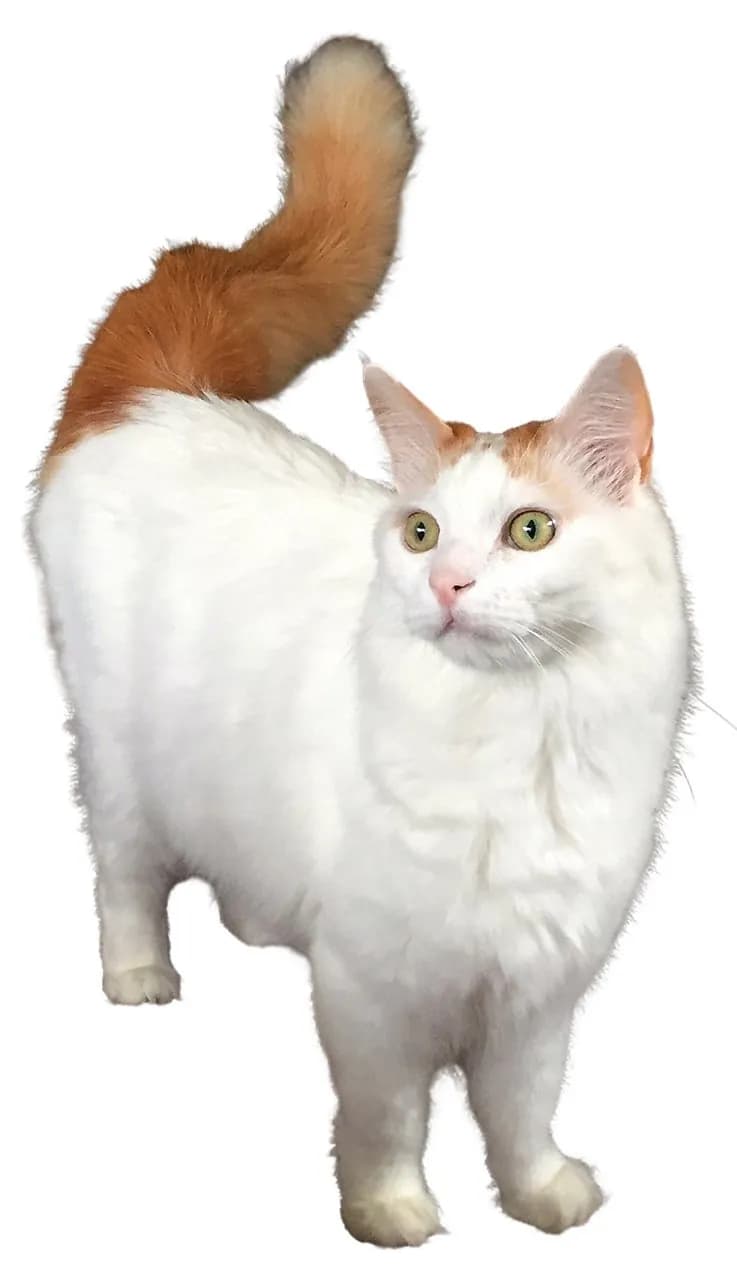
Van Turco
Cat of Lake Van. Famous for its fondness for water (it swims). "Van" pattern: coloured head and tail, white body.
Foto: Wikipedia Commons · CC BY-SA
Mizuu editorial teamupdated on October 14, 2026Not yet reviewed by a vet. Are you a vet? Review itReport an error
Ideal for
- Families with time to give affection
- Flats
- Those looking for a sociable cat
Reconsider if
- ×Homes where it would be left alone for many hours
Notify me when a Van Turco is up for adoption
We'll only email you when a verified rescue posts one available. No spam, unsubscribe in 1 click.
We'll only use your email for this alert. More info in our privacy policy.
Is the Van Turco a good match for you?
Indicative rating from 1 (low) to 5 (high).
Estimated cost of ownership
50-80 €/month
Food (large cat) 25-35 €, litter 12-16 €, prorated vet and vaccinations 12-20 €, parasite treatments 5-7 €, toys/climbing and a contingency fund 8-12 €.
History and origin
A natural breed from the Lake Van region in eastern Turkey, renowned for its bicolour 'van' pattern and its unusual attraction to water.
Temperament and character
Character typical of its breed. Sociable or reserved depending on the individual. Early neutering (4-6 months) is the best preventive measure.
Living together
Children: good with respectful ones. **Other cats:** sociable if raised together from a young age. **Dogs:** possible if calm.
Life stages of the Van Turco
Each stage has its own care priorities. Life expectancy: 13-17 años.
Kitten
0-6 months
Socialisation, vaccination and deworming; a large, slow-maturing breed with a fondness for water.
Junior
6 months-3 years
Prolonged growth, neutering, plenty of exercise and brushing of the semi-long coat without undercoat.
Adult
3-10 years
Cardiac check-up, weight control, enrichment and annual check-up.
Senior
11+ years
Six-monthly check-ups, cardiac and renal monitoring, joint and dental health.
Care
Brushing: according to coat (short = weekly · semi-long = 2-3 times · long = daily).
Litter tray: One litter tray per cat plus one extra (N+1 rule), in quiet spots away from food.
Feeding: quality wet + dry food.
Veterinarian: annual check-up + blood work from 7 years of age.
Care in detail
Nutrition
Quality food for a large and very active cat, with good protein content and wet food for hydration. Portions in line with its size and high energy expenditure.
Grooming
Its semi-long coat without a dense undercoat (cashmere-like) barely mats: brushing 1-2 times a week, more during moulting. It is water-resistant; baths are rarely needed. Check ears and nails.
Training
Intelligent, athletic and independent. It learns games and harness use with positive reinforcement, but it is active and not fond of being held for long. It needs socialisation and an outlet for its energy.
Exercise
Very high energy. A great jumper, climber and swimmer; it needs plenty of space, heights, intense play and daily stimulation. It is not an ideal cat for small flats without enrichment.
Breed-specific health
Health tests recommended for this breed: Echocardiography for hypertrophic cardiomyopathy (HCM); Hearing test (BAER) in white blue-eyed individuals (risk of deafness); General blood work and renal profile; Dermatological examination; Dental check-up. Life expectancy 13-17 years.
Health predispositions for this breed
Conditions this breed is more predisposed to. Knowing about them helps with prevention and early detection. A predisposition does not mean the animal will develop them.
Common diseases in cats
Learn the symptoms, prevention and when to see the vet. Reviewed indicative information that does not replace a veterinary consultation.
Screening and prevention for the Van Turco
Recommended tests and screenings
- Echocardiography for hypertrophic cardiomyopathy (HCM)
- Hearing test (BAER) in white blue-eyed individuals (risk of deafness)
- General blood work and renal profile
- Dermatological examination
- Dental check-up
Prevention
Early neutering, vaccination and deworming. A hearing test in white blue-eyed lines, dental hygiene, plenty of space and play for its high energy, and supervision because of its fondness for water.
Check-up schedule
Annual check-up with cardiac auscultation; renal blood work from 7 years of age. Cardiac screening and a deafness test recommended before breeding.
Warning signs
- !Lethargy or rapid breathing (heart)
- !Lack of response to sounds (possible deafness)
- !Increased thirst/urination (kidney)
- !Destructive behaviour from lack of space or stimulation
- !Inflamed gums or bad breath
Frequently asked questions about the Van Turco
How long does a Van Turco live?
▾
How much does a Van Turco weigh?
▾
Where does the Van Turco breed come from?
▾
How much exercise does a Van Turco need?
▾
Is the Van Turco good with children?
▾
Who is the Van Turco NOT recommended for?
▾
What health problems does the Van Turco have?
▾
Is it true that the Turkish Van likes water?
▾
Is it suitable for a small flat?
▾
Can it be deaf?
▾
Is it very affectionate and a lap cat?
▾
How much brushing does it need?
▾
Learn more about cats
Practical veterinary guides to support your Van Turco.
Sources and references
Content compiled from official breed standards and leading veterinary sources.
Do you have a Van Turco?
Add them to Mizuu and we will remind you what is due for their breed and age: Echocardiography for hypertrophic cardiomyopathy (HCM), check-ups and vaccines.
Add my Van TurcoFree. Create your account in a minute and come back here.
Want to adopt a van turco?
There are van turcos in rescue shelters looking for a family. Filter by breed in the catalogue.

