


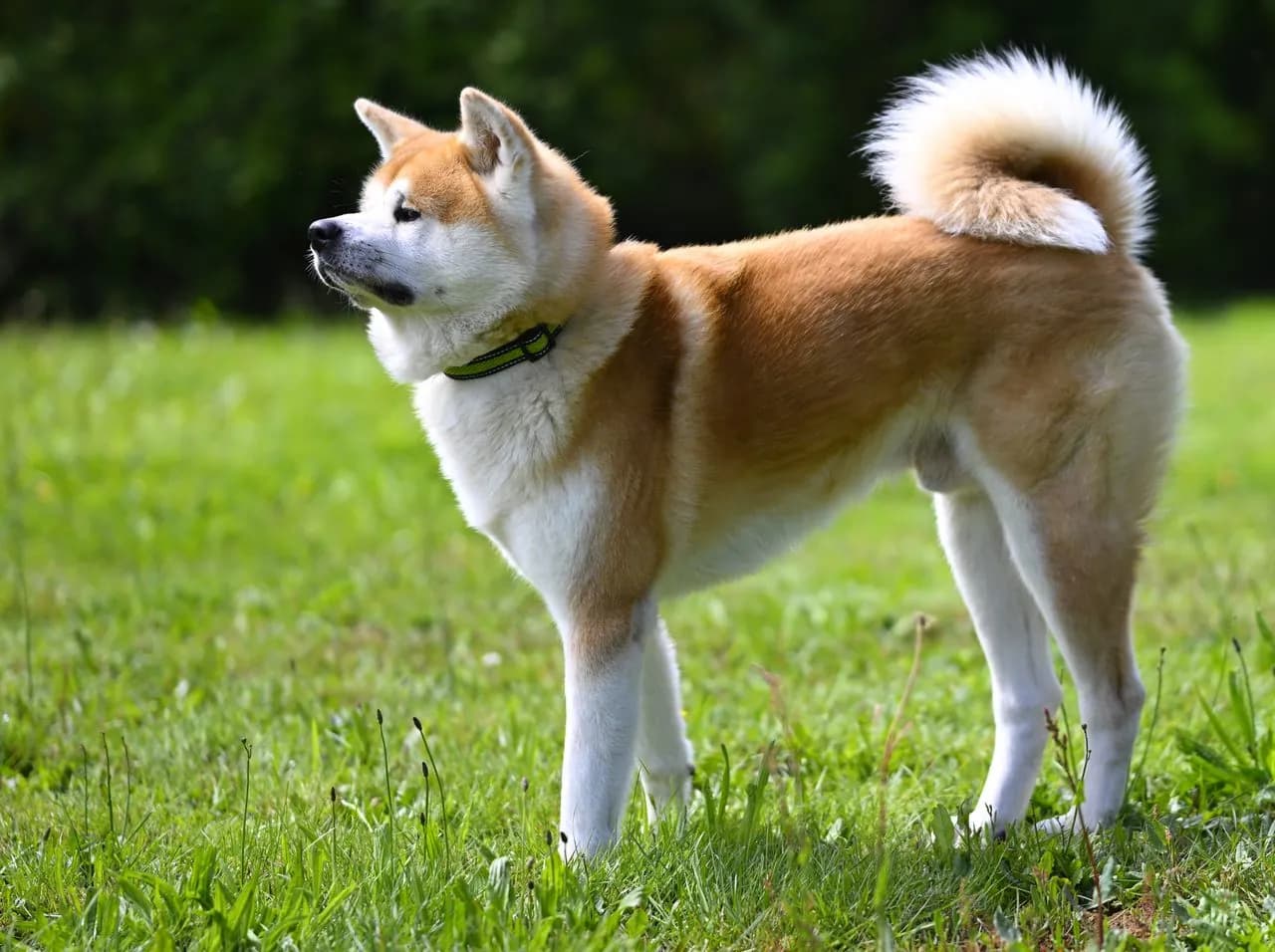
Akita Inu
Large, dignified and loyal Japanese spitz. Hachiko was of this breed. Independent character, a deep bond with a single owner. NOT for beginners: dominant with other dogs, reserved with strangers.
Foto: Wikipedia Commons · CC BY-SA
Mizuu editorial teamupdated on October 14, 2026Not yet reviewed by a vet. Are you a vet? Review itReport an error
Ideal for
- Experienced homes
- Families without other dogs
- Those who value deep loyalty
Reconsider if
- ×Beginners
- ×Homes with other dogs of the same sex
- ×Families with many visitors
Let me know when there are dogs for adoption
We only write when a verified shelter posts one. One email a day at most.
Is the Akita Inu a good match for you?
Indicative rating from 1 (low) to 5 (high).
Estimated cost of ownership
75-130 €/month
Food: 40-65 € · Preventive vet care: 20-40 € · Hygiene and accessories: 10-20 € · Insurance extras: 5-20 €
History and origin
Ancient Japanese breed, originally used for bear hunting in the Akita mountains. Almost extinct in the Second World War. Hachiko (1923-1935) made it internationally famous by waiting 9 years for his deceased owner.
Recognised by the FCI. In Spain it is subject in some cases to the potentially dangerous dog (PPP) regulations (see Law 50/1999 and regional legislation). Its historical selection for guarding demands early training and broad socialisation so that its character is channelled positively.
Temperament and character
Dignified, loyal, reserved. An intense bond with its family. Cat-like independence. High prey drive. Intelligent and stubborn. Needs daily mental stimulation — scent games, food-stuffed Kongs and short tricks channel its energy better than physical exercise alone. Responds best to positive reinforcement: physical punishment breeds fear, anxiety and reactivity — coercive methods are NOT recommended by veterinary behaviourists. Sensitive to its family's mood: it detects tension and catches it.
Living together
Children: with its own, respectful ones. Other dogs: reactive. Cats: prey.
Life stages of the Akita Inu
Each stage has its own care priorities. Life expectancy: 10-13 años.
Puppy
0-15 months
Intensive early socialisation and controlled growth.
Junior
15 months-2 years
Firm training, moult management and thyroid monitoring.
Adult
2-6 years
Monitoring of thyroid function, dysplasia and autoimmune/ocular disorders.
Senior
6+ years
Periodic joint, ophthalmological and metabolic follow-up.
Care
Exercise 1 h/day. Intensive brushing during the moults (twice a year). Firm and respectful training. Early socialisation is CRITICAL.
Feeding: quality food appropriate to its life stage (puppy/adult/senior) and size. Weight control: obesity is the leading preventable cause of joint problems.
Vet: annual check-up with preventive blood work from age 5; twice a year from 7 (large breeds age sooner).
Care in detail
Nutrition
Quality large-breed food in 2 meals, keeping an eye on weight. Some lines are sensitive to certain proteins: watch the skin and digestion.
Grooming
Sheds a great deal, with two explosive annual moults; near-daily brushing during the moult and 2-3 times a week the rest of the year. Needs no clipping.
Training
Dignified, independent and stubborn, almost feline. Not for beginners: it demands firm, respectful training, without coercion, and intense early socialisation given its reserved and dominant character.
Exercise
Around 1 hour of exercise daily. It is not hyperactive, but it needs its routine and mental stimulation; in high temperatures, avoid exertion because of its dense coat.
Breed-specific health
Dysplasia. Hypothyroidism. Retinal atrophy. Sebaceous adenitis. Life expectancy 10-13 years. If you go to a breeder, ask for the parents' health tests relevant to the breed. When adopting, ask the shelter for a vet report on the current state of health.
Health predispositions for this breed
Conditions this breed is more predisposed to. Knowing about them helps with prevention and early detection. A predisposition does not mean the animal will develop them.
Common diseases in dogs
Learn the symptoms, prevention and when to see the vet. Indicative information that does not replace a veterinary consultation.
Screening and prevention for the Akita Inu
Recommended tests and screenings
- Hip dysplasia radiography
- Thyroid profile (T4)
- Ophthalmological examination (progressive retinal atrophy)
- Dermatological assessment where sebaceous adenitis is suspected
Prevention
Balanced diet, intensive brushing during moults, periodic thyroid monitoring and early socialisation, which is critical given its reserved character.
Check-up schedule
Annual review with ophthalmological and thyroid monitoring.
Warning signs
- !Weight gain, lethargy and poor coat (hypothyroidism)
- !Loss of night vision (retinal atrophy)
- !Dandruff, crusting and hair loss (sebaceous adenitis)
- !Lameness or stiffness (dysplasia)
Frequently asked questions about the Akita Inu
How long does a Akita Inu live?
▾
How much does a Akita Inu weigh?
▾
Where does the Akita Inu breed come from?
▾
How much exercise does a Akita Inu need?
▾
Is the Akita Inu good with children?
▾
Who is the Akita Inu NOT recommended for?
▾
What health problems does the Akita Inu have?
▾
Is the Akita good with other dogs?
▾
Can it live with cats?
▾
Does it shed a lot?
▾
Is it a good breed for beginners?
▾
Is it a big barker?
▾
Related and similar breeds
Learn more about dogs
Practical veterinary guides to support your Akita Inu.
Sources and references
Content compiled from official breed standards and leading veterinary sources.
- WikipediaAkita Inu ↗
- AKCAkita ↗
- FCIFCI Nomenclature - Akita (no. 255) ↗
Do you have a Akita Inu?
Add them to Mizuu and we will remind you what is due for their breed and age: Hip dysplasia radiography, check-ups and vaccines.
Add my Akita InuFree. Create your account in a minute and come back here.
Want to adopt a akita inu?
There are akita inus in Spanish rescue shelters looking for a family. Filter by breed in the catalogue.

