


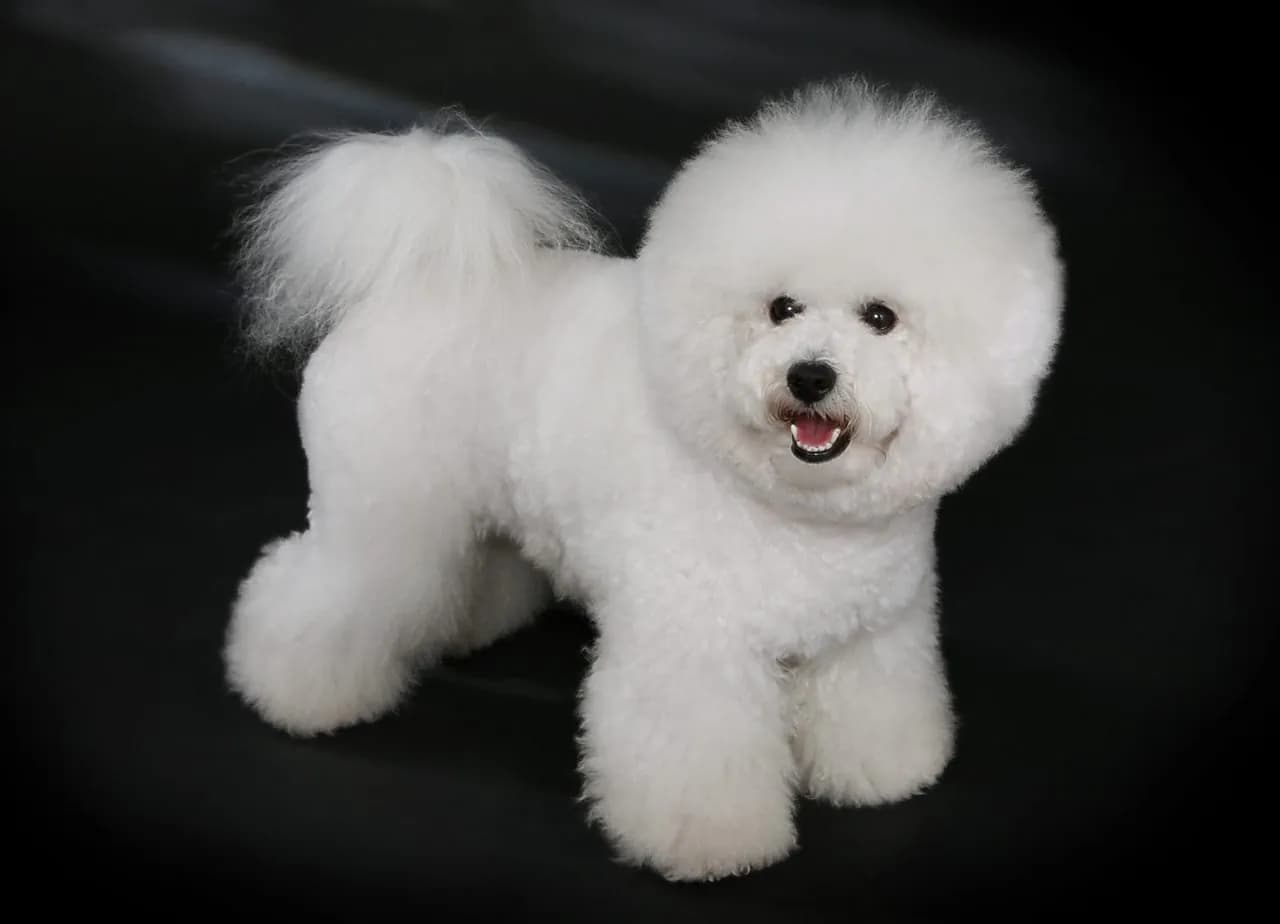
Bichón Frisé
A ball of white cotton wool. Cheerful, sociable character, "always happy". Hypoallergenic (does not shed). Excellent for families. Somewhat independent but very affectionate.
Foto: Wikipedia Commons · CC BY-SA
Mizuu editorial teamupdated on October 14, 2026Not yet reviewed by a vet. Are you a vet? Review itReport an error
Ideal for
- Families with children
- People allergic to hair
- Flats
Reconsider if
- ×Those who don't want a dog groomer
- ×Households with no company during the day
Let me know when there are dogs for adoption
We only write when a verified shelter posts one. One email a day at most.
Is the Bichón Frisé a good match for you?
Indicative rating from 1 (low) to 5 (high).
Estimated cost of ownership
70-120 €/month
Premium food for a small breed (15-25 €), pro-rated vaccinations and annual check-up (15-25 €), internal and external parasite control (10-15 €), optional liability/health insurance (10-20 €) and professional grooming every 6-8 weeks, which is the breed's distinctive expense (25-40 €/month pro-rated).
History and origin
Mediterranean, popularised by Canary Island sailors in the 13th-14th centuries. Passed through Italy, France and Spain as a dog of the nobility.
Recognised by the FCI within group 9 (companion dogs). Its small size makes flat living easy, but "small" is not a synonym for "needs no training": small dog syndrome (excessive barking, fearfulness, reactivity) is common when it is not given the same routine as a large dog.
Temperament and character
Cheerful, sociable, playful and very good-natured. Suffers from loneliness. Learns quickly. Good with everyone. Needs daily mental stimulation — scent games, food-stuffed Kongs and short trick sessions channel its energy better than physical exercise alone. Responds best to positive reinforcement: physical punishment generates fear, anxiety and reactivity — coercive methods are NOT recommended by veterinary behaviourists. Sensitive to its family's mood: it picks up on tension and is affected by it.
Living together
Children: excellent. Other dogs: sociable. Cats: good.
Life stages of the Bichón Frisé
Each stage has its own care priorities. Life expectancy: 12-15 años.
Puppy
0-10 months
Early socialisation, vaccination and a care routine for the white coat and tear ducts.
Junior
10 months-2 years
Training, early tartar control and monitoring for patellar luxation.
Adult
2-8 years
Routine dental hygiene, control of skin allergies and management of urinary stones.
Senior
8+ years
Ophthalmological check-ups (cataracts), renal and joint monitoring every six months.
Care
Brushing 3-4 times a week. Grooming every 6-8 weeks. Regular baths (white gets dirty). Eye cleaning. Moderate exercise.
Feeding: quality food suited to life stage (puppy/adult/senior) and size. Weight control: obesity is the leading preventable cause of joint problems.
Vet: annual check-up with preventive blood work from age 5; twice a year from 8.
Care in detail
Nutrition
Quality food for small breeds adapted to the life stage. Measured portions to avoid excess weight, which aggravates the kneecaps. Dental snacks are useful given its tendency to tartar.
Grooming
The most demanding upkeep of the breed: daily brushing to prevent matting of its curly coat, professional grooming every 6-8 weeks and regular baths (white gets dirty easily). Frequent cleaning of the tear ducts to prevent staining.
Training
Learns quickly and enjoys short positive trick sessions. It is advisable to prevent small dog syndrome and to work on time alone gradually from puppyhood to avoid separation anxiety.
Exercise
45-60 min a day in 2 sessions: calm walks combined with mental play (scent work, Kongs). It does not need intense exercise but does need daily stimulation.
Breed-specific health
Skin allergies. Patellar luxation. Cataracts. Retinal atrophy. Dental problems. Life expectancy 12-15 years. If you go to a breeder, ask for the parents' health tests relevant to the breed. When adopting, ask the shelter for a vet report on the current health status.
Health predispositions for this breed
Conditions this breed is more predisposed to. Knowing about them helps with prevention and early detection. A predisposition does not mean the animal will develop them.
Common diseases in dogs
Learn the symptoms, prevention and when to see the vet. Indicative information that does not replace a veterinary consultation.
Screening and prevention for the Bichón Frisé
Recommended tests and screenings
- Annual ophthalmological evaluation (cataracts, progressive retinal atrophy)
- Patellar luxation examination (OFA/patella grades)
- Periodic dental check-up (breed very prone to tartar and periodontal disease)
- Dermatological/skin allergy testing for recurrent itching
Prevention
Daily brushing to prevent matting, dental hygiene with frequent brushing, cleaning of the skin folds and tear ducts to prevent staining and infections, and weight control to avoid overloading the kneecaps.
Check-up schedule
Annual veterinary check-up with dental cleaning assessed; preventive blood work from 5-7 years of age and two visits a year from 8.
Warning signs
- !Lameness or an intermittent skip in a hind leg (patellar luxation)
- !Persistent scratching, licking or skin redness (allergies)
- !Cloudy eyes or stumbling at dusk (cataracts/retina)
- !Bad breath, tartar or difficulty eating (dental disease)
Bichón Frisé gallery

Frequently asked questions about the Bichón Frisé
How long does a Bichón Frisé live?
▾
How much does a Bichón Frisé weigh?
▾
Where does the Bichón Frisé breed come from?
▾
How much exercise does a Bichón Frisé need?
▾
Is the Bichón Frisé good with children?
▾
Who is the Bichón Frisé NOT recommended for?
▾
What health problems does the Bichón Frisé have?
▾
Is the Bichon Frise really hypoallergenic?
▾
How often does it need grooming?
▾
Can it be left alone for many hours?
▾
Is it a good breed for families with children?
▾
Why do its eyes get stained brown?
▾
Related and similar breeds
Learn more about dogs
Practical veterinary guides to support your Bichón Frisé.
Sources and references
Content compiled from official breed standards and leading veterinary sources.
Do you have a Bichón Frisé?
Add them to Mizuu and we will remind you what is due for their breed and age: Annual ophthalmological evaluation (cataracts, progressive retinal atrophy), check-ups and vaccines.
Add my Bichón FriséFree. Create your account in a minute and come back here.
Want to adopt a bichón frisé?
There are bichón frisés in Spanish rescue shelters looking for a family. Filter by breed in the catalogue.

