


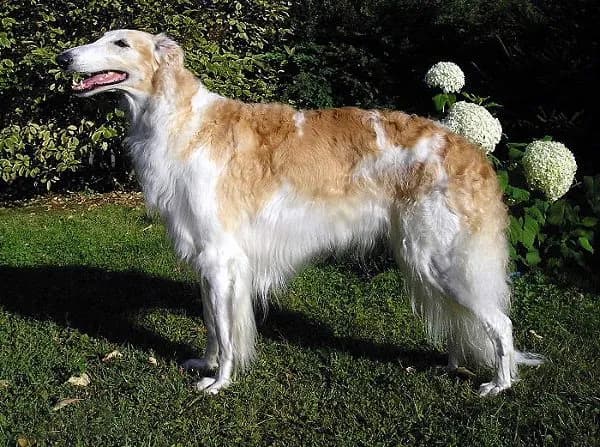
Borzoi (Galgo Ruso)
Aristocratic Russian sighthound. A wolf hunter on the steppes. Long silky coat. Dignified, silent character. Excellent in a flat (yes, surprisingly) if it is walked well every day.
Foto: Wikipedia Commons · CC BY-SA
Mizuu editorial teamupdated on October 14, 2026Not yet reviewed by a vet. Are you a vet? Review itReport an error
Ideal for
- Calm families
- Flats with daily walks + sprints
- Households without small animals
Reconsider if
- ×Households with rabbits/cats
- ×Extreme climates without a coat
Let me know when there are dogs for adoption
We only write when a verified shelter posts one. One email a day at most.
Is the Borzoi (Galgo Ruso) a good match for you?
Indicative rating from 1 (low) to 5 (high).
Estimated cost of ownership
70-110 €/month
Feeding 40-60 €, brushing/occasional grooming 8-15 €, antiparasitics 10-15 €, veterinary provision 18-30 €. Budget for a winter coat and bear in mind the extra cost of monitored anaesthesia.
History and origin
Recognised by the FCI. Originating from Russia. An aristocratic Russian sighthound.
Temperament and character
Calm at home but an athlete outdoors. Reserved with strangers. Very high prey drive. Affectionate and sensitive with its family.
Living together
Children: good with respectful ones. **Other dogs:** sociable with its own type. **Cats/rodents:** high prey drive, NO.
Life stages of the Borzoi (Galgo Ruso)
Each stage has its own care priorities. Life expectancy: 9-14 años.
Puppy
0-15 months
Controlled growth of the large sighthound; exercise in safe areas due to its strong chase instinct; socialisation.
Young
1.5-3 years
Controlled gallops; split meals and rest after eating (risk of torsion); anaesthetic caution.
Adult
3-7 years
Weight control, cardiac health and protection from the cold; general check-ups.
Senior
7+ years
Cardiological and oncological monitoring (osteosarcoma); joint support.
Care
Exercise: long walks + off-lead sprints in a safe area.
Brushing: brief, weekly.
Coat in winter: yes, little fur and little body fat.
Vet: annual check-up + watch for anaesthetic sensitivity.
Care in detail
Nutrition
Quality large-breed food split into several meals (bloat prevention). It is naturally slender: do not mistake its lean figure for being underweight.
Grooming
Long, silky coat that needs brushing 2-3 times a week to prevent knots in the feathering, ears and tail; seasonal moult.
Training
Independent, sensitive and dignified: no harsh methods. Positive reinforcement and patience. Its prey drive is extreme, so never off-lead outside a fenced area.
Exercise
Daily walks plus sprints in a safe, fenced area; calm and almost sedentary at home, but it needs to run at full gallop regularly.
Breed-specific health
Documented anaesthetic sensitivity. Mild heart conditions. Life expectancy 9-14 years.
Health predispositions for this breed
Conditions this breed is more predisposed to. Knowing about them helps with prevention and early detection. A predisposition does not mean the animal will develop them.
Common diseases in dogs
Learn the symptoms, prevention and when to see the vet. Indicative information that does not replace a veterinary consultation.
Screening and prevention for the Borzoi (Galgo Ruso)
Recommended tests and screenings
- Anaesthetic protocol for sighthounds (documented sensitivity to anaesthetics)
- Cardiological assessment/echocardiography (heart conditions, arrhythmias)
- Monitoring for gastric dilatation-volvulus (bloat)
- Orthopaedic assessment for lameness (risk of osteosarcoma in large breeds)
Prevention
Always flag the sighthound before any anaesthesia, split meals to prevent bloat and protect it from extreme cold due to its low body fat. Keep vaccination and deworming up to date.
Check-up schedule
Annual check-up with cardiac monitoring; two visits a year from the age of 7. Discuss the anaesthetic protocol before any surgery.
Warning signs
- !Swollen abdomen with unproductive retching (bloat: EMERGENCY)
- !Fainting, coughing or exercise intolerance (heart)
- !Persistent lameness or swelling in a limb
- !Exaggerated reactions or slow recovery after sedation/anaesthesia
Borzoi (Galgo Ruso) gallery

Frequently asked questions about the Borzoi (Galgo Ruso)
How long does a Borzoi (Galgo Ruso) live?
▾
How much does a Borzoi (Galgo Ruso) weigh?
▾
Where does the Borzoi (Galgo Ruso) breed come from?
▾
How much exercise does a Borzoi (Galgo Ruso) need?
▾
Is the Borzoi (Galgo Ruso) good with children?
▾
Who is the Borzoi (Galgo Ruso) NOT recommended for?
▾
What health problems does the Borzoi (Galgo Ruso) have?
▾
Can it live in a flat, being so large?
▾
Can it live with cats or rabbits?
▾
Why must you flag that it is a sighthound before anaesthesia?
▾
Does it get cold?
▾
Is it easy to train?
▾
Learn more about dogs
Practical veterinary guides to support your Borzoi (Galgo Ruso).
Sources and references
Content compiled from official breed standards and leading veterinary sources.
- WikipediaBorzoi ↗
- AKCBorzoi ↗
- FCIFCI Standard No. 193 ↗
Do you have a Borzoi (Galgo Ruso)?
Add them to Mizuu and we will remind you what is due for their breed and age: Anaesthetic protocol for sighthounds (documented sensitivity to anaesthetics), check-ups and vaccines.
Add my Borzoi (Galgo Ruso)Free. Create your account in a minute and come back here.
Want to adopt a borzoi (galgo ruso)?
There are borzoi (galgo ruso)s in Spanish rescue shelters looking for a family. Filter by breed in the catalogue.

