


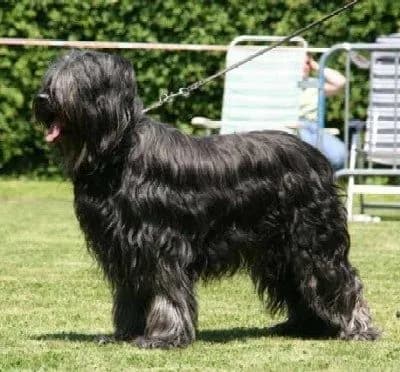
Briard (Pastor de Brie)
An ancient French herding dog. A long coat covers the eyes. Intelligent, loyal and watchful. Excellent with the children of its own family. Reserved with strangers. It was the dog of Charlemagne and Napoleon.
Foto: Wikipedia Commons · CC BY-SA
Mizuu editorial teamupdated on October 14, 2026Not yet reviewed by a vet. Are you a vet? Review itReport an error
Ideal for
- Very active families
- Homes with a garden
- Dog sports (agility, obedience)
Reconsider if
- ×Sedentary families
- ×Flats without daily exercise
- ×Homes where it is alone for many hours (it suffers)
Notify me when a Briard (Pastor de Brie) is up for adoption
We'll only email you when a verified rescue posts one available. No spam, unsubscribe in 1 click.
We'll only use your email for this alert. More info in our privacy policy.
Is the Briard (Pastor de Brie) a good match for you?
Indicative rating from 1 (low) to 5 (high).
Estimated cost of ownership
65-105 €/month
Food 38-58 €, brushing materials/occasional grooming 10-18 €, antiparasitics 10-15 €, veterinary fund 18-28 €. Brushing at home saves on professional grooming.
History and origin
Recognised by the FCI. Originating in France (Brie). An ancient French herding dog.
Temperament and character
Intelligent, hard-working and loyal to its family. Needs mental AND physical stimulation — boredom is the main cause of behavioural problems. Excellent with positive training.
Living together
Children: good with its own. **Other dogs:** sociable with socialisation. **Other animals:** with early socialisation.
Life stages of the Briard (Pastor de Brie)
Each stage has its own care priorities. Life expectancy: 10-12 años.
Puppy
0-15 months
Socialisation of this intelligent and protective herder; early eye screening (stationary night blindness/retinal atrophy).
Young
1.5-3 years
Plenty of exercise and mental work; firm training; brushing the long coat and split meals.
Adult
3-7 years
Weight control, joint health (hips) and thyroid blood work; ophthalmological monitoring.
Senior
7+ years
Eye examinations, joint support and periodic thyroid monitoring.
Care
Exercise: 90-120 min/day split up. Off-lead time in a secure area is essential.
Brushing: 2-3 times/week; daily during moulting.
Feeding: quality food suited to its physical work.
Vet: annual check-up plus blood work from age 5.
Care in detail
Nutrition
Quality food for a large, active breed, split into several meals (bloat prevention) and adjusted to its physical work, avoiding excess weight.
Grooming
A long, wavy coat that covers the eyes: brushing 2-3 times a week (more during moulting) to prevent matting, with attention to the eyes, beard and paws.
Training
Very intelligent, loyal and somewhat stubborn, with a protective instinct: it needs broad socialisation and positive reinforcement. Excellent in obedience and agility.
Exercise
90-120 min of daily exercise and mental work; an energetic herder that does not fit sedentary households.
Breed-specific health
Hip/elbow dysplasia. Progressive retinal atrophy (genetic test recommended). Life expectancy 10-12 years with proper care.
Health predispositions for this breed
Conditions this breed is more predisposed to. Knowing about them helps with prevention and early detection. A predisposition does not mean the animal will develop them.
Common diseases in dogs
Learn the symptoms, prevention and when to see the vet. Reviewed indicative information that does not replace a veterinary consultation.
Screening and prevention for the Briard (Pastor de Brie)
Recommended tests and screenings
- Genetic test for congenital stationary night blindness (CSNB) — characteristic of the breed
- Official hip radiograph (dysplasia)
- Blood work with thyroid profile (hypothyroidism)
- Monitoring for gastric dilatation-volvulus (bloat)
Prevention
Plenty of exercise and mental stimulation, split meals to prevent bloat, frequent brushing of the long coat and weight control. Keep vaccinations and deworming up to date.
Check-up schedule
Annual check-up with a periodic thyroid profile; blood work from age 5 and two visits a year from age 8.
Warning signs
- !Swollen abdomen with retching but no vomiting (bloat: EMERGENCY)
- !Bumping into things or insecurity in low light from puppyhood (CSNB)
- !Weight gain, dull coat or apathy (hypothyroidism)
- !Lameness or hip stiffness
Briard (Pastor de Brie) gallery

Frequently asked questions about the Briard (Pastor de Brie)
How long does a Briard (Pastor de Brie) live?
▾
How much does a Briard (Pastor de Brie) weigh?
▾
Where does the Briard (Pastor de Brie) breed come from?
▾
How much exercise does a Briard (Pastor de Brie) need?
▾
Is the Briard (Pastor de Brie) good with children?
▾
Who is the Briard (Pastor de Brie) NOT recommended for?
▾
What health problems does the Briard (Pastor de Brie) have?
▾
Can it see well with all that hair over its eyes?
▾
Is it a good guard dog?
▾
How much coat maintenance does it need?
▾
Does it adapt to living in a flat?
▾
Is it good with children?
▾
Learn more about dogs
Practical veterinary guides to support your Briard (Pastor de Brie).
Sources and references
Content compiled from official breed standards and leading veterinary sources.
- WikipediaBriard ↗
- AKCBriard ↗
- FCIFCI Standard No. 113 ↗
Do you have a Briard (Pastor de Brie)?
Add them to Mizuu and we will remind you what is due for their breed and age: Genetic test for congenital stationary night blindness (CSNB) — characteristic of the breed, check-ups and vaccines.
Add my Briard (Pastor de Brie)Free. Create your account in a minute and come back here.
Want to adopt a briard (pastor de brie)?
There are briard (pastor de brie)s in rescue shelters looking for a family. Filter by breed in the catalogue.

