


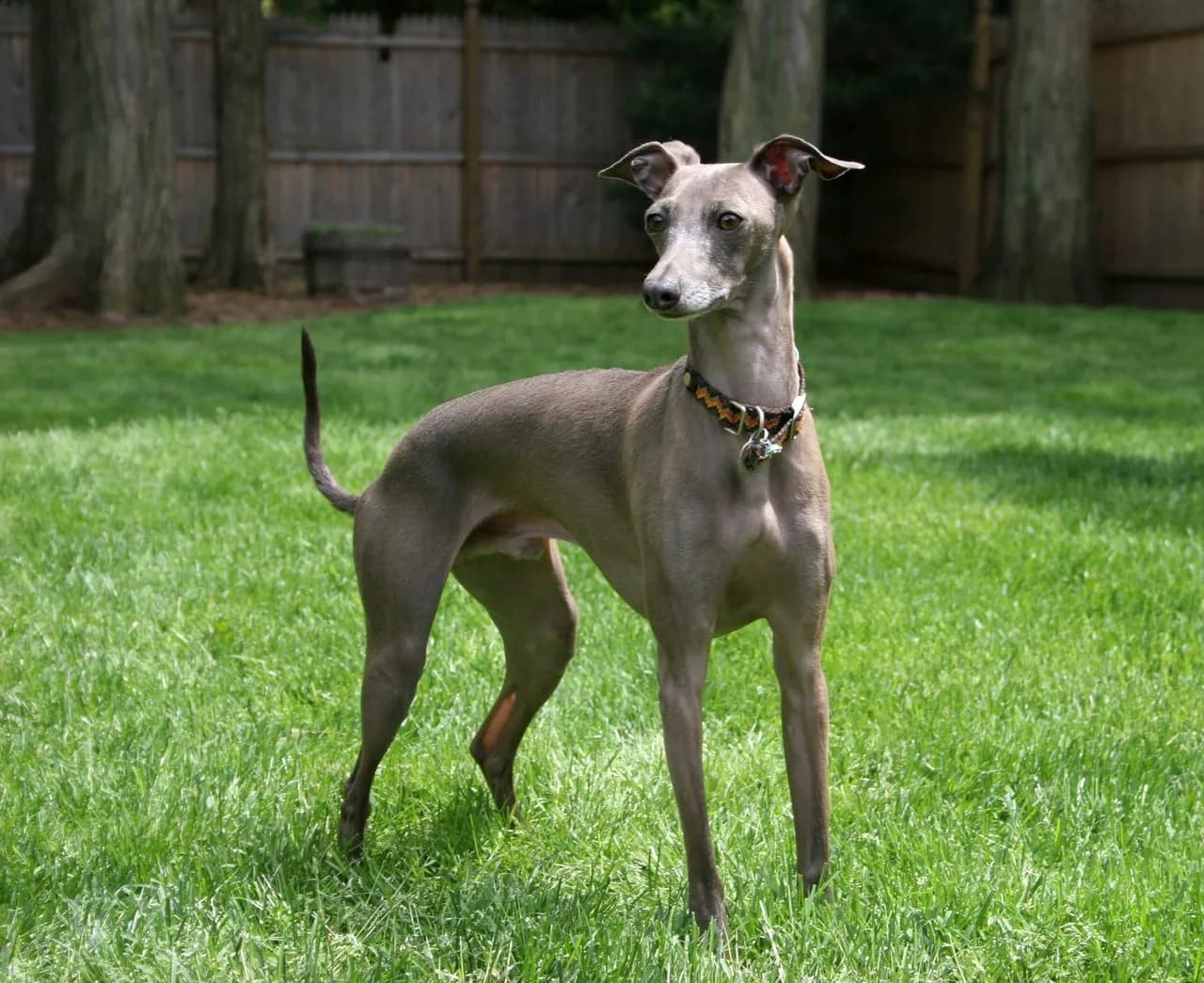
Galgo Italiano (Piccolo Levriero Italiano)
A miniature greyhound. Elegant, delicate, affectionate. More of a homebody than it looks (a sprint athlete + sofa lover). Sensitive to the cold. Feels the chill easily.
Foto: Wikipedia Commons · CC BY-SA
Mizuu editorial teamupdated on October 14, 2026Not yet reviewed by a vet. Are you a vet? Review itReport an error
Ideal for
- Calm families
- Flats
- Anyone looking for an elegant, delicate dog
Reconsider if
- ×Very young children (fragile)
- ×Cold climates without a coat
- ×Homes with boisterous animals
Let me know when there are dogs for adoption
We only write when a verified shelter posts one. One email a day at most.
Is the Galgo Italiano (Piccolo Levriero Italiano) a good match for you?
Indicative rating from 1 (low) to 5 (high).
Estimated cost of ownership
35-60 €/month
Food for a small breed (12-20 €), veterinary care and, above all, dental health (15-30 €), coats and accessories for the cold (5-15 €), insurance and parasite control (5-12 €). The dental bill is usually the breed's highest recurring expense.
History and origin
An ancient Mediterranean breed, the lapdog of the Italian Renaissance nobility. Seen in many paintings of the era.
In Spain the situation of hunting greyhounds abandoned at the end of the season is well known and prompted regional protection laws. Adopting a greyhound from a rescue reduces this tragedy. An endurance athlete in pure speed: short sprints, long rest at home.
Temperament and character
Sensitive, affectionate, shy with strangers. Attached to its family. Calm at home, a short sprinter outdoors. It needs daily mental stimulation — scent games, food-stuffed Kongs and short trick sessions channel its energy better than physical exercise alone. It responds best to positive reinforcement: physical punishment creates fear, anxiety and reactivity — coercive methods are NOT recommended by veterinary behaviourists. Sensitive to its family's mood: it detects tension and picks up on it.
Living together
Children: with older, careful ones. Other dogs: with those its own size. Cats: with socialisation.
Life stages of the Galgo Italiano (Piccolo Levriero Italiano)
Each stage has its own care priorities. Life expectancy: 12-15 años.
Puppy
0-1 year
Extreme caution with falls and jumps (fine, very fragile bones); dental hygiene from the start.
Young
1-2 years
Controlled exercise on safe surfaces; intensive dental care; patella monitoring; eye examination.
Adult
2-9 years
Regular dental cleanings (early periodontal disease); protection from the cold; retinal review.
Senior
9+ years
Dental, ocular and joint monitoring; weight management and a coat in cold climates.
Care
Exercise 30-45 min/day + off-lead sprints. Coats in winter YES. Short coat, easy to care for. Dental care is critical (small mouth).
Diet: quality food suited to its life stage (puppy/adult/senior) and size. Weight control: obesity is the leading preventable cause of joint problems.
Veterinary care: annual check-up with preventive blood work from age 5; twice a year from 8.
Care in detail
Nutrition
Quality food for small breeds, in 2 meals. Avoid an exclusively soft diet: it promotes tartar. Control weight precisely; it is a very light dog and any excess shows.
Grooming
Short, fine, close-lying coat, with barely any shedding or odour: minimal care, a cloth or grooming glove once a week. The priority is dental hygiene (brushing several times a week) and keeping it warm in winter.
Training
Sensitive and somewhat shy: early socialisation and gentle positive reinforcement; a harsh tone frightens it. House-training a puppy can be difficult (too cold-sensitive to go outside). It enjoys learning tricks if the environment is relaxed.
Exercise
A study in contrasts: intense running sprints and long hours on the sofa. 30-45 minutes of daily walking plus the occasional run in a safe, fenced area. Avoid exercise in the cold or on hard ground that could injure its fine legs.
Breed-specific health
Patellar luxation. Severe dental problems. Epilepsy. Retinal atrophy. Bone fractures (fragile). Lifespan 12-15 years. Life expectancy 12-15 years with proper care. If you go to a breeder, ask for the parents' health tests relevant to the breed. When adopting, ask the rescue for a vet report on the current state of health.
Health predispositions for this breed
Conditions this breed is more predisposed to. Knowing about them helps with prevention and early detection. A predisposition does not mean the animal will develop them.
Common diseases in dogs
Learn the symptoms, prevention and when to see the vet. Indicative information that does not replace a veterinary consultation.
Screening and prevention for the Galgo Italiano (Piccolo Levriero Italiano)
Recommended tests and screenings
- Ophthalmological assessment (progressive retinal atrophy, vitreoretinopathy)
- Patellar luxation examination (kneecap)
- Thorough dental check (severe periodontal disease is very common)
- Epilepsy screening in the event of seizures
- Orthopaedic assessment (fine bones, high fracture risk)
Prevention
Watch the teeth from a young age with brushing and professional hygiene: the breed suffers severe, early periodontitis. Protect it from the cold with a coat (it has hardly any fat or coat) and avoid jumps from a height because of its bone fragility. Inform the vet of its sighthound status before any anaesthesia.
Check-up schedule
Annual check-up with a dental and ophthalmological review; frequent dental cleanings as advised. Orthopaedic monitoring in puppies and young dogs. Preventive bloodwork from age 7.
Warning signs
- !Strong bad breath, tartar, inflamed gums or tooth loss
- !Sudden lameness after a jump or fall (fracture)
- !Seizures or absence episodes (epilepsy)
- !Stumbling or bumping into things in low light (retinal atrophy)
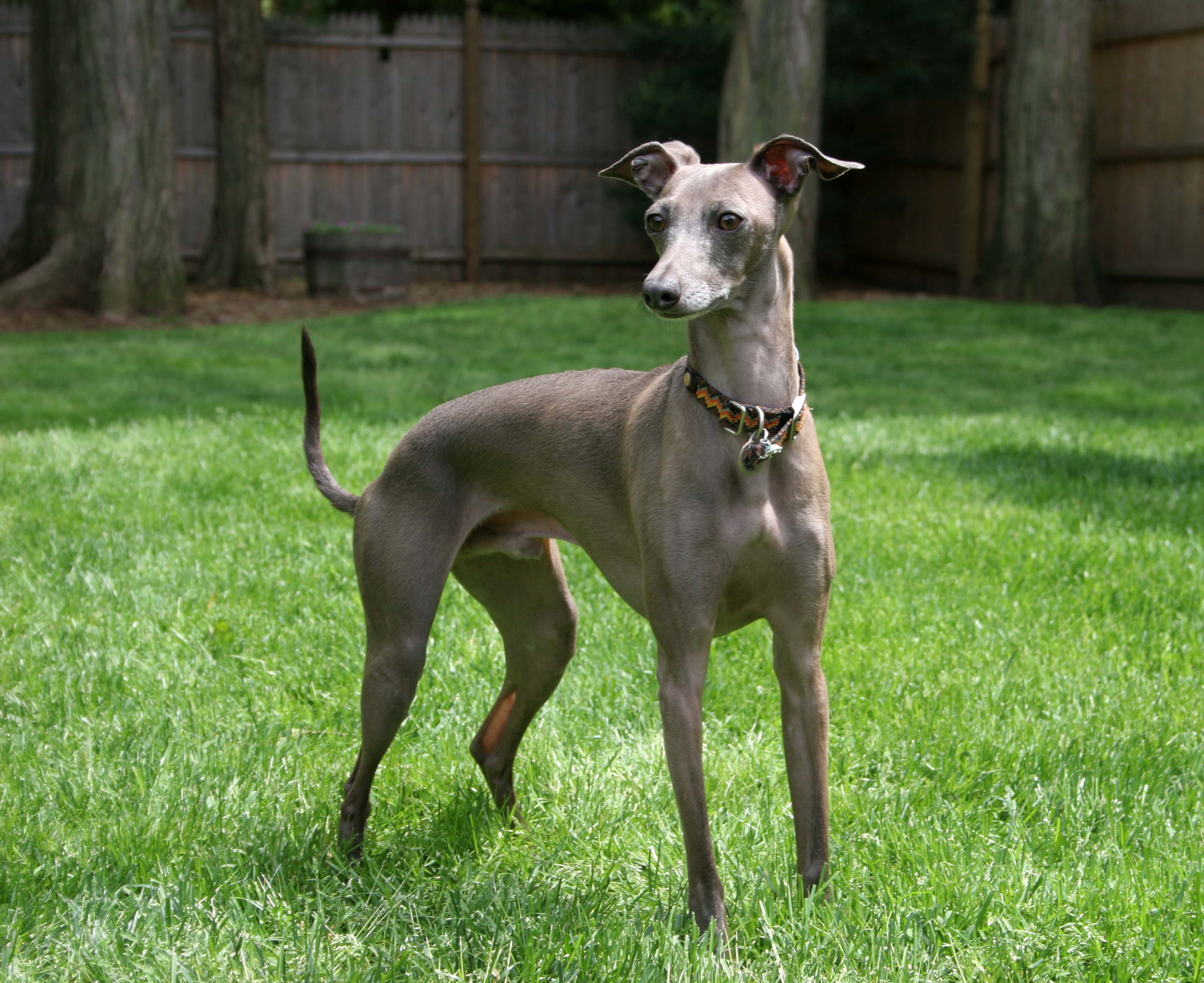
Galgo Italiano (Piccolo Levriero Italiano) gallery
Frequently asked questions about the Galgo Italiano (Piccolo Levriero Italiano)
How long does a Galgo Italiano (Piccolo Levriero Italiano) live?
▾
How much does a Galgo Italiano (Piccolo Levriero Italiano) weigh?
▾
Where does the Galgo Italiano (Piccolo Levriero Italiano) breed come from?
▾
How much exercise does a Galgo Italiano (Piccolo Levriero Italiano) need?
▾
Is the Galgo Italiano (Piccolo Levriero Italiano) good with children?
▾
Who is the Galgo Italiano (Piccolo Levriero Italiano) NOT recommended for?
▾
What health problems does the Galgo Italiano (Piccolo Levriero Italiano) have?
▾
Why does it feel the cold so much?
▾
Is it as fragile as it looks?
▾
Does it need a lot of exercise?
▾
Why is there so much emphasis on its teeth?
▾
Is it good for flats and first-time owners?
▾
Related and similar breeds
Learn more about dogs
Practical veterinary guides to support your Galgo Italiano (Piccolo Levriero Italiano).
Sources and references
Content compiled from official breed standards and leading veterinary sources.
Do you have a Galgo Italiano (Piccolo Levriero Italiano)?
Add them to Mizuu and we will remind you what is due for their breed and age: Ophthalmological assessment (progressive retinal atrophy, vitreoretinopathy), check-ups and vaccines.
Add my Galgo Italiano (Piccolo Levriero Italiano)Free. Create your account in a minute and come back here.
Want to adopt a galgo italiano (piccolo levriero italiano)?
There are galgo italiano (piccolo levriero italiano)s in Spanish rescue shelters looking for a family. Filter by breed in the catalogue.

