


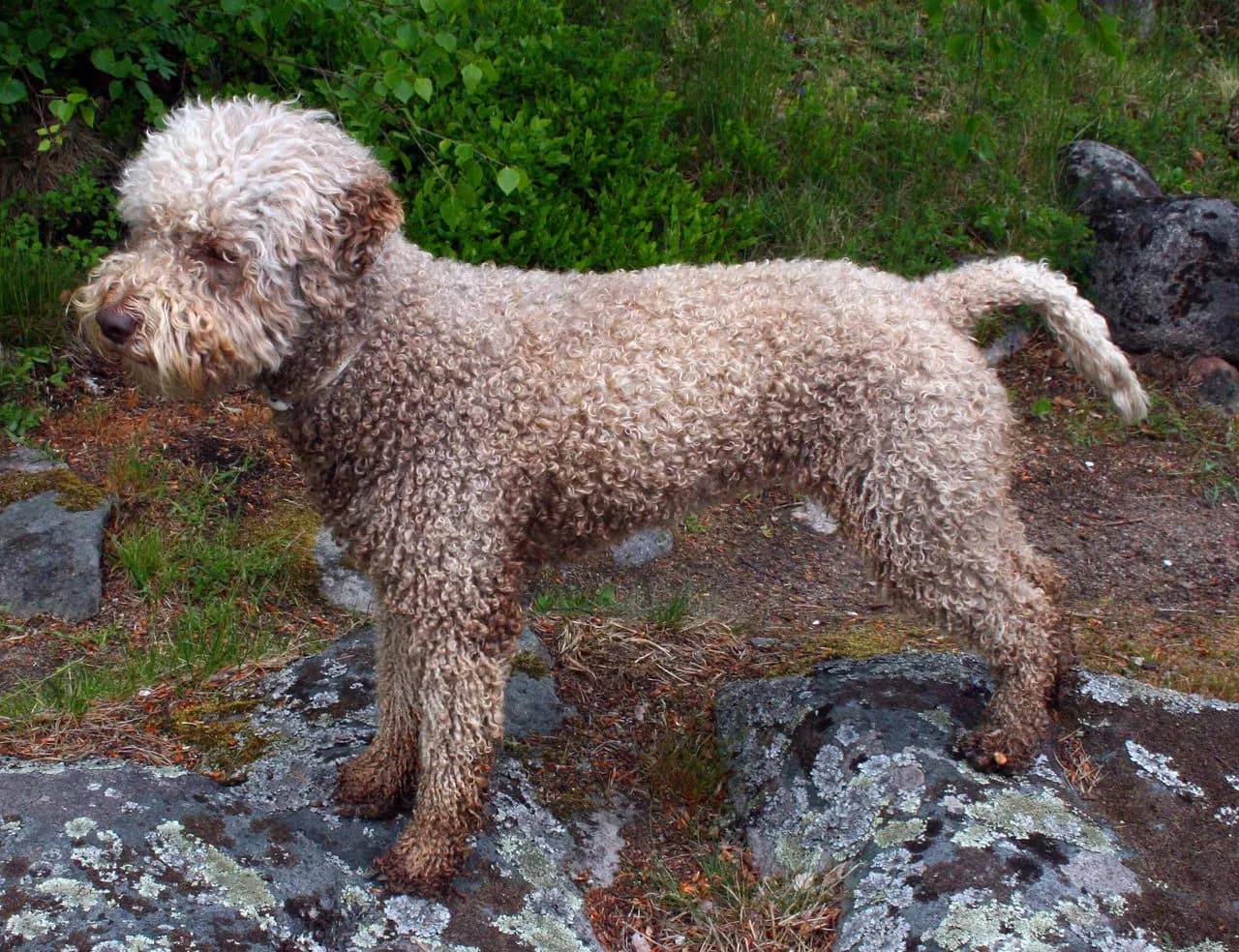
Lagotto Romagnolo
The only officially recognised truffle-hunting dog. Dense curly coat. Cheerful, hard-working, intelligent character. Hypoallergenic. Excellent with children. Long-lived. Growing more popular every year thanks to its extraordinary sense of smell.
Foto: Wikipedia Commons · CC BY-SA
Mizuu editorial teamupdated on October 14, 2026Not yet reviewed by a vet. Are you a vet? Review itReport an error
Ideal for
- Active families with access to water
- Those looking for an intelligent dog
Reconsider if
- ×Those unwilling to devote time to the curly coat
Let me know when there are dogs for adoption
We only write when a verified shelter posts one. One email a day at most.
Is the Lagotto Romagnolo a good match for you?
Indicative rating from 1 (low) to 5 (high).
Estimated cost of ownership
55-90 €/month
Good-quality food (25-40 €), vet and preventive care (15-30 €), grooming/clipping every 6-8 weeks (15-30 €), insurance and accessories (5-15 €). The periodic clipping of the curly coat is the characteristic expense.
History and origin
Recognised by the FCI. Originating in Italy (Romagna). The only officially recognised truffle-hunting dog.
Temperament and character
Intelligent, cheerful, hard-working. Forms a deep bond with the family. Hypoallergenic (curly hair rather than a shedding coat). Learns quickly.
Living together
Children: depends on the individual. **Other dogs:** depends on socialisation. **Cats:** with socialisation.
Life stages of the Lagotto Romagnolo
Each stage has its own care priorities. Life expectancy: 14-17 años.
Puppy
0-12 months
Socialisation and scent stimulation (truffle dog); watch for the characteristic benign juvenile epilepsy.
Young
1-3 years
Exercise and search work; curly-coat maintenance and ear cleaning.
Adult
3-9 years
Weight control, joint health and ophthalmological examination (retinal atrophy).
Senior
9+ years
Neurological and eye check-ups; joint support and maintenance of cognitive activity.
Care
Exercise: 90 min/day + mental stimulation.
Coat: do NOT brush; clip the whole coat 1-2 times/year or a groom every 8 weeks.
Feeding: good-quality standard diet.
Vet: annual check-up.
Care in detail
Nutrition
Good-quality food matched to its medium-high activity level, in 2 meals. Watch the portion size: excess weight goes unnoticed under the curly coat. Deduct training treats from the daily ration.
Grooming
A curly, woolly coat that sheds very little (suitable for many allergy sufferers): it isn't brushed like straight hair but clipped every 1-2 months to keep the curl healthy and prevent matting. Dry the ears and skin well after it gets wet; this is a water dog.
Training
One of the most intelligent and hard-working breeds: it learns extremely fast with positive reinforcement and enjoys scent work (truffle searching, nosework). It needs a mental "job"; when bored it digs and barks. Excellent for canine sports.
Exercise
High: 1-1.5 hours daily combining physical exercise and, above all, scent and mental work. It loves water. Puppy: moderate exercise with no jumping. Senior: keep up the scent searching even as the pace slows.
Breed-specific health
Hip dysplasia. Retinal atrophy. Hypothyroidism. Life expectancy 14-17 years.
Health predispositions for this breed
Conditions this breed is more predisposed to. Knowing about them helps with prevention and early detection. A predisposition does not mean the animal will develop them.
Common diseases in dogs
Learn the symptoms, prevention and when to see the vet. Indicative information that does not replace a veterinary consultation.
Screening and prevention for the Lagotto Romagnolo
Recommended tests and screenings
- BFJE genetic DNA test (benign familial juvenile epilepsy)
- LSD genetic DNA test (lysosomal storage disease)
- Official hip dysplasia radiograph
- Ophthalmological evaluation (progressive retinal atrophy)
- Thyroid screening (hypothyroidism)
Prevention
Buy from breeders whose parent dogs have been tested for BFJE, LSD, hips and eyes: these are inherited disorders with a DNA test available. Its curly coat traps moisture and dirt: check the ears and skin after working in the field. Make the most of its extraordinary sense of smell with scent-search games.
Check-up schedule
Annual check-up with eye and joint examination; hip radiograph at one year. Blood work with thyroid screening from 5-6 years of age. Watch for seizures in puppies (BFJE, which usually resolves).
Warning signs
- !Seizures or absence episodes, especially in puppies (juvenile epilepsy)
- !Tremors, incoordination or developmental delay (lysosomal disease)
- !Weight gain, lethargy or hair loss (hypothyroidism)
- !Stumbling or bumping into things in low light (retinal atrophy)
Lagotto Romagnolo gallery

Frequently asked questions about the Lagotto Romagnolo
How long does a Lagotto Romagnolo live?
▾
How much does a Lagotto Romagnolo weigh?
▾
Where does the Lagotto Romagnolo breed come from?
▾
How much exercise does a Lagotto Romagnolo need?
▾
Is the Lagotto Romagnolo good with children?
▾
Who is the Lagotto Romagnolo NOT recommended for?
▾
What health problems does the Lagotto Romagnolo have?
▾
Is it true that it hunts truffles?
▾
Is it hypoallergenic?
▾
How do you care for its curly coat?
▾
Does it need a lot of mental exercise?
▾
Is it good for families?
▾
Learn more about dogs
Practical veterinary guides to support your Lagotto Romagnolo.
Sources and references
Content compiled from official breed standards and leading veterinary sources.
- WikipediaLagotto Romagnolo ↗
- AKCLagotto Romagnolo ↗
- FCIFCI Standard No. 298 ↗
Do you have a Lagotto Romagnolo?
Add them to Mizuu and we will remind you what is due for their breed and age: BFJE genetic DNA test (benign familial juvenile epilepsy), check-ups and vaccines.
Add my Lagotto RomagnoloFree. Create your account in a minute and come back here.
Want to adopt a lagotto romagnolo?
There are lagotto romagnolos in Spanish rescue shelters looking for a family. Filter by breed in the catalogue.

