


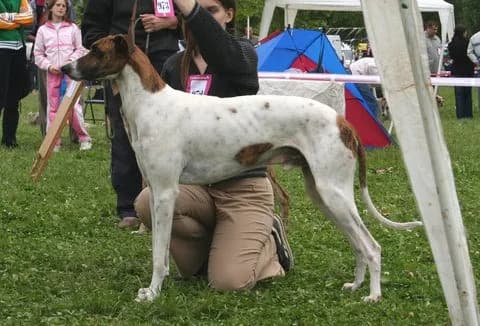
Galgo Húngaro (Magyar Agár)
The Hungarian greyhound. Extraordinary stamina — historically it accompanied riders for whole days at a time. Robust and healthy.
Foto: Wikipedia Commons · CC BY-SA
Mizuu editorial teamupdated on October 14, 2026Not yet reviewed by a vet. Are you a vet? Review itReport an error
Ideal for
- Calm families
- Flats with daily walks + sprints
Reconsider if
- ×Households with rabbits/cats
- ×Extreme climates without a coat
Notify me when a Galgo Húngaro (Magyar Agár) is up for adoption
We'll only email you when a verified rescue posts one available. No spam, unsubscribe in 1 click.
We'll only use your email for this alert. More info in our privacy policy.
Is the Galgo Húngaro (Magyar Agár) a good match for you?
Indicative rating from 1 (low) to 5 (high).
Estimated cost of ownership
50-85 €/month
Food for a large dog (28-48 €), vet and prevention (15-30 €), insurance and large-breed antiparasitics (8-18 €), sighthound accessories (a wide collar, a coat) (5-12 €). A rustic, healthy breed, with few extraordinary expenses apart from emergencies.
History and origin
Recognised by the FCI. Originating in Hungary. The Hungarian greyhound.
Temperament and character
Intelligent, loyal, well-balanced when well socialised and trained. Needs daily mental stimulation. Responds best to positive reinforcement. Physical punishment breeds fear and reactivity.
Living together
Children: good with respectful ones. **Other dogs:** sociable with its own type. **Cats/rabbits:** high prey drive, NO.
Life stages of the Galgo Húngaro (Magyar Agár)
Each stage has its own care priorities. Life expectancy: 12-14 años.
Puppy
0-15 months
Socialisation; controlled exercise during the growth of this hardy sighthound.
Young adult
1-4 years
Free galloping and endurance trotting; channelling its stamina; protection from the cold owing to its short coat.
Adult
4-9 years
Digestive monitoring (gastric dilatation) with split meals; general reviews.
Senior
9+ years
Cardiac and joint check-ups; senior diet and a padded bed.
Care
Exercise: long walks + off-lead sprints.
Brushing: a quick weekly brush.
**A coat in winter.
Veterinarian: documented anaesthetic sensitivity — always inform them.
Care in detail
Nutrition
A quality food for a large, active dog, in 2 meals, avoiding exertion around mealtimes. Adjust the ration to its lean musculature: it is an endurance athlete that should never look obese.
Grooming
A short, dense, hard-wearing coat of minimal upkeep: a weekly brush with a grooming mitt. Moderate shedding. The occasional bath. Check paw pads and ears after running in the field.
Training
Balanced, loyal and somewhat independent, with a hunting instinct: early socialisation and positive training with patience. More tractable than other sighthounds, but recall is difficult when it is in pursuit. Work in secure areas.
Exercise
High: it is a great-endurance greyhound that needs to gallop and, above all, to trot long distances. 1-1.5 hours a day of walking and running in a safe area. Calm at home once it has burned off its energy.
Breed-specific health
Conditions common to the breed according to its FCI group. Life expectancy 12-14 years with proper care. Annual vet review + blood work from the age of 5.
Health predispositions for this breed
Conditions this breed is more predisposed to. Knowing about them helps with prevention and early detection. A predisposition does not mean the animal will develop them.
Common diseases in dogs
Learn the symptoms, prevention and when to see the vet. Reviewed indicative information that does not replace a veterinary consultation.
Screening and prevention for the Galgo Húngaro (Magyar Agár)
Recommended tests and screenings
- Cardiac auscultation and echocardiography (sighthound heart conditions)
- Monitoring for gastric torsion (deep chest)
- Hip radiography in breeding stock
- Ophthalmological evaluation
- Sighthound-specific anaesthetic protocol
Prevention
It is a rustic and fairly healthy breed, but like every sighthound it requires anaesthetic caution: warn the vet. Because of its deep chest, avoid exercise around mealtimes (risk of torsion). It needs to run to stay balanced and socialisation to manage its hunting instinct.
Check-up schedule
Annual check-up with cardiac auscultation; hip radiography in breeding stock. Preventive blood work from the age of 5-6 with sighthound reference values. Cardiac monitoring in seniors.
Warning signs
- !Swollen abdomen and unproductive retching (gastric torsion — EMERGENCY)
- !Fatigue, coughing or fainting on exertion (heart disease)
- !Lameness or joint stiffness
- !Slow or abnormal recovery from anaesthesia
Frequently asked questions about the Galgo Húngaro (Magyar Agár)
How long does a Galgo Húngaro (Magyar Agár) live?
▾
How much does a Galgo Húngaro (Magyar Agár) weigh?
▾
Where does the Galgo Húngaro (Magyar Agár) breed come from?
▾
How much exercise does a Galgo Húngaro (Magyar Agár) need?
▾
Is the Galgo Húngaro (Magyar Agár) good with children?
▾
Who is the Galgo Húngaro (Magyar Agár) NOT recommended for?
▾
What health problems does the Galgo Húngaro (Magyar Agár) have?
▾
How does it differ from other greyhounds?
▾
Can it live with cats?
▾
How much exercise does it need?
▾
Does it need special care with anaesthesia?
▾
Is it a good breed for families?
▾
Learn more about dogs
Practical veterinary guides to support your Galgo Húngaro (Magyar Agár).
Sources and references
Content compiled from official breed standards and leading veterinary sources.
Do you have a Galgo Húngaro (Magyar Agár)?
Add them to Mizuu and we will remind you what is due for their breed and age: Cardiac auscultation and echocardiography (sighthound heart conditions), check-ups and vaccines.
Add my Galgo Húngaro (Magyar Agár)Free. Create your account in a minute and come back here.
Want to adopt a galgo húngaro (magyar agár)?
There are galgo húngaro (magyar agár)s in rescue shelters looking for a family. Filter by breed in the catalogue.

