

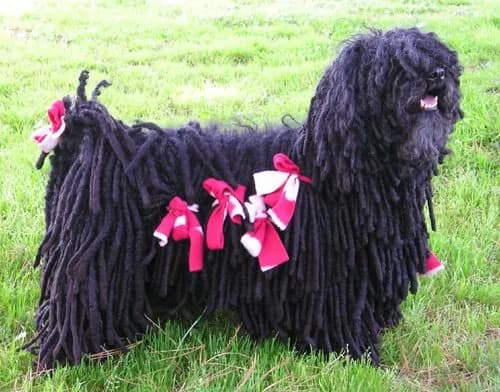
Puli
Hungarian herding dog with unique dreadlocks (a mini Komondor). Intelligent and hard-working. The cords form naturally from 8-10 months of age.
Foto: Wikipedia Commons · CC BY-SA
Ideal for
- ✓Very active families
- ✓Homes with a garden
- ✓Canine sports
Reconsider if
- ×Sedentary families
- ×Homes where it is left alone for many hours
Notify me when a Puli is up for adoption
We'll only email you when a verified rescue posts one available. No spam, unsubscribe in 1 click.
We'll only use your email for this alert. More info in our privacy policy.
Is the Puli a good match for you?
Indicative rating from 1 (low) to 5 (high).
💶 Estimated cost of ownership
55-95 €/month
Food for active medium-sized breeds 30-50 €; maintenance of the cords and specialist grooming 10-20 €; parasite prevention 10-18 €; pro-rated vaccinations and check-ups 15-25 €.
History and origin
Recognised by the FCI. Originating from Hungary. A Hungarian herding dog with unique dreadlocks (a mini Komondor).
Temperament and character
Intelligent, loyal and well-balanced when properly socialised and trained. Needs daily mental stimulation. Responds best to positive reinforcement. Physical punishment creates fear and reactivity.
Living together
Children: good with its own family. **Other dogs:** sociable with socialisation. **Cats:** with early socialisation.
Life stages of the Puli
Each stage has its own care priorities. Life expectancy: 12-16 años.
Puppy
0-15 months
Early socialisation; beginning care of the characteristic corded coat and mental stimulation.
Young adult
1-3 years
Plenty of physical and mental exercise; formation of the coat's cords; canine sports.
Adult
3-9 years
Maintenance of the coat and physical condition; hip and eye examinations.
Senior
9+ years
Adapted exercise, joint and ophthalmological check-ups; senior diet.
Care
Exercise: 90-120 min/day in several sessions. Off-lead running in a safe area is essential.
Brushing: 2-3 times/week; daily during shedding.
Feeding: quality food matched to its physical workload.
Vet: annual check-up + blood work from 5 years of age.
Care in detail
🍽️ Nutrition
Quality food for active medium-sized breeds, adjusted to its physical workload. Control its weight to avoid overloading the joints.
✂️ Grooming
A very distinctive coat: the cords form naturally from 8-10 months of age and need to be separated by hand and dried thoroughly after bathing. It is not brushed and barely sheds.
🎓 Training
Intelligent and hard-working; learns quickly with positive training and enjoys agility. Needs early socialisation and an owner who keeps it occupied.
🏃 Exercise
High: 90-120 minutes daily in several sessions, with off-lead time in a safe area and mental stimulation. It is a herding dog built to move.
Breed-specific health
Common conditions in the breed according to its FCI group. Life expectancy of 12-16 years with appropriate care. Annual vet check-up + blood work from 5 years of age.
🩺 Health predispositions of this breed
Conditions this breed is more predisposed to. Knowing about them helps with prevention and early detection. A predisposition does not mean the animal will develop them.
Common diseases in dogs
Learn the symptoms, prevention and when to see the vet. Reviewed indicative information that does not replace a veterinary consultation.
Screening and prevention for the Puli
Recommended tests and screenings
- ✓Hip dysplasia radiograph
- ✓Ophthalmological examination (retinal atrophy and cataracts)
- ✓Genetic eye test in breeding stock
- ✓Complete blood count and biochemistry
- ✓Joint assessment
Prevention
Daily work and exercise to suit its active herding nature; expert care of the cords to prevent moisture and skin infections; weight control and regular eye examinations.
Check-up schedule
Annual check-up with an eye examination; preventive blood work from 5 years of age.
Warning signs
- !Lameness or stiffness after exercise
- !Stumbling in low light or clouding of the eye (retina or cataracts)
- !Bad smell, moisture or itching in the cords (skin infection)
- !Destructive behaviour or anxiety from boredom
- !Lethargy or changes in appetite
Frequently asked questions about the Puli
How long does a Puli live?
▾
How much does a Puli weigh?
▾
Where does the Puli breed come from?
▾
How much exercise does a Puli need?
▾
Is the Puli good with children?
▾
Who is the Puli NOT recommended for?
▾
What health problems does the Puli have?
▾
How do its cords form?
▾
Does it shed a lot?
▾
Does it dry quickly after a bath?
▾
Does it need a lot of exercise?
▾
How does it differ from the Pumi?
▾
Learn more about dogs
Practical veterinary guides to support your Puli.
Sources and references
Content compiled from official breed standards and leading veterinary sources.
- WikipediaPuli ↗
- AKCPuli ↗
- FCIPuli (FCI no. 55) ↗
Want to adopt a puli?
There are pulis in rescue shelters looking for a family. Filter by breed in the catalogue.