


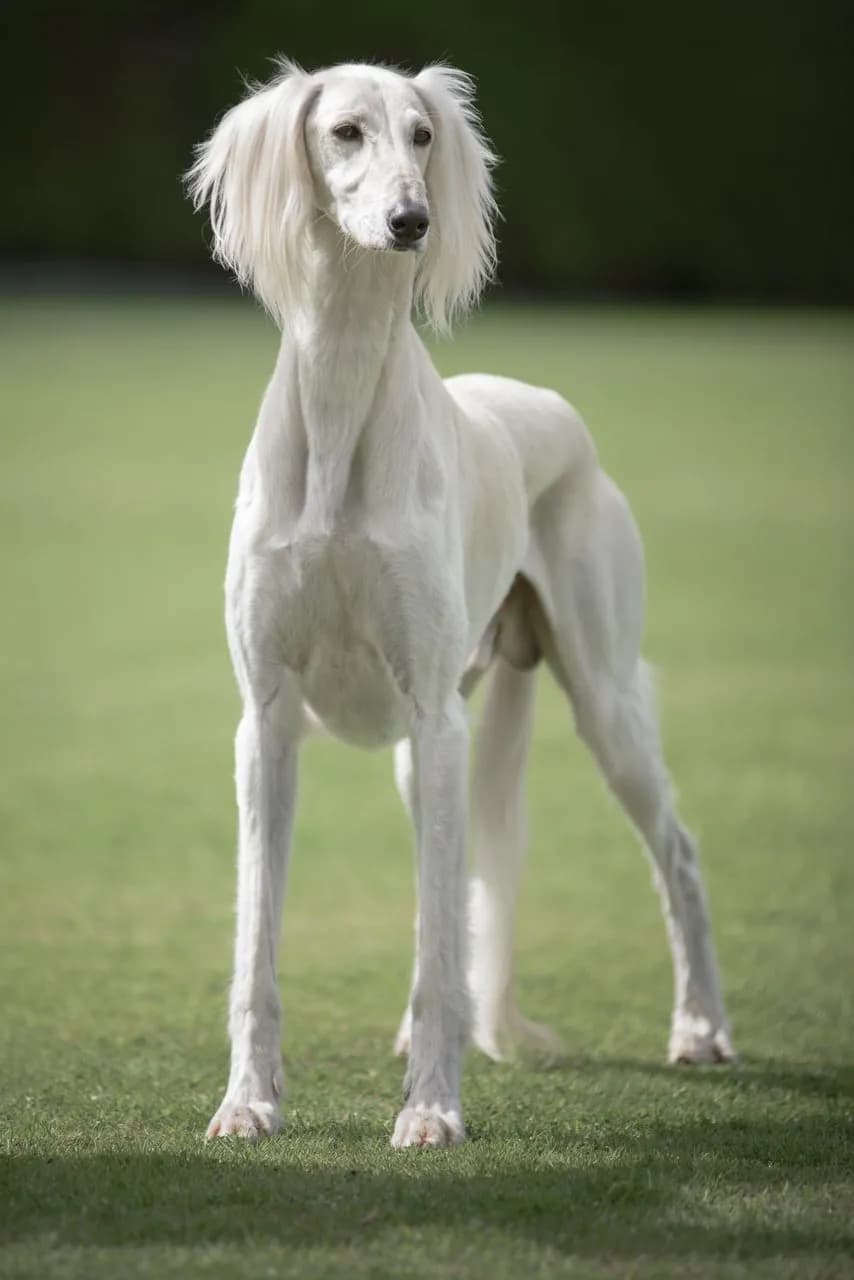
Saluki (Galgo Persa)
One of the oldest breeds in the world (>4,000 years). The sighthound of the Persian kings. Dignified, reserved character, loyal to its family. Extraordinary speed and endurance.
Foto: Wikipedia Commons · CC BY-SA
Mizuu editorial teamupdated on October 14, 2026Not yet reviewed by a vet. Are you a vet? Review itReport an error
Ideal for
- Calm families
- Flats with daily walks + sprints
- Homes without small animals
Reconsider if
- ×Homes with rabbits/cats
- ×Extreme climates without a coat
Notify me when a Saluki (Galgo Persa) is up for adoption
We'll only email you when a verified rescue posts one available. No spam, unsubscribe in 1 click.
We'll only use your email for this alert. More info in our privacy policy.
Is the Saluki (Galgo Persa) a good match for you?
Indicative rating from 1 (low) to 5 (high).
Estimated cost of ownership
55-95 €/month
Large-breed food 30-50 €; antiparasitics 12-20 €; pro-rated vaccinations and check-ups 15-25 €; winter coat and accessories 5-15 €. Generally a healthy breed.
History and origin
Recognised by the FCI. Originating in the Middle East (Mesopotamia). One of the oldest breeds in the world (>4,000 years).
Temperament and character
Calm at home but an athlete outdoors. Reserved with strangers. Very high prey drive. Affectionate and sensitive with its family.
Living together
Children: good with respectful ones. **Other dogs:** sociable with its own type. **Cats/rodents:** high prey drive, NO.
Life stages of the Saluki (Galgo Persa)
Each stage has its own care priorities. Life expectancy: 12-14 años.
Puppy
0-12 months
Socialisation of the sensitive sighthound; exercise in safe, fenced areas because of its strong chase instinct.
Young
1-3 years
Controlled gallops and gentle training; caution with anaesthetics (sensitive sighthounds, little body fat).
Adult
3-8 years
Weight control, cardiac health and thyroid blood work; protection from the cold given its low body fat.
Senior
8+ years
Cardiology check-ups, thyroid monitoring and joint support.
Care
Exercise: long walks + off-lead sprints in a safe area.
Brushing: brief, weekly.
Winter coat: yes, it has little fur and little body fat.
Vet: annual check-up + watch for anaesthetic sensitivity.
Care in detail
Nutrition
Quality large-breed food; it is a naturally lean dog, and its slender figure should not be mistaken for being underweight. Ration adjusted to its actual activity.
Grooming
Short, fine, low-maintenance coat: weekly brushing. The feathered varieties with fringing on the ears and tail need extra attention in those areas.
Training
Dignified and independent; it learns with patience and positive reinforcement, but will rarely be a dog of blind obedience. Recall is hard to guarantee because of its hunting instinct.
Exercise
Average needs at home, where it is calm, but it needs to gallop: long walks and sprints in a fenced, safe area several times a week.
Breed-specific health
Documented anaesthetic sensitivity. Mild heart disease. Life expectancy 12-14 years.
Health predispositions for this breed
Conditions this breed is more predisposed to. Knowing about them helps with prevention and early detection. A predisposition does not mean the animal will develop them.
Common diseases in dogs
Learn the symptoms, prevention and when to see the vet. Reviewed indicative information that does not replace a veterinary consultation.
Screening and prevention for the Saluki (Galgo Persa)
Recommended tests and screenings
- Echocardiography (heart disease)
- Complete blood count and biochemistry with thyroid function
- Pre-anaesthetic blood work (sighthound anaesthetic sensitivity)
- Ophthalmological examination
- Cardiac assessment before intense exertion
Prevention
Always inform the vet of its anaesthetic sensitivity (specific protocols for sighthounds); protect it from the cold given its sparse coat and body fat; controlled runs in a safe area because of its very high prey drive.
Check-up schedule
Annual check-up with cardiac auscultation and blood work; periodic thyroid monitoring.
Warning signs
- !Cough, fatigue or fainting (heart disease)
- !Abnormally slow recovery from anaesthesia or sedation
- !Apathy, weight gain or skin problems (hypothyroidism)
- !Shivering or seeking warmth due to cold
- !Lameness or stiffness after a sprint
Saluki (Galgo Persa) gallery

Frequently asked questions about the Saluki (Galgo Persa)
How long does a Saluki (Galgo Persa) live?
▾
How much does a Saluki (Galgo Persa) weigh?
▾
Where does the Saluki (Galgo Persa) breed come from?
▾
How much exercise does a Saluki (Galgo Persa) need?
▾
Is the Saluki (Galgo Persa) good with children?
▾
Who is the Saluki (Galgo Persa) NOT recommended for?
▾
What health problems does the Saluki (Galgo Persa) have?
▾
Can I let it off the lead?
▾
Does it live with cats or rabbits?
▾
Why must the vet be warned about anaesthesia?
▾
Does it get cold?
▾
Is it calm at home?
▾
Learn more about dogs
Practical veterinary guides to support your Saluki (Galgo Persa).
Sources and references
Content compiled from official breed standards and leading veterinary sources.
- WikipediaSaluki ↗
- AKCSaluki ↗
- FCIFCI Standard No. 269 ↗
Do you have a Saluki (Galgo Persa)?
Add them to Mizuu and we will remind you what is due for their breed and age: Echocardiography (heart disease), check-ups and vaccines.
Add my Saluki (Galgo Persa)Free. Create your account in a minute and come back here.
Want to adopt a saluki (galgo persa)?
There are saluki (galgo persa)s in rescue shelters looking for a family. Filter by breed in the catalogue.

