


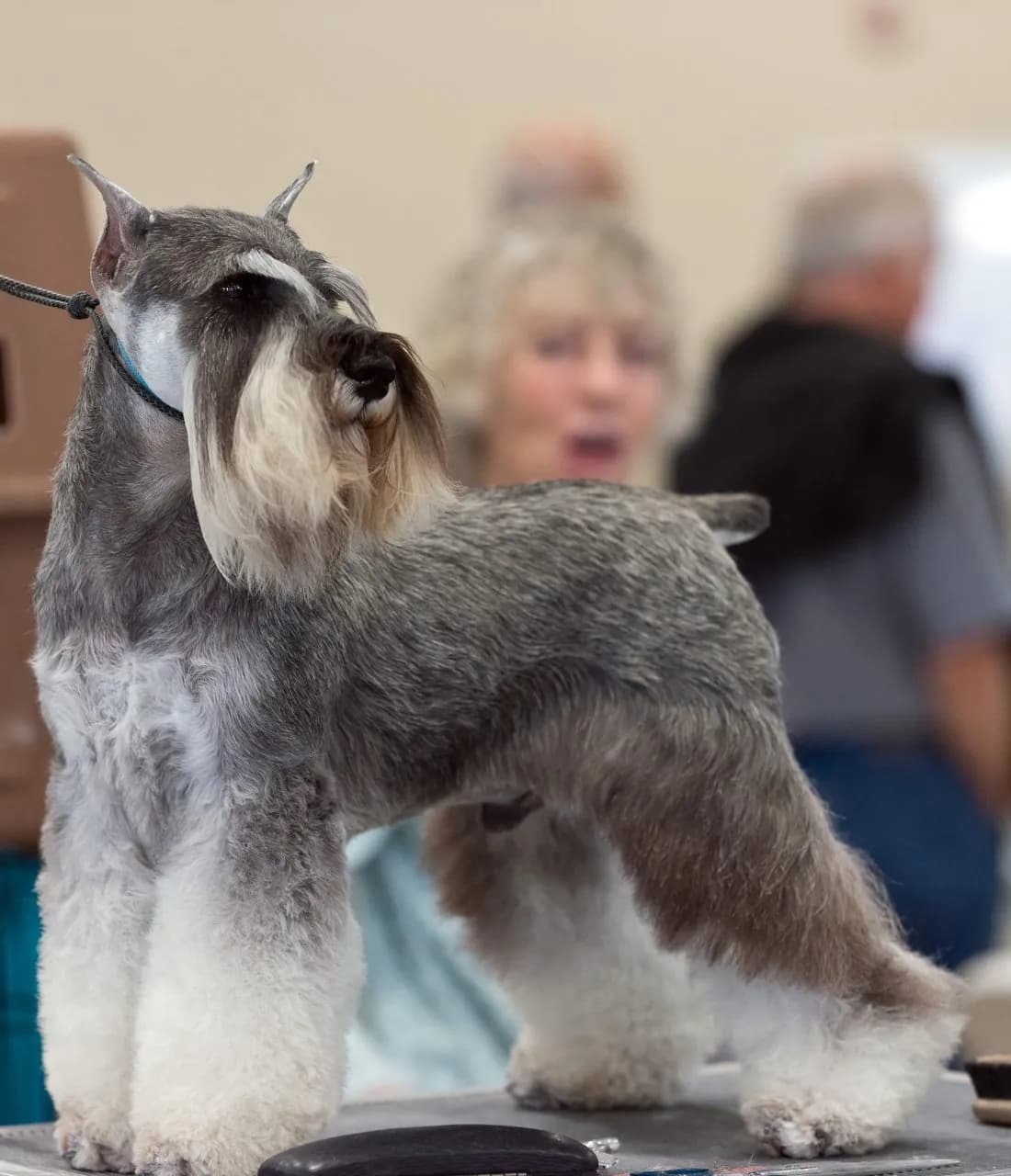
Schnauzer Miniatura
The smallest of the schnauzers. Same alert, terrier character in a small package. Hypoallergenic. A barker. An excellent urban family dog for active people.
Foto: Wikipedia Commons · CC BY-SA
Mizuu editorial teamupdated on October 14, 2026Not yet reviewed by a vet. Are you a vet? Review itReport an error
Ideal for
- Active families with children
- Flats with regular walks
- Allergy sufferers
Reconsider if
- ×Flats with neighbours sensitive to barking
- ×Homes with no time
Notify me when a Schnauzer Miniatura is up for adoption
We'll only email you when a verified rescue posts one available. No spam, unsubscribe in 1 click.
We'll only use your email for this alert. More info in our privacy policy.
Is the Schnauzer Miniatura a good match for you?
Indicative rating from 1 (low) to 5 (high).
Estimated cost of ownership
55-90 €/month
Food £18-28, professional grooming (stripping/clipping every 6-8 weeks) prorated £15-25, prorated veterinary care (vaccinations, deworming, check-up) £12-20, insurance and unforeseen costs £6-12, hygiene and accessories £5-10.
History and origin
Germany, 19th-20th centuries, scaled down from the Standard Schnauzer by crossing with small poodle and affenpinscher. Recognised as a separate breed in 1933.
Recognised by the FCI within Group 9 (companion dogs). Its small size makes flat living easy, but "small" is not a synonym for "needs no training": small dog syndrome (excessive barking, fear, reactivity) is common when the same routine as for a large dog is not applied.
Temperament and character
Lively, alert, intelligent. Devoted to the family. Watchful (a barker). Sociable but stubborn. Needs daily mental stimulation — scent games, food Kongs and short trick sessions channel their energy better than physical exercise alone. Responds best to positive reinforcement: physical punishment creates fear, anxiety and reactivity — coercive methods are NOT recommended by behaviourist vets. Sensitive to the mood of their family: they pick up on tension and catch it.
Living together
Children: good with respectful ones. Other dogs: sociable. Cats: tolerates them.
Life stages of the Schnauzer Miniatura
Each stage has its own care priorities. Life expectancy: 12-15 años.
Puppy
0-1 year
Socialisation; managing the wiry coat; establishing lipid and ophthalmological control from a young age.
Young
1-2 years
Low-fat diet to prevent pancreatitis/hyperlipidaemia; eye examination; regular exercise.
Adult
2-9 years
Control of pancreatitis and weight; monitoring for urinary stones and cataracts; periodic blood tests (diabetes).
Senior
9+ years
Pancreatic, endocrine (diabetes) and ocular monitoring; urinary and dental control.
Care
Exercise 1 hr/day. Weekly brushing + stripping/clipping every 2 months. Beard cleaning. Dental hygiene critical.
Feeding: quality food suited to life stage (puppy/adult/senior) and size. Weight control: obesity is the leading preventable cause of joint problems.
Vet: annual check-up with preventive blood work from age 5; twice a year from 8.
Care in detail
Nutrition
Quality low-fat food for small breeds, in 2 meals, avoiding fatty treats and table scraps: they are very prone to pancreatitis and hyperlipidaemia. Lean treats, weight control and water always available to prevent stones.
Grooming
A wiry coat that barely sheds (a good option for allergy sufferers), but demands maintenance: brushing 2-3 times a week and stripping or a groomer's clip every 6-8 weeks. Wash and dry the beard daily, as it retains food and tartar.
Training
Clever, lively and somewhat stubborn; learns quickly with positive reinforcement if you set clear boundaries. Their biggest challenge is barking: they are watchful and alert-givers, so it is best to work on control from puppyhood and avoid reinforcing their alarms.
Exercise
60-90 minutes daily between walks and play, plus mental stimulation. Despite their size they have a terrier's energy and mind: if they don't burn it off, they bark and get bored. They love scent games and searching for treats.
Breed-specific health
Pancreatitis. Cataracts. Retinal atrophy. Schnauzer comedo syndrome (plaques). Diabetes. Life expectancy 12-15 years. If you go to a breeder, ask for the parents' health tests relevant to the breed. When adopting, ask the shelter for a vet report on current health status.
Health predispositions for this breed
Conditions this breed is more predisposed to. Knowing about them helps with prevention and early detection. A predisposition does not mean the animal will develop them.
Common diseases in dogs
Learn the symptoms, prevention and when to see the vet. Reviewed indicative information that does not replace a veterinary consultation.
Screening and prevention for the Schnauzer Miniatura
Recommended tests and screenings
- Lipid and pancreatic profile (predisposition to hyperlipidaemia and pancreatitis)
- Ophthalmological examination (cataracts, progressive retinal atrophy)
- Urinalysis and ultrasound (stones/uroliths)
- Blood glucose and endocrine review (diabetes mellitus)
Prevention
Low-fat diet to prevent pancreatitis and hyperlipidaemia, avoiding leftovers and cured meats. Rigorous dental hygiene (small breed prone to tartar). Weight control and periodic urine checks. Cleaning the beard after every meal.
Check-up schedule
Annual check-up with lipid and glucose blood work from age 5; periodic ophthalmological checks. Professional dental cleaning when the vet advises it.
Warning signs
- !Vomiting, abdominal pain and a hunched posture after eating fatty food (pancreatitis)
- !Difficulty or blood when urinating (urinary stones)
- !Excessive thirst and urination, weight loss (diabetes)
- !A bluish eye or loss of vision (cataracts)
Schnauzer Miniatura gallery

Frequently asked questions about the Schnauzer Miniatura
How long does a Schnauzer Miniatura live?
▾
How much does a Schnauzer Miniatura weigh?
▾
Where does the Schnauzer Miniatura breed come from?
▾
How much exercise does a Schnauzer Miniatura need?
▾
Is the Schnauzer Miniatura good with children?
▾
Who is the Schnauzer Miniatura NOT recommended for?
▾
What health problems does the Schnauzer Miniatura have?
▾
Is it hypoallergenic?
▾
Does it bark a lot?
▾
Why does it have so many pancreatic problems?
▾
Is it good with children?
▾
Do I need to take it to the groomer?
▾
Related and similar breeds
Learn more about dogs
Practical veterinary guides to support your Schnauzer Miniatura.
Sources and references
Content compiled from official breed standards and leading veterinary sources.
Do you have a Schnauzer Miniatura?
Add them to Mizuu and we will remind you what is due for their breed and age: Lipid and pancreatic profile (predisposition to hyperlipidaemia and pancreatitis), check-ups and vaccines.
Add my Schnauzer MiniaturaFree. Create your account in a minute and come back here.
Want to adopt a schnauzer miniatura?
There are schnauzer miniaturas in rescue shelters looking for a family. Filter by breed in the catalogue.

