


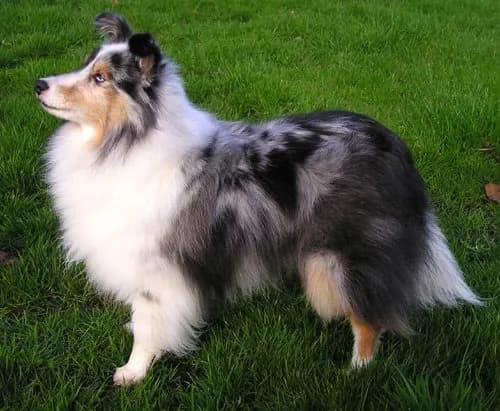
Shetland Sheepdog (Sheltie)
A Mini-Collie from the Shetland Islands. Intelligent, sensitive, "an extremely fast learner". A barker. An excellent family dog for active households. Needs regular brushing.
Foto: Wikipedia Commons · CC BY-SA
Mizuu editorial teamupdated on October 14, 2026Not yet reviewed by a vet. Are you a vet? Review itReport an error
Ideal for
- Active families
- Flats with daily walks
- Anyone wanting a clever, gentle dog
Reconsider if
- ×Flats with very sensitive neighbours
- ×Homes with no time for training
Let me know when there are dogs for adoption
We only write when a verified shelter posts one. One email a day at most.
Is the Shetland Sheepdog (Sheltie) a good match for you?
Indicative rating from 1 (low) to 5 (high).
Estimated cost of ownership
70-110 €/month
Feeding 25-35 €, prorated veterinary costs (vaccines, worming, check-up, one-off MDR1 test) 15-25 €, grooming/brushing and coat tools 12-20 €, insurance and contingencies 8-15 €, accessories and puzzle toys 5-12 €.
History and origin
A herding dog from the Shetland Islands (Scotland), miniaturised from collies through island isolation. Standardised in the early 20th century.
Recognised by the FCI within Group 1 (sheepdogs and cattle dogs). In Spain it retains its herding role in rural areas as well as being an urban companion dog. It quickly learns complex tasks — a benchmark in canine sport (agility, obedience, mondioring).
Temperament and character
Sensitive, loyal, watchful. Intelligent (ranked 6th by Coren). Attached to its family. Reserved with strangers. A barker. Needs daily mental stimulation — scent games, food Kongs and short trick sessions channel its energy better than physical exercise alone. Responds best to positive reinforcement: physical punishment breeds fear, anxiety and reactivity — coercive methods are NOT recommended by veterinary behaviourists. Sensitive to its family's mood: it picks up on tension and takes it on.
Living together
Children: excellent. Other dogs: sociable. Cats: good.
Life stages of the Shetland Sheepdog (Sheltie)
Each stage has its own care priorities. Life expectancy: 12-14 años.
Puppy
0-1 year
Early ophthalmological examination (eye anomaly); socialisation to reduce shyness; patella monitoring.
Young
1-2 years
Exercise and mental stimulation (very clever breed); clotting tests (von Willebrand) and thyroid testing.
Adult
2-8 years
Patella and weight control; retinal and thyroid check-ups; long coat care.
Senior
8+ years
Monitoring of vision, thyroid and joints; adjusting exercise while maintaining mental stimulation.
Care
Exercise 1 hr/day + mental stimulation. Brushing 3 times a week, daily during moulting. Positive training (sensitive).
Feeding: quality food suited to life stage (puppy/adult/senior) and size. Weight control: obesity is the leading preventable cause of joint problems.
Vet: annual check-up with preventive blood work from age 5; twice a year from 8.
Care in detail
Nutrition
Quality food for an active small-to-medium breed, in 2 meals. It is easy to overfeed beneath all that coat, so weigh out the ration and watch the treats: excess weight goes unnoticed until brushing time.
Grooming
An abundant double coat: thorough brushing 3-4 times a week and daily during the two annual moults, which are heavy. Watch for knots behind the ears, in the armpits and on the trousers. Do not clip it: the coat protects it from heat and cold.
Training
One of the most intelligent and sensitive breeds there is, top of the class in obedience and agility. It learns first time with positive reinforcement and falls apart with harsh methods. Work on barking control from puppyhood, its biggest drawback.
Exercise
60-90 min daily combining walks, play and, above all, mental stimulation: tricks, agility, ball-herding. A bored Sheltie mind barks and chases anything that moves, including cars and bikes.
Breed-specific health
Retinal atrophy (CEA). MDR1. Dermatomyositis. Dysplasia. Hypothyroidism. Life expectancy 12-14 years. Life expectancy of 12-14 years with appropriate care. If you go to a breeder, ask for the parents' health tests relevant to the breed. When adopting, ask the rescue for a vet report on the dog's current condition.
Health predispositions for this breed
Conditions this breed is more predisposed to. Knowing about them helps with prevention and early detection. A predisposition does not mean the animal will develop them.
Common diseases in dogs
Learn the symptoms, prevention and when to see the vet. Indicative information that does not replace a veterinary consultation.
Screening and prevention for the Shetland Sheepdog (Sheltie)
Recommended tests and screenings
- MDR1 genetic test (MDR1/ABCB1 gene: sensitivity to ivermectin and other drugs)
- Ophthalmological examination (Collie eye anomaly, retinal atrophy)
- Hip dysplasia radiograph
- Thyroid panel (hypothyroidism) and dermatological check (dermatomyositis)
Prevention
Confirm MDR1 status before using antiparasitics or anaesthetics: an affected Sheltie can suffer severe reactions at normal doses. Vaccination and worming with products safe for the breed. Weight control and dental plaque management.
Check-up schedule
Annual check-up with eye examination; blood work and thyroid monitoring from age 5-6. MDR1 genotyping done just once in a lifetime.
Warning signs
- !Drooling, tremors or disorientation after a wormer or anaesthesia (MDR1 alert)
- !Bumping into objects or poor night vision
- !Weight gain, lethargy or symmetrical hair loss (hypothyroidism)
- !Crusty lesions on the face and legs (dermatomyositis)
Frequently asked questions about the Shetland Sheepdog (Sheltie)
How long does a Shetland Sheepdog (Sheltie) live?
▾
How much does a Shetland Sheepdog (Sheltie) weigh?
▾
Where does the Shetland Sheepdog (Sheltie) breed come from?
▾
How much exercise does a Shetland Sheepdog (Sheltie) need?
▾
Is the Shetland Sheepdog (Sheltie) good with children?
▾
Who is the Shetland Sheepdog (Sheltie) NOT recommended for?
▾
What health problems does the Shetland Sheepdog (Sheltie) have?
▾
Does the Sheltie bark a lot?
▾
What is MDR1 and why does it matter?
▾
Is it good with children?
▾
How much does it shed?
▾
Is it suitable for a first-time owner?
▾
Related and similar breeds
Learn more about dogs
Practical veterinary guides to support your Shetland Sheepdog (Sheltie).
Sources and references
Content compiled from official breed standards and leading veterinary sources.
Do you have a Shetland Sheepdog (Sheltie)?
Add them to Mizuu and we will remind you what is due for their breed and age: MDR1 genetic test (MDR1/ABCB1 gene: sensitivity to ivermectin and other drugs), check-ups and vaccines.
Add my Shetland Sheepdog (Sheltie)Free. Create your account in a minute and come back here.
Want to adopt a shetland sheepdog (sheltie)?
There are shetland sheepdog (sheltie)s in Spanish rescue shelters looking for a family. Filter by breed in the catalogue.

