

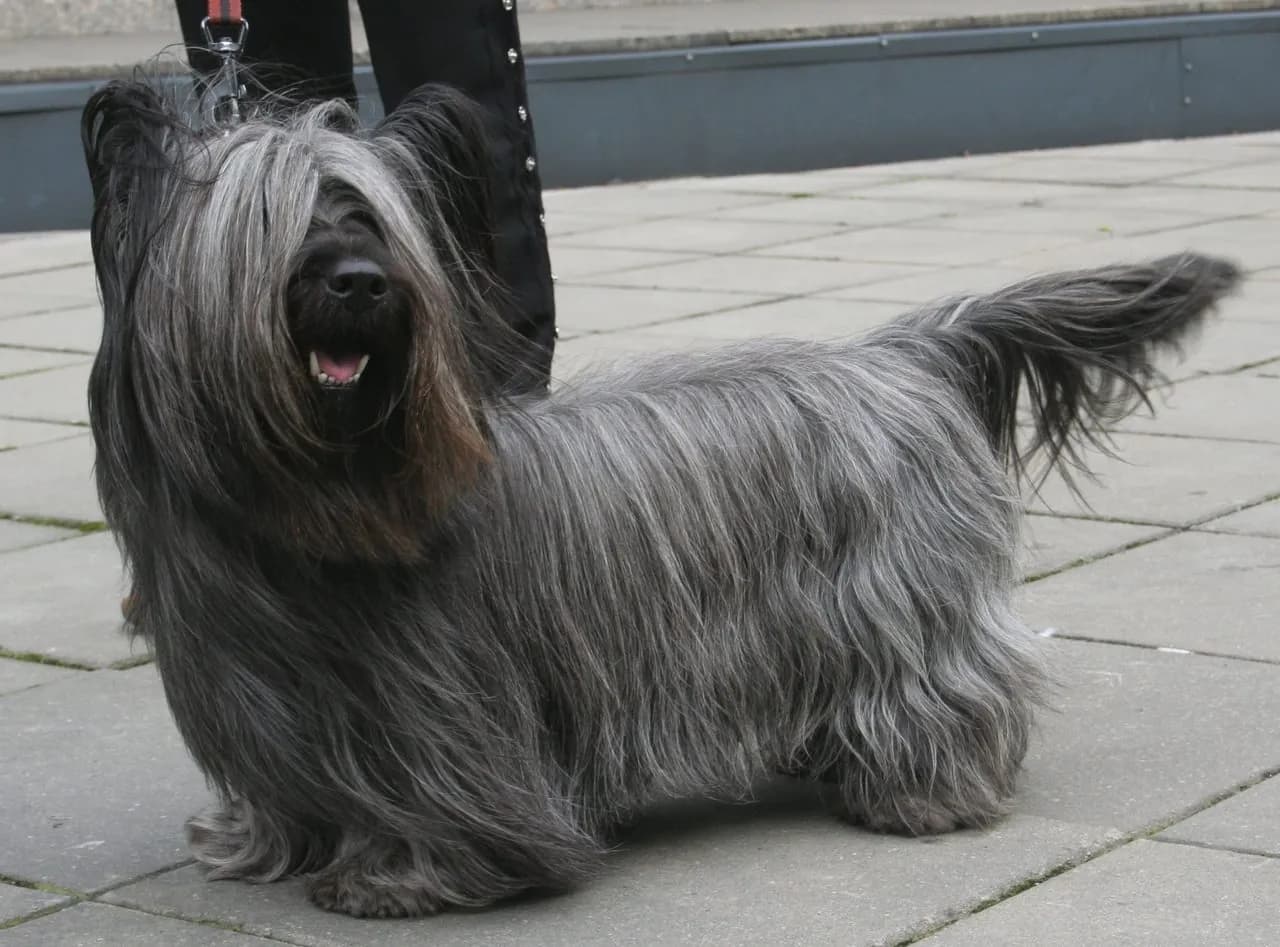
Skye Terrier
Scottish terrier from the Isle of Skye. A long coat drapes the body. Dignified and loyal in character. Greyfriars Bobby was a Skye — a Scottish legend.
Foto: Wikipedia Commons · CC BY-SA
Ideal for
- ✓Active families
- ✓Anyone wanting a charismatic dog in a small package
Reconsider if
- ×Homes with pet rodents
Notify me when a Skye Terrier is up for adoption
We'll only email you when a verified rescue posts one available. No spam, unsubscribe in 1 click.
We'll only use your email for this alert. More info in our privacy policy.
Is the Skye Terrier a good match for you?
Indicative rating from 1 (low) to 5 (high).
💶 Estimated cost of ownership
60-95 €/month
Food 18-26 €, grooming/care of the long coat prorated 12-22 €, vet costs prorated (vaccinations, deworming, check-up) 12-20 €, insurance and unexpected costs 8-15 €, ramps/accessories to protect the back and supplies 5-12 €.
History and origin
Recognised by the FCI. Originating in Scotland (Isle of Skye). A Scottish terrier from the Isle of Skye.
Temperament and character
Intelligent, loyal and well-balanced when properly socialised and trained. Needs daily mental stimulation. Responds best to positive reinforcement. Physical punishment breeds fear and reactivity.
Living together
Children: with older, respectful ones. **Other dogs:** variable. **Rodents:** strong prey drive.
Life stages of the Skye Terrier
Each stage has its own care priorities. Life expectancy: 12-15 años.
Puppy
0-12 months
Chondrodysplastic growth: avoid jumps and stairs to protect the back; early socialisation.
Young adult
1-3 years
Moderate exercise without vertical impact; care of the long coat.
Adult
3-9 years
Protection of the spine and joints; weight control; coat care.
Senior
9+ years
Monitoring for disc disease and joint problems; senior diet and gentle exercise.
Care
Exercise: 60-90 min/day + scent games.
Brushing: 2-3 times a week; hand-stripping every 8-10 weeks if the coat is harsh.
Feeding: matched to high energy needs.
Vet: annual check-up.
Care in detail
🍽️ Nutrition
Quality small-breed food in 2 meals, with rigorous weight control: every extra gram punishes his long spine. Lean treats and a diet adapted for any liver tendency, as advised by the vet.
✂️ Grooming
A long, straight, abundant coat that covers the body and face: brush 3-4 times a week to prevent knots and tangles. Keep the hair around the eyes clear and clean, and check the ears and perianal area. Not usually clipped.
🎓 Training
Dignified, loyal and reserved, very much a 'one-owner' dog. Intelligent but independent and wary of strangers: needs early, patient socialisation and positive reinforcement. Does not tolerate harshness and holds a grudge against coercive methods.
🏃 Exercise
45-60 minutes daily of calm walking and play, avoiding jumps and high-impact running. Has moderate energy and enjoys scent work. Always protect his back: no jumping on and off the sofa or repeated stairs.
Breed-specific health
Conditions commonly seen in the breed according to its FCI group. Life expectancy 12-15 years with proper care. Annual vet check plus blood work from age 5.
🩺 Health predispositions of this breed
Conditions this breed is more predisposed to. Knowing about them helps with prevention and early detection. A predisposition does not mean the animal will develop them.
Common diseases in dogs
Learn the symptoms, prevention and when to see the vet. Reviewed indicative information that does not replace a veterinary consultation.
Screening and prevention for the Skye Terrier
Recommended tests and screenings
- ✓Spinal and joint radiography (long body, chondrodystrophy: disc disease)
- ✓Ophthalmic examination (retinal atrophy, poor tear production)
- ✓Screening for liver disease (hepatic function)
- ✓Assessment of patellae and mammary masses due to tumour predisposition
Prevention
Avoid jumping and stairs to protect a long back that is prone to disc problems; use ramps and do not push the puppy. Strict weight control. Dental hygiene and periodic liver checks. Care of the long coat that covers the eyes.
Check-up schedule
Annual check-up with blood work and liver monitoring from age 5; spinal assessment at any sign of pain or lameness.
Warning signs
- !Back pain, reluctance to move or weakness in the legs (disc problem)
- !Lethargy, jaundice or weight loss (liver disease)
- !Lumps, especially along the mammary chain
- !Permanently damp hair over the eyes with irritation
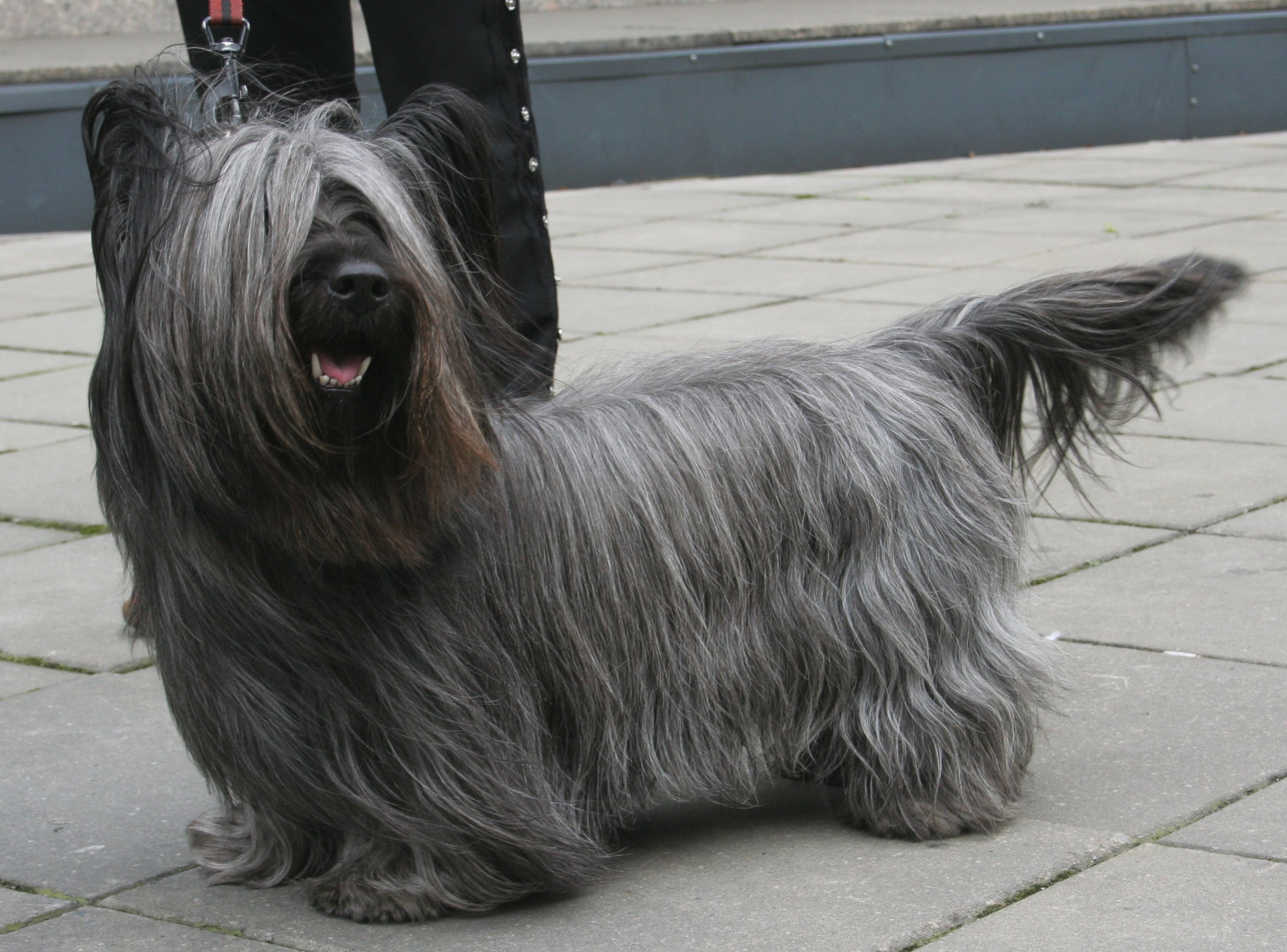
Skye Terrier gallery
Frequently asked questions about the Skye Terrier
How long does a Skye Terrier live?
▾
How much does a Skye Terrier weigh?
▾
Where does the Skye Terrier breed come from?
▾
How much exercise does a Skye Terrier need?
▾
Is the Skye Terrier good with children?
▾
Who is the Skye Terrier NOT recommended for?
▾
What health problems does the Skye Terrier have?
▾
Why does his back need so much care?
▾
Is he affectionate?
▾
How much brushing does he need?
▾
Is he a good breed for first-time owners?
▾
Is the story about the faithful Greyfriars dog true?
▾
Learn more about dogs
Practical veterinary guides to support your Skye Terrier.
Sources and references
Content compiled from official breed standards and leading veterinary sources.
- WikipediaSkye Terrier ↗
- AKCSkye Terrier ↗
- FCISkye Terrier (FCI no. 75) ↗
Want to adopt a skye terrier?
There are skye terriers in rescue shelters looking for a family. Filter by breed in the catalogue.