

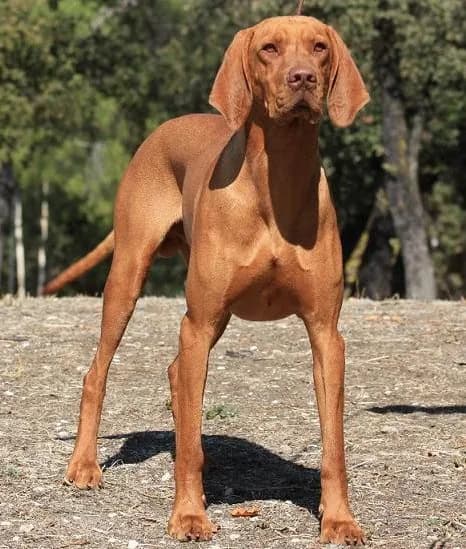
Vizsla (Braco Húngaro)
Elegant golden-rust coat. A "velcro dog": it never leaves its human's side. An excellent athlete for hunters and sportspeople. Suffers when left alone — the perfect companion for someone who works from home.
Foto: Wikipedia Commons · CC BY-SA
Ideal for
- ✓Hunters
- ✓Sportspeople (canicross, running)
- ✓Very active families
Reconsider if
- ×Sedentary families
- ×Homes without long exercise
Notify me when a Vizsla (Braco Húngaro) is up for adoption
We'll only email you when a verified rescue posts one available. No spam, unsubscribe in 1 click.
We'll only use your email for this alert. More info in our privacy policy.
Is the Vizsla (Braco Húngaro) a good match for you?
Indicative rating from 1 (low) to 5 (high).
💶 Estimated cost of ownership
75-120 €/month
High-end food for an active dog (45-70 €), preventive healthcare and insurance (25-40 €), and a recurring extra for ear care and possible professional support (trainer, dog-walker or day care if you work away from home).
History and origin
Recognised by the FCI. Native to Hungary. Elegant golden-rust coat.
Temperament and character
Active, intelligent, loyal. Attached to its family. Needs a daily 'task', both mental AND physical. Strong bond with its main human.
Living together
Children: good with its own family. **Other dogs:** sociable with socialisation. **Other animals:** with early socialisation.
Life stages of the Vizsla (Braco Húngaro)
Each stage has its own care priorities. Life expectancy: 12-14 años.
Puppy
0-12 months
Intensive socialisation and channelling of its very high energy; avoid high-impact exercise until the growth plates close to protect the hips.
Young
1-3 years
Plenty of daily exercise and mental stimulation (a hunting breed); firm training against separation anxiety, typical of the 'velcro dog'.
Adult
3-8 years
Maintain athletic condition, weight control and skin/thyroid examination; routine dental care.
Senior
8+ years
Oncological surveillance (mast cell tumour, lymphoma), joint monitoring and periodic thyroid blood tests.
Care
Exercise: 90-120 min/day + scent stimulation.
Brushing: weekly (more for the wire-haired coat).
Feeding: food for active dogs.
Veterinary care: annual check-up + ear monitoring (long ears).
Care in detail
🍽️ Nutrition
High-energy food for a sporting dog, adjusted to its real activity level. Split into 2 daily servings and avoid strenuous exercise around mealtimes to reduce the risk of gastric torsion. Watch the weight without allowing excessive thinness in very active dogs.
✂️ Grooming
Short, very low-maintenance coat: weekly brushing with a rubber mitt and the occasional bath. The key is regular cleaning and drying of its drop ears to prevent otitis. Check nails and pads after exercise.
🎓 Training
Very intelligent and eager to please, but sensitive: it responds badly to harshness. Positive reinforcement, short and varied sessions, and plenty of mental work (scent, obedience, canine sport). Early socialisation prevents overexcitement.
🏃 Exercise
Very high needs: 90-120 minutes of intense exercise daily (running, canicross, swimming) plus scent stimulation. It is an athlete that requires a real outlet every day; without it, it develops anxiety and destructiveness.
Breed-specific health
Recurrent otitis. Dysplasia. Bloat. Life expectancy 12-14 years.
🩺 Health predispositions of this breed
Conditions this breed is more predisposed to. Knowing about them helps with prevention and early detection. A predisposition does not mean the animal will develop them.
Common diseases in dogs
Learn the symptoms, prevention and when to see the vet. Reviewed indicative information that does not replace a veterinary consultation.
Screening and prevention for the Vizsla (Braco Húngaro)
Recommended tests and screenings
- ✓Official X-ray for hip and elbow dysplasia
- ✓Ophthalmological examination (cataracts, entropion)
- ✓Neurological assessment in case of seizures (idiopathic epilepsy)
- ✓Dermatological assessment for atopy/allergies
- ✓Periodic ear examination (otitis due to drop ears)
- ✓Screening for predisposition to oncological processes in adults/seniors
Prevention
Because of the risk of gastric dilatation-volvulus (bloat): split meals into 2 servings, avoid intense exercise right before and after eating, and use anti-gulp bowls. Dry the ears well after bathing or swimming. Maintain ideal weight and muscle tone to protect the joints.
Check-up schedule
Annual veterinary check-up with specific ear monitoring; preventive blood tests from age 5 and every 6 months from age 8. Oncological surveillance with palpation for lumps at check-ups.
Warning signs
- !Swollen abdomen, unproductive attempts to vomit and restlessness (bloat: life-threatening EMERGENCY)
- !Seizures or absence episodes (epilepsy)
- !Head shaking, bad smell or discharge from the ears (otitis)
- !Scratching, redness or hair loss (atopy/allergy)
- !New lumps, weight loss or lethargy (oncological monitoring)
Frequently asked questions about the Vizsla (Braco Húngaro)
How long does a Vizsla (Braco Húngaro) live?
▾
How much does a Vizsla (Braco Húngaro) weigh?
▾
Where does the Vizsla (Braco Húngaro) breed come from?
▾
How much exercise does a Vizsla (Braco Húngaro) need?
▾
Is the Vizsla (Braco Húngaro) good with children?
▾
Who is the Vizsla (Braco Húngaro) NOT recommended for?
▾
What health problems does the Vizsla (Braco Húngaro) have?
▾
Why is it called a 'velcro dog'?
▾
Can it live in a flat?
▾
Does it tolerate the cold well?
▾
What is bloat and why should I worry about it?
▾
Is it a good breed for a first-time owner?
▾
Learn more about dogs
Practical veterinary guides to support your Vizsla (Braco Húngaro).
Sources and references
Content compiled from official breed standards and leading veterinary sources.
Want to adopt a vizsla (braco húngaro)?
There are vizsla (braco húngaro)s in rescue shelters looking for a family. Filter by breed in the catalogue.