


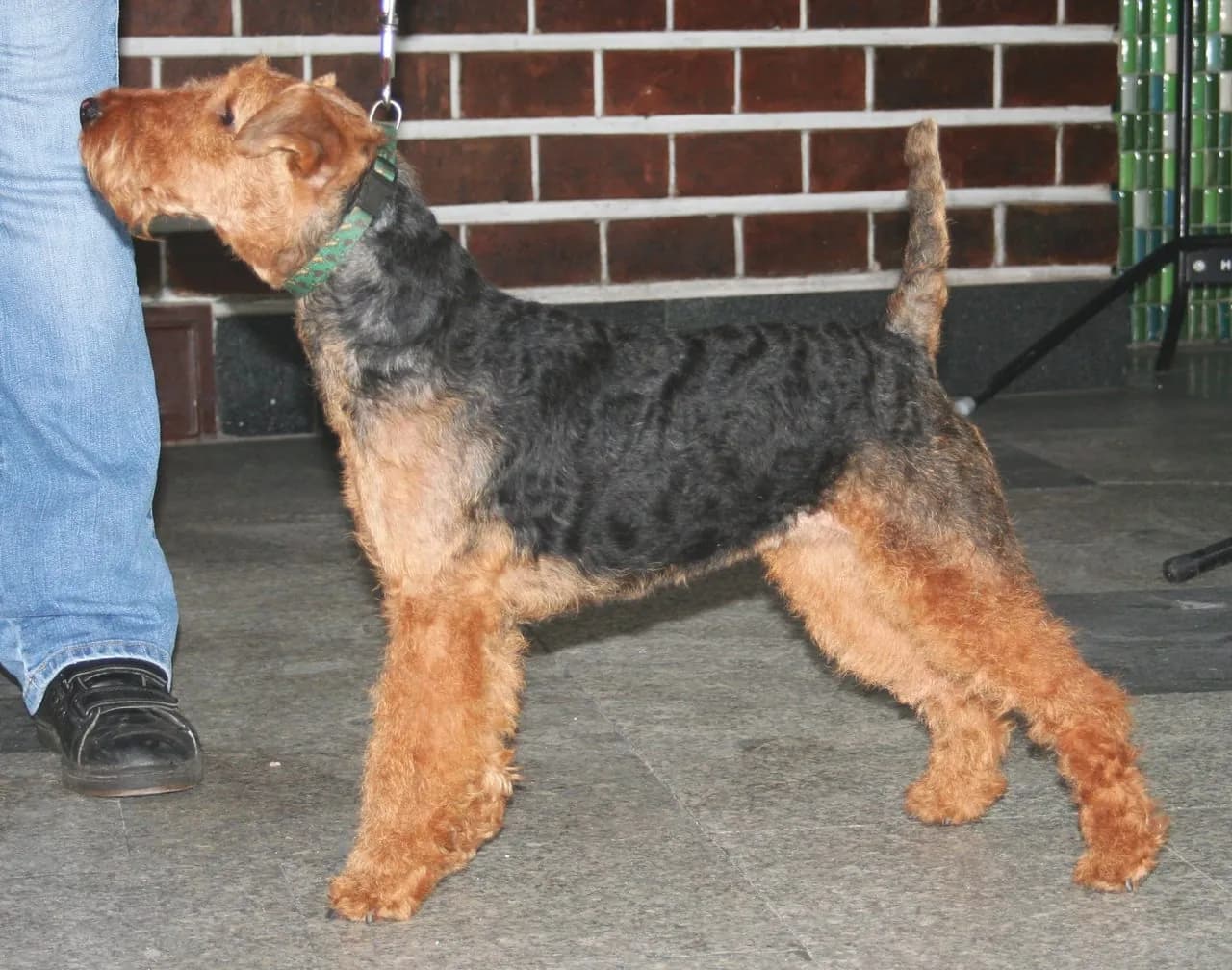
Welsh Terrier
Traditional Welsh terrier. Like a small Airedale. Harsh black-and-tan coat. Lively, alert, a hunter. Needs hand-stripping every 2-3 months.
Foto: Wikipedia Commons · CC BY-SA
Mizuu editorial teamupdated on October 14, 2026Not yet reviewed by a vet. Are you a vet? Review itReport an error
Ideal for
- Active families
- Anyone wanting a charismatic dog in a small package
Reconsider if
- ×Homes with pet rodents
Notify me when a Welsh Terrier is up for adoption
We'll only email you when a verified rescue posts one available. No spam, unsubscribe in 1 click.
We'll only use your email for this alert. More info in our privacy policy.
Is the Welsh Terrier a good match for you?
Indicative rating from 1 (low) to 5 (high).
Estimated cost of ownership
60-95 €/month
Food 18-28 €, grooming (hand-stripping/clipping every 8-12 weeks) prorated 15-25 €, prorated vet costs (vaccines, deworming, check-up) 12-20 €, insurance and contingencies 8-15 €, hygiene and accessories 5-10 €.
History and origin
Recognised by the FCI. Originating in Wales. The traditional Welsh terrier.
Temperament and character
Intelligent, loyal and balanced when well socialised and trained. Needs daily mental stimulation. Responds best to positive reinforcement. Physical punishment creates fear and reactivity.
Living together
Children: with respectful older children. **Other dogs:** variable. **Rodents:** high prey drive.
Life stages of the Welsh Terrier
Each stage has its own care priorities. Life expectancy: 12-15 años.
Puppy
0-12 months
Socialisation and firm training of its terrier character; introduction to brushing/hand-stripping of the coat.
Young adult
1-3 years
Daily exercise and play to channel its high energy; maintenance of the wiry coat.
Adult
3-9 years
Weight control, skin health and eye examinations; consistent exercise.
Senior
9+ years
Ophthalmological (glaucoma) and dental check-ups; senior diet and adapted exercise.
Care
Exercise: 60-90 min/day plus scent games.
Brushing: 2-3 times/week; hand-stripping every 8-10 weeks for a wiry coat.
Feeding: matched to its high energy.
Vet: annual check-up.
Care in detail
Nutrition
Quality food for an active small-to-medium breed in 2 meals, with portion control and lean treats. If prone to allergies, discuss a controlled-protein diet with your vet. Fresh water always available.
Grooming
A wiry coat that sheds very little (a good option for allergy sufferers), but it needs hand-stripping every 8-12 weeks to keep its texture, or clipping if you give that up. Brushing 2-3 times a week and care of the beard and leg feathering.
Training
Intelligent, cheerful and with the typical terrier energy and stubbornness. Learns well with positive reinforcement, short sessions and gentle firmness. Work on recall and self-control from puppyhood: its hunting instinct can be triggered in an instant.
Exercise
60-90 min daily across walks, play and scent work. Active and tireless; loves to dig and chase. Without enough exercise it channels its energy into barking, digging and mischief.
Breed-specific health
Common conditions in the breed according to its FCI group. Life expectancy 12-15 years with proper care. Annual vet check-up plus blood work from age 5.
Health predispositions for this breed
Conditions this breed is more predisposed to. Knowing about them helps with prevention and early detection. A predisposition does not mean the animal will develop them.
Common diseases in dogs
Learn the symptoms, prevention and when to see the vet. Reviewed indicative information that does not replace a veterinary consultation.
Screening and prevention for the Welsh Terrier
Recommended tests and screenings
- Ophthalmological examination (lens luxation, cataracts, glaucoma)
- Radiograph of patellae and hips
- Hypothyroidism screening (thyroid panel)
- Dermatological review (atopy/skin allergies)
Prevention
Consistent dental hygiene and weight control. Periodic eye examinations because of the predisposition to lens luxation, which can be an emergency. Skin care for allergies. Vaccinations and deworming kept up to date.
Check-up schedule
Annual check-up with blood work from age 5 and ophthalmological monitoring, especially if signs of eye discomfort appear.
Warning signs
- !Sudden red, painful, watery or cloudy eye (emergency due to lens luxation or glaucoma)
- !Scratching, licking and skin redness (allergies)
- !Intermittent lameness in the hind legs (patellar luxation)
- !Apathy, weight gain or hair loss (hypothyroidism)
Frequently asked questions about the Welsh Terrier
How long does a Welsh Terrier live?
▾
How much does a Welsh Terrier weigh?
▾
Where does the Welsh Terrier breed come from?
▾
How much exercise does a Welsh Terrier need?
▾
Is the Welsh Terrier good with children?
▾
Who is the Welsh Terrier NOT recommended for?
▾
What health problems does the Welsh Terrier have?
▾
Is it like a small Airedale?
▾
Does it shed?
▾
Does it get on with cats and rodents?
▾
Is it a good dog with children?
▾
Does it bark and dig a lot?
▾
Learn more about dogs
Practical veterinary guides to support your Welsh Terrier.
Sources and references
Content compiled from official breed standards and leading veterinary sources.
- WikipediaWelsh terrier ↗
- AKCWelsh Terrier ↗
- FCIWelsh Terrier (FCI no. 78) ↗
Do you have a Welsh Terrier?
Add them to Mizuu and we will remind you what is due for their breed and age: Ophthalmological examination (lens luxation, cataracts, glaucoma), check-ups and vaccines.
Add my Welsh TerrierFree. Create your account in a minute and come back here.
Want to adopt a welsh terrier?
There are welsh terriers in rescue shelters looking for a family. Filter by breed in the catalogue.

