

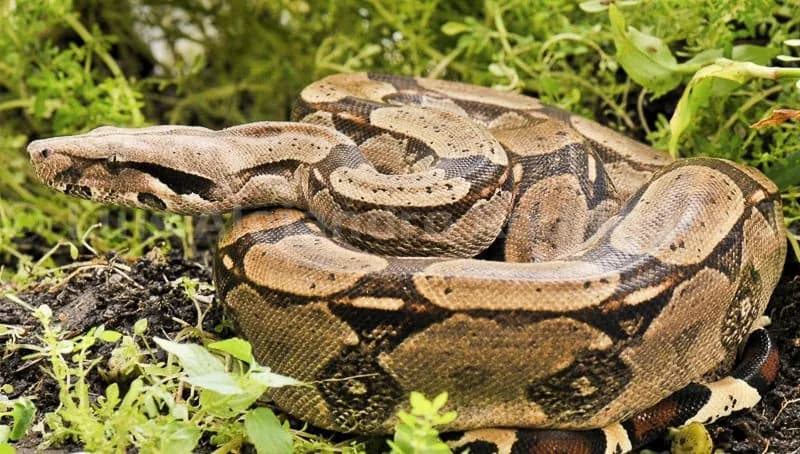
Boa Constrictora
Large constrictor. Requires space and knowledge. Adults up to 3 m.
Foto: Wikipedia Commons · CC BY-SA
Ideal for
- ✓Anyone seeking an exotic pet with a technical commitment
- ✓Patient people (reptiles need time to build trust)
- ✓Homes with space for a vivarium
Reconsider if
- ×Homes with unsupervised young children
- ×People with no prior experience (consult an exotics vet first)
- ×Life spent entirely in a small vivarium (cruel)
Notify me when a Boa Constrictora is up for adoption
We'll only email you when a verified rescue posts one available. No spam, unsubscribe in 1 click.
We'll only use your email for this alert. More info in our privacy policy.
Is the Boa Constrictora a good match for you?
Indicative rating from 1 (low) to 5 (high).
💶 Estimated cost of ownership
25-45 €/month
Frozen prey 8-15 € + heating electricity 12-22 € + substrate and maintenance of the large enclosure 5-10 €.
History and origin
Native to the Americas. A large constrictor.
Temperament and character
Reptiles are NOT social like mammals. They tolerate handling but do not seek companionship. Trust is earned with patience.
Living together
Children: depends on species + educated handling. **Other pets:** avoid — bidirectional risk. **Other reptiles:** depending on species, best kept in separate vivariums.
Life stages of the Boa Constrictora
Each stage has its own care priorities. Life expectancy: 20-30 años.
Hatchling
0-6 months
Born live (viviparous); enclosure with hides, gradient 28-31 °C, humidity 60-70%; a mouse every 7 days and gentle handling.
Juvenile
6-24 months
Sustained growth; large mouse/rat every 7-10 days; sturdy branches; watch for complete sheds and eye caps.
Subadult
2-3 years
Spacious enclosure, heat lamp with thermostat (burns); a suitable rat every 10-14 days; avoid overfeeding and obesity.
Adult
3-30 years
Gradient 28-31 °C, humidity 60-70%; prey every 2-3 weeks; in females, monitor for egg/embryo retention.
Care
Vivarium: minimum size depending on species (consult species-specific guides). UVB essential for diurnal species.
Temperature: day/night gradient · warm zone vs cool zone for thermoregulation.
Humidity: depending on species (rainforest 70%+ · desert 30-50%).
Feeding: species-specific diet · insectivores, herbivores and carnivores vary radically.
Veterinary care: an exotics vet (a regular vet will NOT do). Annual check-up.
Care in detail
🍽️ Nutrition
Carnivore: dead rodents or small rabbits sized to the snake, every 1-3 weeks (adults every 2-4 weeks). Do not overfeed: obesity is common in captivity.
✂️ Grooming
Supports shedding with ambient humidity and water to soak in. Warm bath if there is dysecdysis; remove eye caps only if they are retained.
🎓 Training
Usually docile but very powerful: with large adults, follow the two-person rule for handling. Never handle alone with the snake around your neck.
🏃 Exercise
A sturdy, spacious enclosure (adults: 180-240 cm long), gradient of 28-32 °C in the warm spot and 24-26 °C in the cool zone, with hides on both sides.
Breed-specific health
UVB deficiency (rickets, MBD), parasites, respiratory infections from incorrect humidity. Life expectancy 20-30 years when well cared for.
🩺 Health predispositions of this breed
Conditions this breed is more predisposed to. Knowing about them helps with prevention and early detection. A predisposition does not mean the animal will develop them.
Common diseases in reptiles
Learn the symptoms, prevention and when to see the vet. Reviewed indicative information that does not replace a veterinary consultation.
Screening and prevention for the Boa Constrictora
Recommended tests and screenings
- ✓Faecal exam (nematodes, cryptosporidia)
- ✓Oral examination (infectious stomatitis)
- ✓Respiratory assessment (pneumonia)
- ✓Inclusion body disease (IBD) screening in collections
Prevention
Correct thermal gradient with a thermostat, humidity 50-60% and a large water dish. Long quarantine of new specimens (IBD risk). Two-person handling of large adults.
Check-up schedule
Annual check-up with an exotics vet; weighing and growth monitoring.
Warning signs
- !Open-mouth breathing, wheezing or mucus (pneumonia)
- !Star-gazing/disorientation or chronic regurgitation (possible IBD)
- !Retained shed or stuck eye caps
- !Mouth sores and excess saliva (stomatitis)
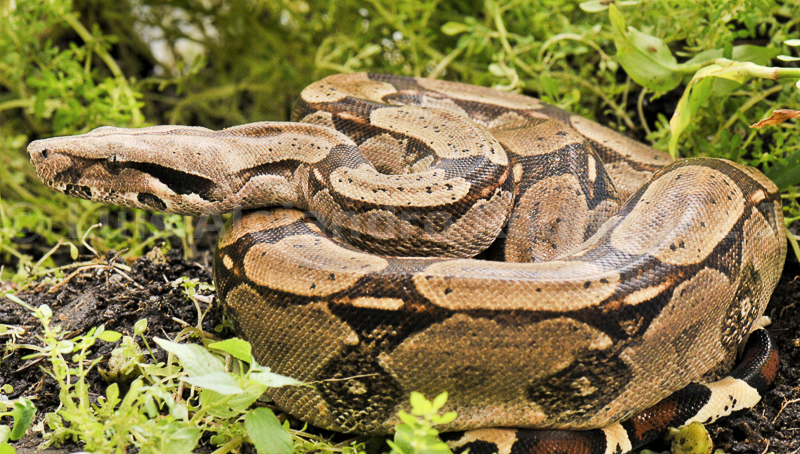
Boa Constrictora gallery
Frequently asked questions about the Boa Constrictora
How long does a Boa Constrictora live?
▾
How much does a Boa Constrictora weigh?
▾
Where does the Boa Constrictora breed come from?
▾
How much exercise does a Boa Constrictora need?
▾
Is the Boa Constrictora good with children?
▾
Who is the Boa Constrictora NOT recommended for?
▾
What health problems does the Boa Constrictora have?
▾
How big does it grow?
▾
Is it dangerous?
▾
How often does it eat?
▾
How long does it live?
▾
Learn more about reptiles
Practical veterinary guides to support your Boa Constrictora.
Sources and references
Content compiled from official breed standards and leading veterinary sources.
- WikipediaBoa constrictor (Wikipedia) ↗
- The Reptile DatabaseBoa constrictor — The Reptile Database ↗
Want to adopt a boa constrictora?
There are boa constrictoras in rescue shelters looking for a family. Filter by breed in the catalogue.