

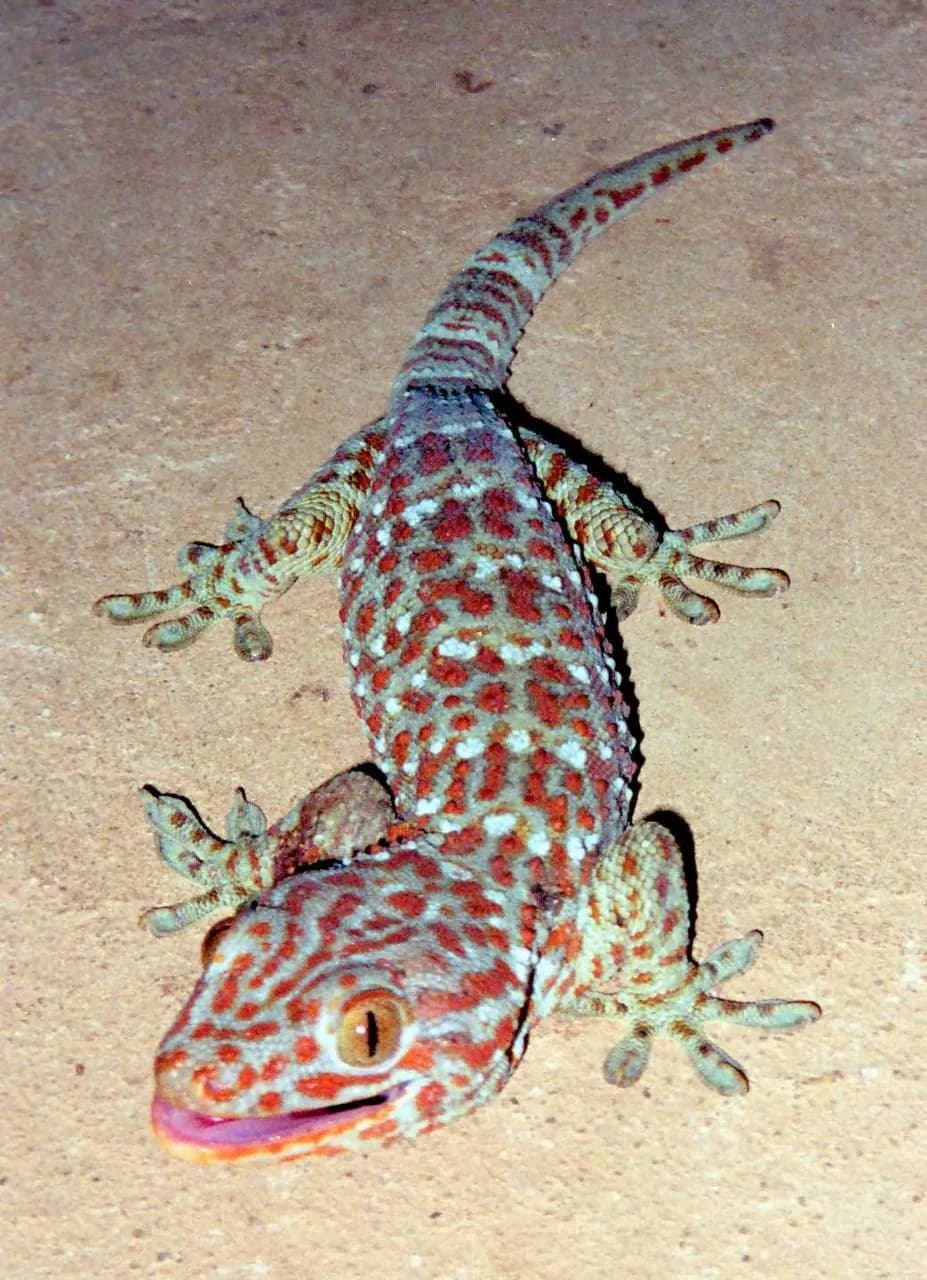
Gecko Tokay
Spectacular colours (blue-orange). BUT an aggressive temperament, it bites hard. For experts only.
Foto: Wikipedia Commons · CC BY-SA
Ideal for
- ✓Anyone seeking an exotic pet with a technical commitment
- ✓Patient people (reptiles need time to build trust)
- ✓Homes with room for a terrarium
Reconsider if
- ×Homes with young children without supervision
- ×People with no previous experience (consult an exotics vet first)
- ×Life 100% in a small terrarium (cruel)
Notify me when a Gecko Tokay is up for adoption
We'll only email you when a verified rescue posts one available. No spam, unsubscribe in 1 click.
We'll only use your email for this alert. More info in our privacy policy.
Is the Gecko Tokay a good match for you?
Indicative rating from 1 (low) to 5 (high).
💶 Estimated cost of ownership
15-30 €/month
Insects 8-14 € + supplements 2-4 € + electricity for heating/humidity 5-10 € + substrate and upkeep 3-6 €.
History and origin
A large nocturnal arboreal gecko from Southeast Asia, greyish-blue in colour with spots; famous for its powerful 'to-kay' call.
Temperament and character
Reptiles are NOT social like mammals. They tolerate handling but do not seek companionship. Trust is earned with patience.
Living together
Children: depends on species + educational handling. **Other pets:** avoid — two-way risk. **Other reptiles:** according to species, separate terrariums are best.
Life stages of the Gecko Tokay
Each stage has its own care priorities. Life expectancy: 10-15 años.
Hatchling/Neonate
0-3 months
Heat 28-32 °C and high humidity; small insects with calcium; a nervous species that bites, minimal handling.
Juvenile
3-12 months
Varied insects with calcium, planted humid vertical terrarium with high hides.
Subadult
1-2 years
Large terrarium with height, thermal gradient and humidity for shedding; very territorial temperament.
Adult
2+ years
Robust insectivorous diet (even large prey), constant humidity; watch for dysecdysis and clutches.
Care
Terrarium: minimum size according to species (consult species-specific guides). UVB compulsory for diurnal species.
Temperature: day/night gradient · warm zone vs cool zone for thermoregulation.
Humidity: according to species (rainforest 70%+ · desert 30-50%).
Feeding: species-specific diet · insectivores, herbivores and carnivores vary radically.
Vet: exotics vet (a regular vet will NOT do). Annual check-up.
Care in detail
🍽️ Nutrition
Voracious insectivore: crickets, locusts, roaches and the occasional small vertebrate, dusted with calcium/multivitamin. Water by misting and a bowl.
✂️ Grooming
It is not bathed; humidity and misting for sheds. Watch the toes and tail.
🎓 Training
It is NOT handleable: it bites hard and does not let go. A display species for experts only; handle with gloves and as little as strictly necessary.
🏃 Exercise
A vertical terrarium with hides and branches, gradient 26-30 °C (warm spot ~32 °C), humidity 60-80%; a calm environment to reduce its stress/aggression.
Breed-specific health
UVB deficiency (rickets, MBD), parasites, respiratory infections from incorrect humidity. Life expectancy 10-15 years when well cared for.
🩺 Health predispositions of this breed
Conditions this breed is more predisposed to. Knowing about them helps with prevention and early detection. A predisposition does not mean the animal will develop them.
Common diseases in reptiles
Learn the symptoms, prevention and when to see the vet. Reviewed indicative information that does not replace a veterinary consultation.
Screening and prevention for the Gecko Tokay
Recommended tests and screenings
- ✓Faecal test (parasites, very common due to wild-caught origin)
- ✓MBD assessment
- ✓Oral and shed check
- ✓Hydration monitoring
Prevention
Humidity 60-80% with misting for complete sheds, calcium/D3 and, preferably, mild UVB. Strict quarantine (a large proportion of specimens are wild-caught with a parasite load).
Check-up schedule
Check with an exotics vet on acquisition (faecal test) and annually.
Warning signs
- !Retained shed on the toes and tail
- !Soft jaw (MBD)
- !Weight loss despite eating (parasites)
- !Extreme aggression with lethargy between episodes (illness)
Gecko Tokay gallery

Frequently asked questions about the Gecko Tokay
How long does a Gecko Tokay live?
▾
How much does a Gecko Tokay weigh?
▾
Where does the Gecko Tokay breed come from?
▾
How much exercise does a Gecko Tokay need?
▾
Is the Gecko Tokay good with children?
▾
Who is the Gecko Tokay NOT recommended for?
▾
What health problems does the Gecko Tokay have?
▾
Why is it not for beginners?
▾
Why is quarantine important?
▾
Does it make noise?
▾
Can it be petted or picked up?
▾
Learn more about reptiles
Practical veterinary guides to support your Gecko Tokay.
Sources and references
Content compiled from official breed standards and leading veterinary sources.
- WikipediaGekko gecko ↗
- The Reptile DatabaseReptile Database ↗
- AHESpanish Herpetological Association ↗
Want to adopt a gecko tokay?
There are gecko tokays in rescue shelters looking for a family. Filter by breed in the catalogue.