

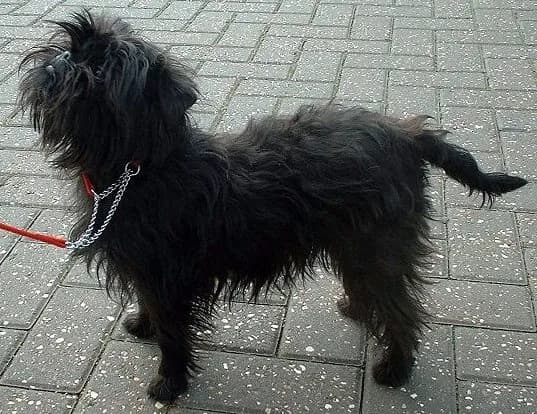
Affenpinscher
The "monkey dog", named for its expressive, bearded face. An old German toy breed. Bold, lively and fearless. Originally a ratter. Now a fun companion.
Foto: Wikipedia Commons · CC BY-SA
Ideal for
- ✓Small flats
- ✓Older people
- ✓Urban families
Reconsider if
- ×Very young children (fragile)
- ×Households with large, clumsy dogs
Notify me when a Affenpinscher is up for adoption
We'll only email you when a verified rescue posts one available. No spam, unsubscribe in 1 click.
We'll only use your email for this alert. More info in our privacy policy.
Is the Affenpinscher a good match for you?
Indicative rating from 1 (low) to 5 (high).
💶 Estimated cost of ownership
45-75 €/month
Food (toy breed) 15-25 €, grooming/stripping pro-rated 10-18 €, vet and vaccines pro-rated 12-20 €, antiparasitics 6-10 €, dental hygiene and contingency fund 8-12 €.
History and origin
Recognised by the FCI. Originating in Germany. The "monkey dog", named for its expressive, bearded face.
Temperament and character
Cheerful, sociable, devoted to its human. Sensitive. Intelligent. Prone to barking if 'small dog syndrome' is not trained out.
Living together
Children: with careful older ones (fragile). **Other dogs:** fine with its own size. **Cats:** usually cohabits well.
Life stages of the Affenpinscher
Each stage has its own care priorities. Life expectancy: 12-15 años.
Puppy
0-12 months
Socialising the curious, brave 'monkey dog'; monitoring for lameness (Legg-Calvé-Perthes) and breathing due to the short muzzle.
Young
1-3 years
Moderate exercise, play and patient training; care of the rough coat and monitoring of the patellae.
Adult
3-9 years
Dental care, weight control and avoiding exertion in the heat due to its mildly brachycephalic profile.
Senior
9+ years
Cardiac and joint check-ups; respiratory monitoring and maintaining comfort.
Care
Exercise: 30-45 min/day (several short walks).
Brushing: according to coat (some daily, others weekly).
Critical dental hygiene: crowded teeth.
Vet: annual check-up + attention to patellar luxation.
Care in detail
🍽️ Nutrition
Good-quality food for toy breeds in measured, divided portions; puppies may need several feeds to avoid hypoglycaemia. Strict weight control to avoid overloading the patellae and hips.
✂️ Grooming
Its rough, shaggy coat should be brushed 2-3 times a week and a periodic trim or stripping is advisable to maintain its appearance. Take special care of the beard (food debris) and eye cleaning. Almost daily dental hygiene.
🎓 Training
Intelligent but somewhat stubborn and independent. It responds to positive reinforcement in short, fun sessions. It is key to socialise it and to avoid 'small dog syndrome' and excessive barking.
🏃 Exercise
Medium energy. 30-45 minutes a day spread over short walks and play is enough. It enjoys scent and hunting games (its ratter origin), but does not need great exertion.
Breed-specific health
Patellar luxation. Dental problems. Hypoglycaemia (puppies). Life expectancy 12-15 years.
🩺 Health predispositions of this breed
Conditions this breed is more predisposed to. Knowing about them helps with prevention and early detection. A predisposition does not mean the animal will develop them.
Common diseases in dogs
Learn the symptoms, prevention and when to see the vet. Reviewed indicative information that does not replace a veterinary consultation.
Screening and prevention for the Affenpinscher
Recommended tests and screenings
- ✓Orthopaedic evaluation of the patellae (patellar luxation)
- ✓Radiography of the hip/femoral head (Legg-Calvé-Perthes disease)
- ✓Cardiac auscultation and echocardiography (patent ductus arteriosus, murmurs)
- ✓Dental check-up for crowding (small mouth)
- ✓Respiratory examination (mild brachycephaly)
Prevention
Neutering at the vet's discretion, vaccination and deworming. Dental hygiene is critical because of tooth crowding, weight control to protect the patellae and hips, and monitoring for hypoglycaemia in puppies.
Check-up schedule
Annual veterinary check-up with an orthopaedic and dental examination; cardiac auscultation at every visit. Periodic dental cleanings from 3-4 years of age.
Warning signs
- !Intermittent lameness or 'skipping' of the hind leg (patellar luxation)
- !Hip pain or muscle atrophy in one leg (Legg-Calvé-Perthes)
- !Coughing, fatigue or exercise intolerance (heart)
- !Bad breath, tartar or tooth loss
- !Trembling or weakness in puppies (hypoglycaemia)
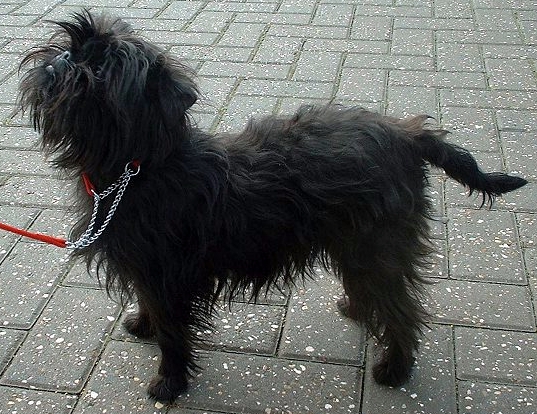
Affenpinscher gallery
Frequently asked questions about the Affenpinscher
How long does a Affenpinscher live?
▾
How much does a Affenpinscher weigh?
▾
Where does the Affenpinscher breed come from?
▾
How much exercise does a Affenpinscher need?
▾
Is the Affenpinscher good with children?
▾
Who is the Affenpinscher NOT recommended for?
▾
What health problems does the Affenpinscher have?
▾
Why is it called the 'monkey dog'?
▾
Does it bark a lot?
▾
Is it suitable for families with young children?
▾
How much coat maintenance does it need?
▾
What health problems should I watch for?
▾
Learn more about dogs
Practical veterinary guides to support your Affenpinscher.
Sources and references
Content compiled from official breed standards and leading veterinary sources.
- WikipediaAffenpinscher ↗
- AKCAffenpinscher ↗
- FCIFCI Standard No. 186 ↗
Want to adopt a affenpinscher?
There are affenpinschers in rescue shelters looking for a family. Filter by breed in the catalogue.