


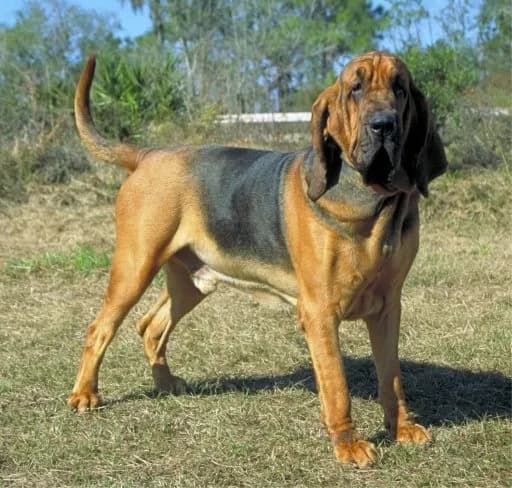
Bloodhound (Sabueso de San Huberto)
The finest canine sense of smell: tracks scents a week later. Extremely long ears, characteristic dewlap. Calm, gentle nature. Howls a lot. Drool guaranteed.
Foto: Wikipedia Commons · CC BY-SA
Mizuu editorial teamupdated on October 14, 2026Not yet reviewed by a vet. Are you a vet? Review itReport an error
Ideal for
- Families with space
- Those who can tolerate howling and drool
- Hunters/trackers
Reconsider if
- ×Flats with sensitive neighbours
- ×Those who cannot cope with drool/hair
Let me know when there are dogs for adoption
We only write when a verified shelter posts one. One email a day at most.
Is the Bloodhound (Sabueso de San Huberto) a good match for you?
Indicative rating from 1 (low) to 5 (high).
Estimated cost of ownership
70-120 €/month
Feeding 45-65 €, ear/fold cleaners and parasite control 12-18 €, veterinary allowance 20-35 €, accessories 5-10 €. Set aside a fund for digestive emergencies (bloat) and ear treatments.
History and origin
Refined by Belgian monks of the Abbey of Saint-Hubert in the 8th century. It reached England with the Normans. Used by modern police forces for its sense of smell (its evidence has been admitted in US courts).
Recognised by the FCI in Group 6 (Scent hounds and related breeds). Its historical hunting use determines its need for physical exercise and scent work: boredom is the main cause of behavioural problems.
Temperament and character
Calm, gentle, patient. Affectionate. When it catches a scent: impossible to call back. Howls. Somewhat stubborn. Needs daily mental stimulation — scent games, food Kongs and short tricks channel its energy better than physical exercise alone. Responds best to positive reinforcement: physical punishment creates fear, anxiety and reactivity — coercive methods are NOT recommended by veterinary behaviourists. Sensitive to its family's mood: it picks up on tension and takes it on.
Living together
Children: excellent. Other dogs: sociable. Cats: tolerates.
Life stages of the Bloodhound (Sabueso de San Huberto)
Each stage has its own care priorities. Life expectancy: 7-10 años.
Puppy
0-1 year
Controlled growth and gentle exercise; hygiene of facial folds and the long ears from the start.
Young
1-2 years
Hip and elbow radiographs; split meals with rest afterwards due to the high risk of gastric torsion.
Adult
2-6 years
Frequent ear cleaning (otitis); eye examination (entropion/ectropion); weight control.
Senior
6+ years
Management of osteoarthritis; digestive and cardiac monitoring; frequent geriatric check-ups given its shorter longevity.
Care
Exercise 1 hr/day. Cleaning of ears and folds. Weekly brushing. Cleaning of dewlap area. Weight control.
Feeding: quality food appropriate to life stage (puppy/adult/senior) and size. Weight control: obesity is the main avoidable cause of joint problems.
Vet: preventive blood work from age 4-5 and check-ups every 6 months from 6 (giant breeds age sooner).
Care in detail
Nutrition
Quality large-breed food split into 2-3 meals to reduce the risk of gastric torsion, with rest after eating and weight control to protect the joints.
Grooming
Simple weekly brushing, but daily cleaning of the long ears, facial folds and drool to prevent infections and dermatitis.
Training
Gentle but very stubborn and driven by its nose: positive reinforcement, patience and tracking as a reward. Never off-lead near traffic: a scent switches it off from the world.
Exercise
45-60 min daily of scent walks at a calm pace; powerful and hardy, but do not push it in the heat given its size and muzzle.
Breed-specific health
Bloat (high risk). Dysplasia. Entropion. Chronic otitis. Heart disease. Life expectancy 7-10 years (short). If you go to a breeder, ask for the parents' health tests relevant to the breed. When adopting, ask the rescue for a vet report on the current state of health.
Health predispositions for this breed
Conditions this breed is more predisposed to. Knowing about them helps with prevention and early detection. A predisposition does not mean the animal will develop them.
Common diseases in dogs
Learn the symptoms, prevention and when to see the vet. Indicative information that does not replace a veterinary consultation.
Screening and prevention for the Bloodhound (Sabueso de San Huberto)
Recommended tests and screenings
- Official hip and elbow radiographs (dysplasia)
- Ophthalmological examination (entropion/ectropion are common)
- Ear examination (chronic otitis due to long ears)
- Cardiological assessment and monitoring for gastric dilatation (bloat)
Prevention
Strict anti-bloat routine: meals split up, rest after eating and a feeding bowl at floor level; many vets recommend preventive gastropexy. Daily cleaning of ears and folds, weight control and up-to-date vaccinations.
Check-up schedule
Annual check-up with blood work from age 4-5; two visits a year from age 6-7 given its short average lifespan.
Warning signs
- !Distended abdomen, unproductive retching and restlessness (bloat: life-threatening EMERGENCY)
- !Head shaking, bad smell or ear pain
- !Red eyes, watering or turned-in eyelids (entropion/ectropion)
- !Lameness, stiffness or exercise intolerance
Bloodhound (Sabueso de San Huberto) gallery

Frequently asked questions about the Bloodhound (Sabueso de San Huberto)
How long does a Bloodhound (Sabueso de San Huberto) live?
▾
How much does a Bloodhound (Sabueso de San Huberto) weigh?
▾
Where does the Bloodhound (Sabueso de San Huberto) breed come from?
▾
How much exercise does a Bloodhound (Sabueso de San Huberto) need?
▾
Is the Bloodhound (Sabueso de San Huberto) good with children?
▾
Who is the Bloodhound (Sabueso de San Huberto) NOT recommended for?
▾
What health problems does the Bloodhound (Sabueso de San Huberto) have?
▾
Does it really have the best canine sense of smell?
▾
What is bloat and why is it so dangerous?
▾
Does it drool and shed a lot?
▾
Why does it live less than other dogs?
▾
Is it a good family dog?
▾
Related and similar breeds
Learn more about dogs
Practical veterinary guides to support your Bloodhound (Sabueso de San Huberto).
Sources and references
Content compiled from official breed standards and leading veterinary sources.
Do you have a Bloodhound (Sabueso de San Huberto)?
Add them to Mizuu and we will remind you what is due for their breed and age: Official hip and elbow radiographs (dysplasia), check-ups and vaccines.
Add my Bloodhound (Sabueso de San Huberto)Free. Create your account in a minute and come back here.
Want to adopt a bloodhound (sabueso de san huberto)?
There are bloodhound (sabueso de san huberto)s in Spanish rescue shelters looking for a family. Filter by breed in the catalogue.

