


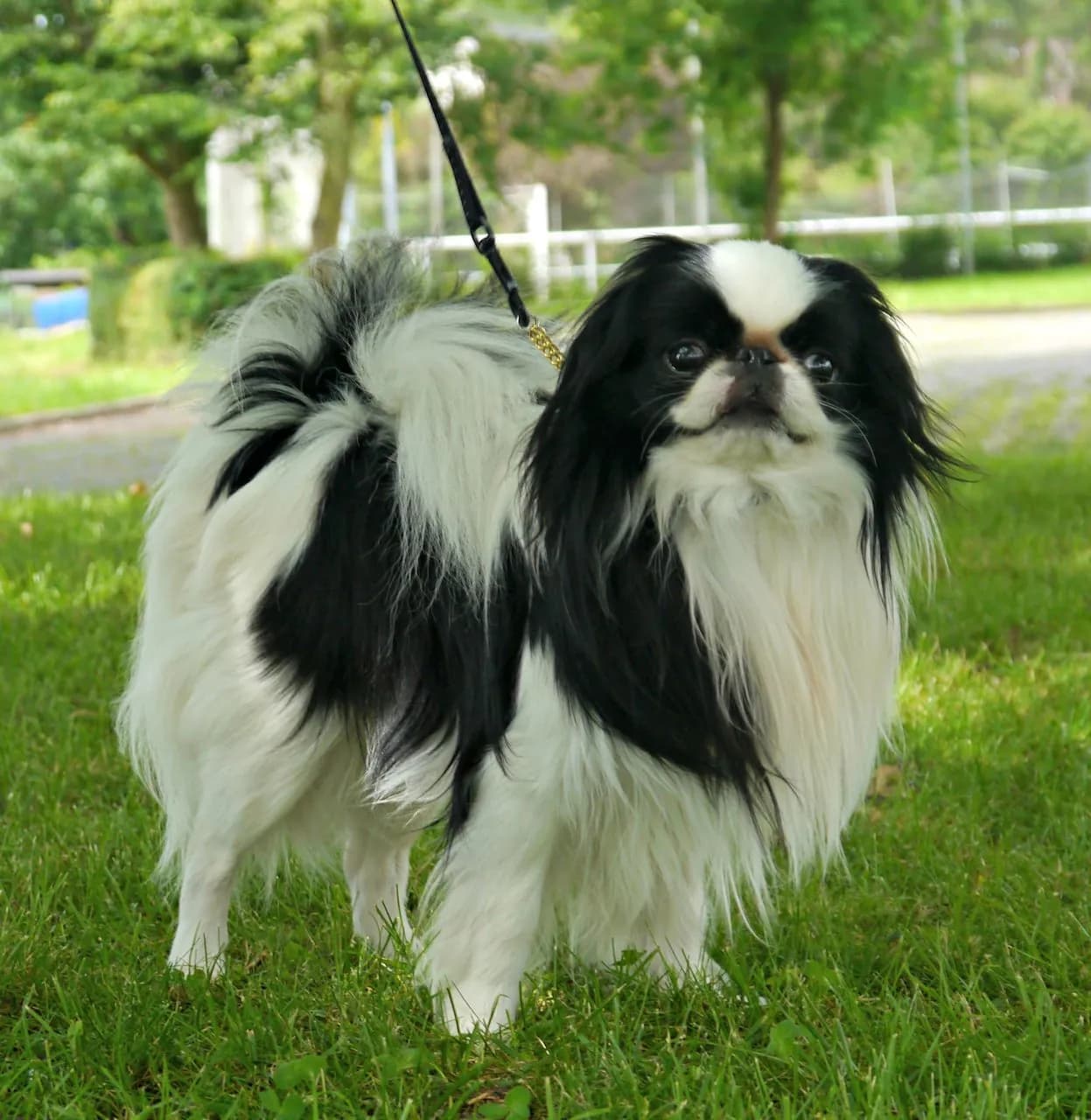
Japanese Chin (Chin Japonés)
An aristocratic Japanese toy, historically exchanged as a gift between Eastern courts. Graceful, almost feline movements. Calm at home.
Foto: Wikipedia Commons · CC BY-SA
Mizuu editorial teamupdated on October 14, 2026Not yet reviewed by a vet. Are you a vet? Review itReport an error
Ideal for
- Small flats
- Older people
- Quiet urban families
Reconsider if
- ×Very young children (fragile)
Let me know when there are dogs for adoption
We only write when a verified shelter posts one. One email a day at most.
Is the Japanese Chin (Chin Japonés) a good match for you?
Indicative rating from 1 (low) to 5 (high).
Estimated cost of ownership
35-60 €/month
Food for a toy breed (€12-22), vet with cardiac and ocular monitoring (€15-30), insurance and antiparasitics (€5-12), light grooming and accessories (€5-15). Heart and eye check-ups drive the cost from a certain age onwards.
History and origin
Recognised by the FCI. Originating in Japan (via China). An aristocratic Japanese toy, historically exchanged as a gift between Eastern courts.
Temperament and character
Intelligent, loyal and well-balanced when properly socialised and trained. Needs daily mental stimulation. Responds best to positive reinforcement. Physical punishment generates fear and reactivity.
Living together
Children: with careful older children (fragile). **Other dogs:** fine given its size. **Cats:** usually cohabits well.
Life stages of the Japanese Chin (Chin Japonés)
Each stage has its own care priorities. Life expectancy: 12-14 años.
Puppy
0-12 months
Gentle socialisation; ocular and respiratory protection due to its brachycephalic face; delicate handling.
Young adult
1-3 years
Light exercise avoiding heat; care of the silky coat and the eyes.
Adult
3-8 years
Cardiac auscultation, respiratory and patellar monitoring; weight control.
Senior
8+ years
Cardiac, ocular and dental monitoring; senior diet and a cool environment.
Care
Exercise: 30-45 min/day.
Brushing: according to coat.
**Dental hygiene critical.
Vet: annual check-up + attention to patellar luxation.
Care in detail
Nutrition
Quality kibble for toy breeds, in 2 meals. Manage weight: excess weight worsens respiratory and cardiac strain. Kibble sized appropriately for its small mouth and undershot jaw.
Grooming
Long, silky coat that is surprisingly easy to care for: brush 2-3 times a week to prevent knots in the feathering and plumes. Moderate shedding. Gently clean the facial folds and the eye area.
Training
Calm, cat-like and dignified: it learns well with positive reinforcement and gentleness; harsh methods make it withdraw. It is clean and quiet. Gentle socialisation; it needs no great obedience demands.
Exercise
Low: 20-30 minutes of calm daily walking and play at home are enough. Avoid exercise in the heat because of its flat face. A perfect sedentary companion dog.
Breed-specific health
Conditions common to the breed according to the FCI group. Life expectancy 12-14 years with appropriate care. Annual vet check-up + bloodwork from age 5.
Health predispositions for this breed
Conditions this breed is more predisposed to. Knowing about them helps with prevention and early detection. A predisposition does not mean the animal will develop them.
Common diseases in dogs
Learn the symptoms, prevention and when to see the vet. Indicative information that does not replace a veterinary consultation.
Screening and prevention for the Japanese Chin (Chin Japonés)
Recommended tests and screenings
- Cardiac auscultation and echocardiography (murmurs, valvular disease)
- Ophthalmological assessment (cataracts, corneal ulcers from prominent eyes)
- Patellar luxation examination
- Respiratory assessment due to its brachycephalic morphology
- Dental check (a toy breed prone to tartar)
Prevention
Because of its large, prominent eyes, avoid branches, sand and facial trauma, and check the cornea frequently. It is slightly brachycephalic: protect it from heat and intense exertion. Buy from breeders who test heart, eyes and patellae.
Check-up schedule
Annual check-up with cardiac auscultation, ocular and dental examination. Preventive bloodwork from age 7. Six-monthly cardiac monitoring in seniors.
Warning signs
- !A red, closed or watering eye (corneal ulcer — needs prompt attention)
- !Coughing, fatigue or exercise intolerance (valvular heart disease)
- !Heavy snoring or breathing difficulty in the heat
- !Patellar slipping or intermittent lameness
Frequently asked questions about the Japanese Chin (Chin Japonés)
How long does a Japanese Chin (Chin Japonés) live?
▾
How much does a Japanese Chin (Chin Japonés) weigh?
▾
Where does the Japanese Chin (Chin Japonés) breed come from?
▾
How much exercise does a Japanese Chin (Chin Japonés) need?
▾
Is the Japanese Chin (Chin Japonés) good with children?
▾
Who is the Japanese Chin (Chin Japonés) NOT recommended for?
▾
What health problems does the Japanese Chin (Chin Japonés) have?
▾
Why is it said to be cat-like?
▾
Does it have breathing problems?
▾
Do its eyes need special care?
▾
Is it good for flats and older people?
▾
Is it hard to train?
▾
Learn more about dogs
Practical veterinary guides to support your Japanese Chin (Chin Japonés).
Sources and references
Content compiled from official breed standards and leading veterinary sources.
- WikipediaJapanese Chin ↗
- AKCJapanese Chin ↗
- FCIJapanese Chin (FCI no. 206) ↗
Do you have a Japanese Chin (Chin Japonés)?
Add them to Mizuu and we will remind you what is due for their breed and age: Cardiac auscultation and echocardiography (murmurs, valvular disease), check-ups and vaccines.
Add my Japanese Chin (Chin Japonés)Free. Create your account in a minute and come back here.
Want to adopt a japanese chin (chin japonés)?
There are japanese chin (chin japonés)s in Spanish rescue shelters looking for a family. Filter by breed in the catalogue.

