

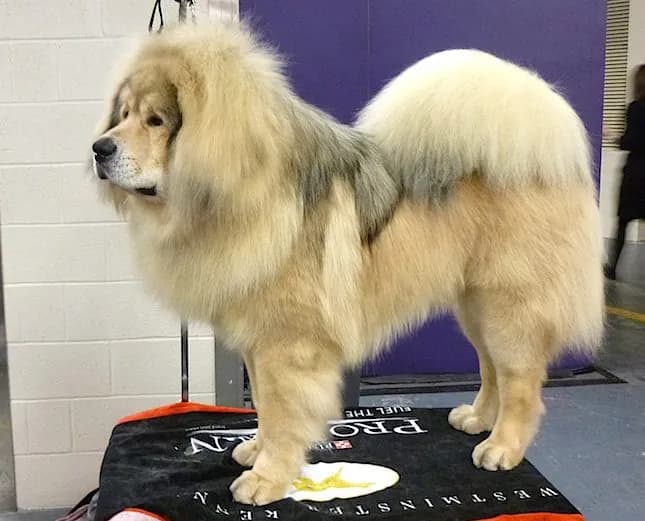
Mastín Tibetano
Traditional guardian of Tibetan monasteries. Dense coat adapted to altitude. Independent and territorial character. NOT for beginners. Night mode: owner of an active dog at night.
Foto: Wikipedia Commons · CC BY-SA
Ideal for
- ✓Families with space
- ✓Cool climates
Reconsider if
- ×Small flats
- ×Warm climates without air conditioning
Notify me when a Mastín Tibetano is up for adoption
We'll only email you when a verified rescue posts one available. No spam, unsubscribe in 1 click.
We'll only use your email for this alert. More info in our privacy policy.
Is the Mastín Tibetano a good match for you?
Indicative rating from 1 (low) to 5 (high).
💶 Estimated cost of ownership
110-190 €/month
Giant-breed food 50-85 €; health and third-party liability insurance 30-50 €; grooming/brushing and antiparasitics 20-30 €; pro-rated vaccinations and check-ups 20-30 €. Anaesthetics and radiographs are expensive because of its size.
History and origin
Recognised by the FCI. Native to Tibet. Traditional guardian of Tibetan monasteries.
Temperament and character
Intelligent, loyal, well-balanced when properly socialised and trained. Requires daily mental stimulation. Responds best to positive reinforcement. Physical punishment causes fear and reactivity.
Living together
Children: good with its own family. **Other dogs:** sociable with socialisation. **Cats:** with early socialisation.
Life stages of the Mastín Tibetano
Each stage has its own care priorities. Life expectancy: 10-14 años.
Puppy
0-24 months
Slow giant-breed growth: controlled diet, moderate exercise without overloading the joints, and firm early socialisation.
Young adult
2-4 years
Late maturation; reinforcing the management of its guardian and independent character; weight control.
Adult
4-7 years
Joint maintenance, weight control and hip, elbow and thyroid check-ups.
Senior
7+ years
Close joint monitoring, senior diet and periodic cardiac and endocrine check-ups.
Care
Exercise: moderate (45-60 min/day), avoid jumping during growth.
Brushing: 2-3 times/week.
Feeding: giant-breed food; weight control is critical.
Vet: annual cardiological check-up from 4 years.
Care in detail
🍽️ Nutrition
Giant-breed food with controlled calcium during growth. They tend to self-regulate their intake and eat less than expected for their size; monitor the weight all the same and split the food into 2 meals.
✂️ Grooming
Very dense double coat: brushing 2-3 times a week, intensifying during the heavy annual moult. It should not be clipped, as the coat protects it from cold and sun.
🎓 Training
Independent and territorial; it needs early socialisation and an experienced owner. It tends to be active and watchful at night. Positive reinforcement and patience, never coercive methods.
🏃 Exercise
Low to moderate: 45-60 minutes of calm walking a day and a fenced space. Avoid exercise during the hot hours.
Breed-specific health
Conditions common to the breed according to the FCI group. Life expectancy 10-14 years with appropriate care. Annual vet check-up + blood work from 5 years.
🩺 Health predispositions of this breed
Conditions this breed is more predisposed to. Knowing about them helps with prevention and early detection. A predisposition does not mean the animal will develop them.
Common diseases in dogs
Learn the symptoms, prevention and when to see the vet. Reviewed indicative information that does not replace a veterinary consultation.
Screening and prevention for the Mastín Tibetano
Recommended tests and screenings
- ✓Hip and elbow dysplasia radiography
- ✓Ophthalmological examination (entropion)
- ✓Thyroid function (T4/TSH)
- ✓Genetic test for hereditary neuropathy (CIDN)
- ✓Complete blood count and biochemistry
Prevention
Slow growth on giant-breed food and controlled weight to protect the hips; frequent brushing of the dense coat to avoid matting and heatstroke; thyroid monitoring in adults.
Check-up schedule
Annual check-up with joint and cardiological monitoring from 4 years; blood work with periodic thyroid profile.
Warning signs
- !Lameness or difficulty getting up
- !Apathy, weight gain or symmetrical hair loss (hypothyroidism)
- !Squinting eyes or watery eyes (entropion)
- !Weakness or lack of coordination in puppies (neuropathy)
- !Heavy panting or lethargy in the heat
Mastín Tibetano gallery

Frequently asked questions about the Mastín Tibetano
How long does a Mastín Tibetano live?
▾
How much does a Mastín Tibetano weigh?
▾
Where does the Mastín Tibetano breed come from?
▾
How much exercise does a Mastín Tibetano need?
▾
Is the Mastín Tibetano good with children?
▾
Who is the Mastín Tibetano NOT recommended for?
▾
What health problems does the Mastín Tibetano have?
▾
Is it a dog for beginners?
▾
Why is it active at night?
▾
Does it cope with heat?
▾
Does it shed a lot?
▾
Does it get along with other dogs?
▾
Learn more about dogs
Practical veterinary guides to support your Mastín Tibetano.
Sources and references
Content compiled from official breed standards and leading veterinary sources.
Want to adopt a mastín tibetano?
There are mastín tibetanos in rescue shelters looking for a family. Filter by breed in the catalogue.