


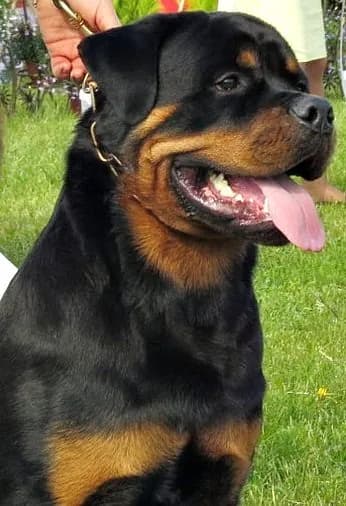
Rottweiler
A robust, loyal, protective dog. Intelligent. When well socialised and trained it is family-oriented and gentle; without proper training it can become dominant. A breed classed as PPP (potentially dangerous dog) in Spain.
Foto: Wikipedia Commons · CC BY-SA
Mizuu editorial teamupdated on October 14, 2026Not yet reviewed by a vet. Are you a vet? Review itReport an error
Ideal for
- Families with prior experience
- Homes with a garden
- Those who will socialise consistently
Reconsider if
- ×First-time owners
- ×Homes without time for training
- ×Those wanting a permissive dog
Let me know when there are dogs for adoption
We only write when a verified shelter posts one. One email a day at most.
Is the Rottweiler a good match for you?
Indicative rating from 1 (low) to 5 (high).
Estimated cost of ownership
90-150 €/month
Food 45-70 €, compulsory liability insurance (dangerous-dog) 10-20 €, veterinary provision 25-45 € (dysplasia, cardiac), deworming/accessories 10-15 €.
History and origin
Descended from Roman mastiffs. Used in Rottweil to drive cattle to market and to pull the butcher's cart. After nearly becoming extinct, it was revived in the 20th century as a police dog.
Recognised by the FCI. In Spain it is subject in some cases to the potentially dangerous dog (PPP) regulations (see Law 50/1999 and regional legislation). Its historic selection for guarding demands early training and broad socialisation so that its character is channelled positively.
Temperament and character
Confident, courageous, loyal. Reserved with strangers. Devoted to its family. Intelligent and hard-working. It needs a clear, consistent leader. It needs daily mental stimulation — scent games, food-stuffed Kongs and short trick sessions channel its energy better than physical exercise alone. It responds best to positive reinforcement: physical punishment produces fear, anxiety and reactivity — coercive methods are NOT recommended by veterinary behaviourists. Sensitive to its family's mood: it picks up on tension and mirrors it.
Living together
PPP (potentially dangerous dog) in Spain: civil liability insurance, licence, muzzle in public areas. Children: excellent with its own, supervise around strangers.
Life stages of the Rottweiler
Each stage has its own care priorities. Life expectancy: 8-10 años.
Puppy
0-12 months
Slow, controlled growth to protect the joints; socialisation and firm, positive training are essential.
Junior
1-2 years
Obedience and managing size/strength; hip and elbow radiographic screening; split meals (bloat risk).
Adult
2-6 years
Moderate strength exercise, weight control, prevention of gastric torsion and monitoring of the cruciate ligament.
Senior
6+ years
Ages early: cancer screening (osteosarcoma) a priority, osteoarthritis management and cardiac review.
Care
Minimum 1 hour of exercise per day. Early training essential. Socialisation from puppyhood. Weekly brushing. Weight control (tendency to obesity).
Feeding: quality food appropriate to life stage (puppy/adult/senior) and size. Weight control: obesity is the leading preventable cause of joint problems.
Vet: preventive blood work from age 4-5 and check-ups every 6 months from 6 (giant breeds age sooner).
Care in detail
Nutrition
Quality large-breed food according to life stage; in puppies, a controlled-growth formula to protect the joints. Obesity is the main preventable factor in joint problems.
Grooming
Brushing 2-3 times a week, more intensive during the spring and autumn moults. Short, easy-to-maintain coat.
Training
Intelligent and highly trainable, but it needs a consistent, coherent handler from puppyhood. Positive reinforcement only: coercive methods produce reactivity. Broad socialisation is mandatory.
Exercise
45-60 min/day in at least two sessions, combining calm walks with mental work. Avoid jumping and joint strain in the young dog.
Breed-specific health
Hip and elbow dysplasia. Heart disease. Osteosarcoma (bone cancer). Life expectancy 8-10 years (short for its size). If you go to a breeder, ask for the parents' health tests relevant to the breed. When adopting, ask the rescue for a vet report on the dog's current condition.
Health predispositions for this breed
Conditions this breed is more predisposed to. Knowing about them helps with prevention and early detection. A predisposition does not mean the animal will develop them.
Common diseases in dogs
Learn the symptoms, prevention and when to see the vet. Indicative information that does not replace a veterinary consultation.
Screening and prevention for the Rottweiler
Recommended tests and screenings
- Hip and elbow dysplasia radiographs
- Echocardiography (subvalvular aortic stenosis)
- Ophthalmological examination
- Full blood panel with thyroid profile
- Osteosarcoma monitoring in seniors
Prevention
Controlled growth in the puppy (no joint overload or excess weight), moderate low-impact exercise, lifelong weight control and essential early socialisation. Dangerous-dog status: civil liability insurance, licence and muzzle in public.
Check-up schedule
Annual check-up with preventive blood work from age 5; twice a year from age 7 given its shorter life expectancy.
Warning signs
- !Persistent lameness or difficulty getting up
- !Tiredness or fainting during exercise (cardiac sign)
- !Swelling or pain in a limb (osteosarcoma warning)
- !Increased thirst/urination or weight changes
Rottweiler gallery

Frequently asked questions about the Rottweiler
How long does a Rottweiler live?
▾
How much does a Rottweiler weigh?
▾
Where does the Rottweiler breed come from?
▾
How much exercise does a Rottweiler need?
▾
Is the Rottweiler good with children?
▾
Who is the Rottweiler NOT recommended for?
▾
What health problems does the Rottweiler have?
▾
Is it a dangerous dog?
▾
What legal obligations come with owning a Rottweiler?
▾
Is it suitable for a first-time family?
▾
Why do they live less long than other dogs?
▾
Related and similar breeds
Learn more about dogs
Practical veterinary guides to support your Rottweiler.
Sources and references
Content compiled from official breed standards and leading veterinary sources.
Do you have a Rottweiler?
Add them to Mizuu and we will remind you what is due for their breed and age: Hip and elbow dysplasia radiographs, check-ups and vaccines.
Add my RottweilerFree. Create your account in a minute and come back here.
Want to adopt a rottweiler?
There are rottweilers in Spanish rescue shelters looking for a family. Filter by breed in the catalogue.

