

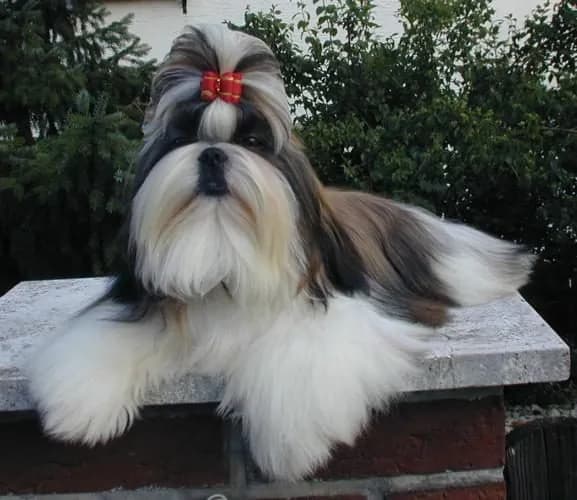
Shih Tzu
Beautiful long coat, expressive face. Balanced, affectionate, playful character. An excellent companion dog. Like other brachycephalic breeds, it has respiratory and eye problems.
Foto: Wikipedia Commons · CC BY-SA
Ideal for
- ✓Families
- ✓Flats
- ✓Older people
Reconsider if
- ×Very sporty families
- ×Very warm climates without air conditioning
Notify me when a Shih Tzu is up for adoption
We'll only email you when a verified rescue posts one available. No spam, unsubscribe in 1 click.
We'll only use your email for this alert. More info in our privacy policy.
Is the Shih Tzu a good match for you?
Indicative rating from 1 (low) to 5 (high).
💶 Estimated cost of ownership
50-95 €/month
Feeding: 15-28 € · Preventive veterinary care: 18-35 € · Hygiene and grooming: 12-25 € · Insurance and extras: 5-15 €
History and origin
Originating in Tibet (the lion dog of Buddhist monks), refined in imperial China. Nearly extinct during the Cultural Revolution, recovered in the West.
Recognised by the FCI within Group 9 (companion and toy dogs). Its small size makes flat living easy, but "small" is not a synonym for "needs no training": small dog syndrome (excessive barking, fearfulness, reactivity) is common when it is not given the same routine as a large dog.
Temperament and character
Affectionate, cheerful, sociable. Good-natured. Learns quickly if motivated. Barks less than other toys. Needs daily mental stimulation — scent games, food Kongs and short trick sessions channel its energy better than physical exercise alone. Responds best to positive reinforcement: physical punishment breeds fear, anxiety and reactivity — coercive methods are NOT recommended by veterinary behaviourists. Sensitive to its family's mood: it picks up on tension and takes it on.
Living together
Children: excellent. Other dogs: sociable. Cats: good.
Life stages of the Shih Tzu
Each stage has its own care priorities. Life expectancy: 10-16 años.
Puppy
0-9 months
Avoid heat due to brachycephalic anatomy; care of eyes and facial folds; start of dental and coat hygiene.
Junior
9 months-1.5 years
Socialisation and training; grooming and eye-cleaning routine; weight control.
Adult
1.5-9 years
Eye protection (dry eye, ulcers), rigorous dental hygiene (periodontal), patella control and heatstroke prevention.
Senior
9+ years
Eye, dental and respiratory monitoring; joint and renal management with a senior diet.
Care
Exercise: 45-60 min/day split into at least 2 sessions. Calm walks + mental play.
Brushing: daily; intensive during the moulting seasons (spring and autumn).
Feeding: quality food suited to life stage (puppy/adult/senior) and size. Weight control: obesity is the leading preventable cause of joint problems.
Vet: annual check-up with preventive blood work from age 5 (7 in giant breeds); twice a year from age 8.
Exercise 30-45 min/day. Daily brushing or a "puppy cut" every 6 weeks. Cleaning of eyes and folds. Weight control. Heat care.
Care in detail
🍽️ Nutrition
Quality food for small breeds, controlling the amount to avoid the excess weight that worsens its brachycephalic breathing.
✂️ Grooming
The greatest part of its care: daily brushing if kept in long coat, or a "puppy cut" every 6 weeks. Daily cleaning of the eyes and facial folds.
🎓 Training
Affectionate and quite willing if motivated with treats. Learns quickly despite a certain stubbornness; it needs the same routine and rules as a large dog to avoid "small dog syndrome".
🏃 Exercise
30-45 minutes daily of gentle walks and play. Avoid exercise during hot hours because of its short muzzle.
Breed-specific health
Brachycephalic syndrome. Eye problems (prominent eyes). Disc herniation. Hypothyroidism. Bladder stones. Life expectancy 10-16 years. Life expectancy of 10-16 years with appropriate care. Pre-breeding testing is recommended in responsible kennels (dysplasia + cardiac + ophthalmology screening according to the breed's conditions). When adopting, ask the rescue for a vet report on the dog's current condition.
🩺 Health predispositions of this breed
Conditions this breed is more predisposed to. Knowing about them helps with prevention and early detection. A predisposition does not mean the animal will develop them.
Common diseases in dogs
Learn the symptoms, prevention and when to see the vet. Reviewed indicative information that does not replace a veterinary consultation.
Screening and prevention for the Shih Tzu
Recommended tests and screenings
- ✓Ophthalmological examination (prominent eyes)
- ✓Airway assessment (brachycephalic syndrome)
- ✓Thyroid panel
- ✓Patella and spine assessment (disc herniation)
Prevention
Daily cleaning of facial folds and eyes, avoiding heat and intense exercise, weight control to protect the spine.
Check-up schedule
Annual check-up with eye and respiratory monitoring.
Warning signs
- !Snoring or laboured breathing
- !Red eyes, watering or corneal ulcers
- !Back pain or reluctance to jump (herniation)
- !Weight gain and lethargy (thyroid)
Shih Tzu gallery

Frequently asked questions about the Shih Tzu
How long does a Shih Tzu live?
▾
How much does a Shih Tzu weigh?
▾
Where does the Shih Tzu breed come from?
▾
How much exercise does a Shih Tzu need?
▾
Is the Shih Tzu good with children?
▾
Who is the Shih Tzu NOT recommended for?
▾
What health problems does the Shih Tzu have?
▾
How much care does its coat need?
▾
Does it tolerate heat well?
▾
Does it bark a lot?
▾
Why do its eyes need so much cleaning?
▾
Is it a good breed for beginners?
▾
Related and similar breeds
Learn more about dogs
Practical veterinary guides to support your Shih Tzu.
Sources and references
Content compiled from official breed standards and leading veterinary sources.
- WikipediaShih Tzu ↗
- AKCShih Tzu Breed ↗
- FCIFCI Standard no. 208 (Shih Tzu) ↗
Want to adopt a shih tzu?
There are shih tzus in rescue shelters looking for a family. Filter by breed in the catalogue.