


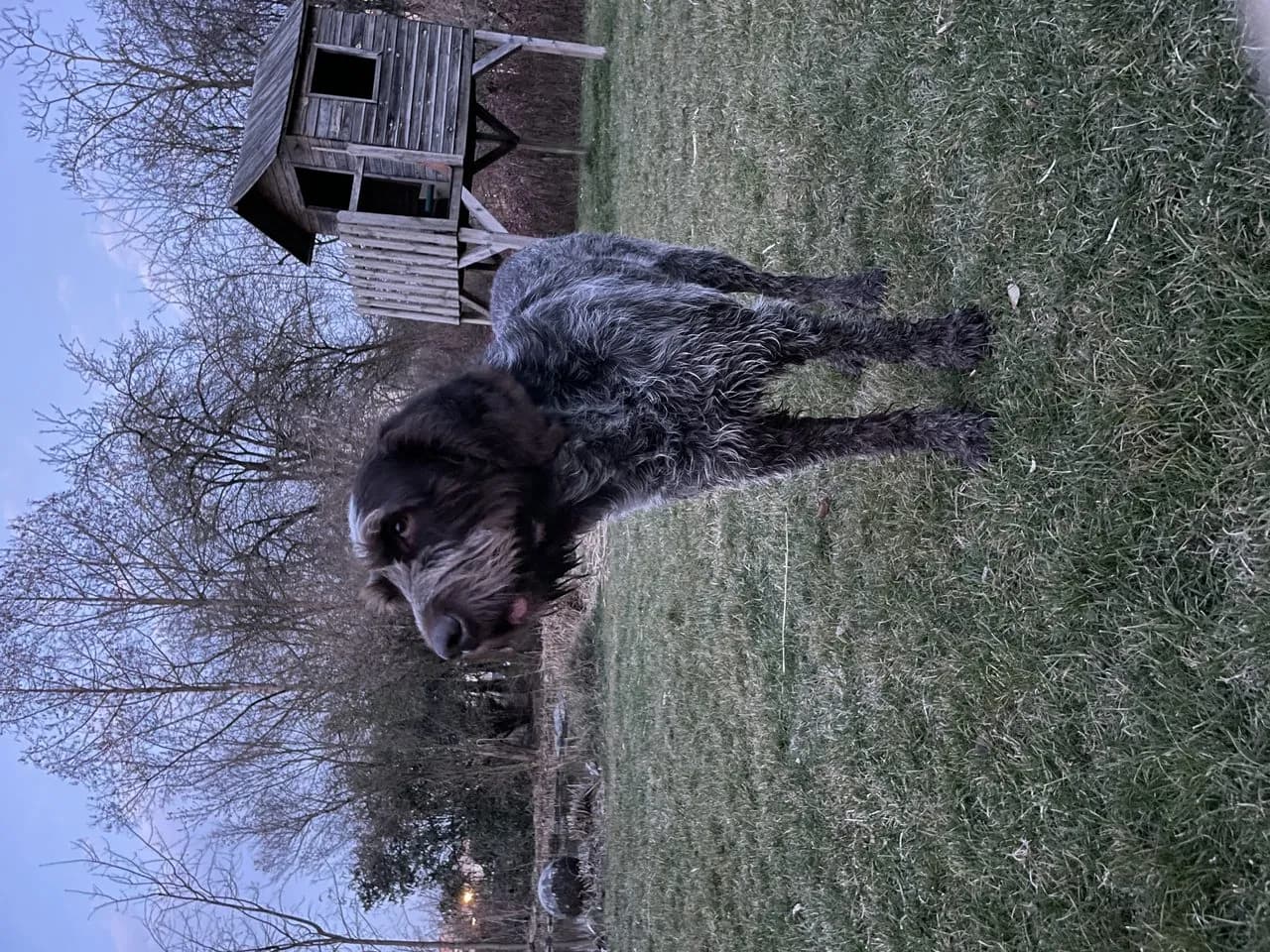
Spinone Italiano
Italian hunter with a wiry coat. Calm, hard-working character. Good sense of smell. Excellent with children. Calmer than other hunting breeds. Slow to mature — do not overwork in youth.
Foto: Wikipedia Commons · CC BY-SA
Mizuu editorial teamupdated on October 14, 2026Not yet reviewed by a vet. Are you a vet? Review itReport an error
Ideal for
- Hunters
- Sportspeople (canicross, running)
- Very active families
Reconsider if
- ×Sedentary families
- ×Flats without long exercise
Let me know when there are dogs for adoption
We only write when a verified shelter posts one. One email a day at most.
Is the Spinone Italiano a good match for you?
Indicative rating from 1 (low) to 5 (high).
Estimated cost of ownership
95-145 €/month
Feeding 40-55 €, pro-rated vet costs (vaccinations, deworming, check-up) 18-28 €, insurance and contingencies 12-22 €, beard and ear hygiene/supplies 8-15 €, accessories 5-12 €. Recurrent ear infections increase the cost.
History and origin
Recognised by the FCI. Native to Italy. An Italian hunter with a wiry coat.
Temperament and character
Active, intelligent, loyal. Attached to its family. Needs a daily mental AND physical 'task'. Strong bond with its reference person.
Living together
Children: good with its own family. **Other dogs:** sociable with socialisation. **Other animals:** with early socialisation.
Life stages of the Spinone Italiano
Each stage has its own care priorities. Life expectancy: 10-12 años.
Puppy
0-15 months
Controlled growth and low-impact exercise (large breed); socialisation of the calm pointing dog.
Young
1.5-3 years
Moderate, regular exercise and fieldwork; split meals to prevent torsion; cleaning of the long ears.
Adult
3-7 years
Weight control, joint health (hips/elbows) and ophthalmological check-up.
Senior
7+ years
Joint support, neurological monitoring (cerebellar ataxia) and general check-ups.
Care
Exercise: 90-120 min/day + scent stimulation.
Brushing: weekly (more with the wiry coat).
Feeding: active-formula food.
Vet: annual check-up + ear control (long ears).
Care in detail
Nutrition
Quality food for a large, active breed in 2 meals, adjusting the ration to its actual activity (more during hunting or sport season). Slow growth in the puppy with controlled calcium/phosphorus; avoid being overweight, which punishes its joints.
Grooming
A hard, wiry coat that is low maintenance: weekly brushing and occasional stripping of dead hairs; it is not clipped. Clean its beard and moustache after eating and drinking (it gets everything wet) and check the ears every week to prevent otitis.
Training
Calm, intelligent and very attached to its family, one of the easiest and most docile of the pointing breeds. It learns with positive reinforcement and gentleness; it is sensitive and does not tolerate harshness. It needs socialisation and a daily physical and mental 'task'.
Exercise
90-120 minutes of daily activity with scent work and safe off-lead time. It is a hardy hunter that needs to expend body and mind; it enjoys canicross, tracking and searching. Without enough exercise it becomes frustrated and puts on weight.
Breed-specific health
Recurrent otitis. Dysplasia. Bloat. Life expectancy 10-12 years.
Health predispositions for this breed
Conditions this breed is more predisposed to. Knowing about them helps with prevention and early detection. A predisposition does not mean the animal will develop them.
Common diseases in dogs
Learn the symptoms, prevention and when to see the vet. Indicative information that does not replace a veterinary consultation.
Screening and prevention for the Spinone Italiano
Recommended tests and screenings
- Official radiograph for hip and elbow dysplasia
- Genetic test for cerebellar ataxia (CA, specific to the breed)
- Ophthalmological examination (ectropion/entropion, retinal atrophy)
- Cardiac echocardiography and thyroid profile
Prevention
Slow growth, without pushing the puppy: it matures slowly and excessive impact damages the joints. Weekly cleaning of the long, hairy ears (prone to otitis). Prevention of gastric torsion: 2 meals and rest after eating. Weight control.
Check-up schedule
Annual check-up with blood work from 5 years of age; auditory and ophthalmological control. Genetic test for cerebellar ataxia before breeding.
Warning signs
- !Lack of coordination or progressive wobbling in the puppy (cerebellar ataxia)
- !Head shaking and foul-smelling ears (otitis)
- !Lameness or difficulty getting up (dysplasia)
- !Bloated abdomen and retching without vomiting (gastric torsion emergency)
Frequently asked questions about the Spinone Italiano
How long does a Spinone Italiano live?
▾
How much does a Spinone Italiano weigh?
▾
Where does the Spinone Italiano breed come from?
▾
How much exercise does a Spinone Italiano need?
▾
Is the Spinone Italiano good with children?
▾
Who is the Spinone Italiano NOT recommended for?
▾
What health problems does the Spinone Italiano have?
▾
Is it a good family dog?
▾
Does it need a lot of exercise?
▾
Is its coat difficult to maintain?
▾
Is it suitable for a first-time owner?
▾
Why does it wet and mess everything when it drinks?
▾
Learn more about dogs
Practical veterinary guides to support your Spinone Italiano.
Sources and references
Content compiled from official breed standards and leading veterinary sources.
- WikipediaSpinone Italiano ↗
- AKCSpinone Italiano ↗
- FCIFCI Standard No. 165 ↗
Do you have a Spinone Italiano?
Add them to Mizuu and we will remind you what is due for their breed and age: Official radiograph for hip and elbow dysplasia, check-ups and vaccines.
Add my Spinone ItalianoFree. Create your account in a minute and come back here.
Want to adopt a spinone italiano?
There are spinone italianos in Spanish rescue shelters looking for a family. Filter by breed in the catalogue.

