


Maine Coon
The "gentle giant". The largest of the domestic cats. Sweet, tolerant, sociable nature. Excellent with children and dogs. A beautiful long coat, but one that requires care.
Foto: Wikipedia Commons · CC BY-SA
Mizuu editorial teamupdated on October 14, 2026Not yet reviewed by a vet. Are you a vet? Review itReport an error
Ideal for
- Families with children
- Large homes
- Those who want a "dog-like" cat
- Homes with other cats
Reconsider if
- ×Small flats
- ×Those who cannot brush regularly
Notify me when a Maine Coon is up for adoption
We'll only email you when a verified rescue posts one available. No spam, unsubscribe in 1 click.
We'll only use your email for this alert. More info in our privacy policy.
Is the Maine Coon a good match for you?
Indicative rating from 1 (low) to 5 (high).
Estimated cost of ownership
55-90 €/month
Quality food for a large cat (35-55 €, it eats more than a medium cat), litter and preventive health care/insurance (20-35 €). Initial investment in a sturdy scratching tree and a large feeding bowl/litter tray.
History and origin
A natural breed from the north-east of the USA (Maine) and one of the largest. It has specific genetic tests for hypertrophic cardiomyopathy (MyBPC3 mutation) and is predisposed to hip dysplasia and spinal muscular atrophy.
Temperament and character
Sociable, tolerant, gentle. Vocalises with soft "chirps". Intelligent. It likes water (unusual in cats). Keeps its playful behaviour into old age.
Living together
Children: excellent. Other cats: sociable. Dogs: very good coexistence with calm ones.
Life stages of the Maine Coon
Each stage has its own care priorities. Life expectancy: 12-15 años.
Kitten
0-9 months
Socialisation, vaccination and a growth diet suited to a slow-maturing, large breed.
Junior
9 months-2 years
Neutering, HCM/SMA genetic test, musculoskeletal monitoring and continued development (matures until 3-4 years).
Adult
2-10 years
Periodic HCM echocardiography, hip dysplasia monitoring, weight and brushing of the long coat.
Senior
11+ years
Cardiac and renal follow-up, joint management and a geriatric diet.
Care
Brushing 2-3 times/week. Space: needs room because of its size. Large feeding bowl/litter tray. Large-breed feed. Early neutering (the hormones do not make the cat large anyway).
Care in detail
Nutrition
Quality feed formulated for large breeds or large cats, adjusted to prevent overweight despite its appetite. Combining wet and dry supports kidney hydration. A wide bowl to suit its size.
Grooming
Brushing 2-3 times per week (daily during moult) with a brush and metal comb to prevent mats in friction areas (armpits, groin, behind the ears). Its semi-long coat does not require clipping. Check ear tufts and claws.
Training
A very sociable and intelligent cat, easy to handle and to socialise with children, dogs and other cats. Accepts a harness and puzzle games well. Large litter trays to suit its size and, ideally, N+1 (one more than the number of cats). Keeps playing into old age.
Exercise
Medium energy: enjoys daily interactive play and climbing. A sturdy scratching post/tree that can bear its weight and wide shelves or elevated areas are advisable. It is one of the few cats that usually likes water.
Breed-specific health
Hypertrophic cardiomyopathy (HCM genetic test). Hip dysplasia. Spinal muscular atrophy. PKD rare. Life expectancy 12-15 years.
Health predispositions for this breed
Conditions this breed is more predisposed to. Knowing about them helps with prevention and early detection. A predisposition does not mean the animal will develop them.
Common diseases in cats
Learn the symptoms, prevention and when to see the vet. Reviewed indicative information that does not replace a veterinary consultation.
Screening and prevention for the Maine Coon
Recommended tests and screenings
- Genetic test for Hypertrophic Cardiomyopathy (MYBPC3 mutation)
- Periodic echocardiographic HCM screening
- Hip dysplasia radiograph
- Genetic test for Spinal Muscular Atrophy (SMA)
- Genetic test for Polycystic Kidney Disease (PKD, less common)
Prevention
Acquire from a breeder who tests the parents for HCM and SMA. Keep an appropriate weight for a large breed and protect the joints. Regular brushing to prevent mats and hairballs. Early neutering, since its large size does not depend on hormones.
Check-up schedule
Annual veterinary review; echocardiographic HCM screening per the vet's schedule even if genetically negative. Preventive bloodwork (kidney function) from 7 years of age.
Warning signs
- !Laboured breathing, lethargy or exercise intolerance (HCM)
- !Hindquarter weakness, tremors or abnormal gait (SMA)
- !Lameness or reluctance to jump (hip dysplasia)
- !Increased thirst and urination, weight loss (kidney function/PKD)
- !Mats in the coat or frequent hairballs
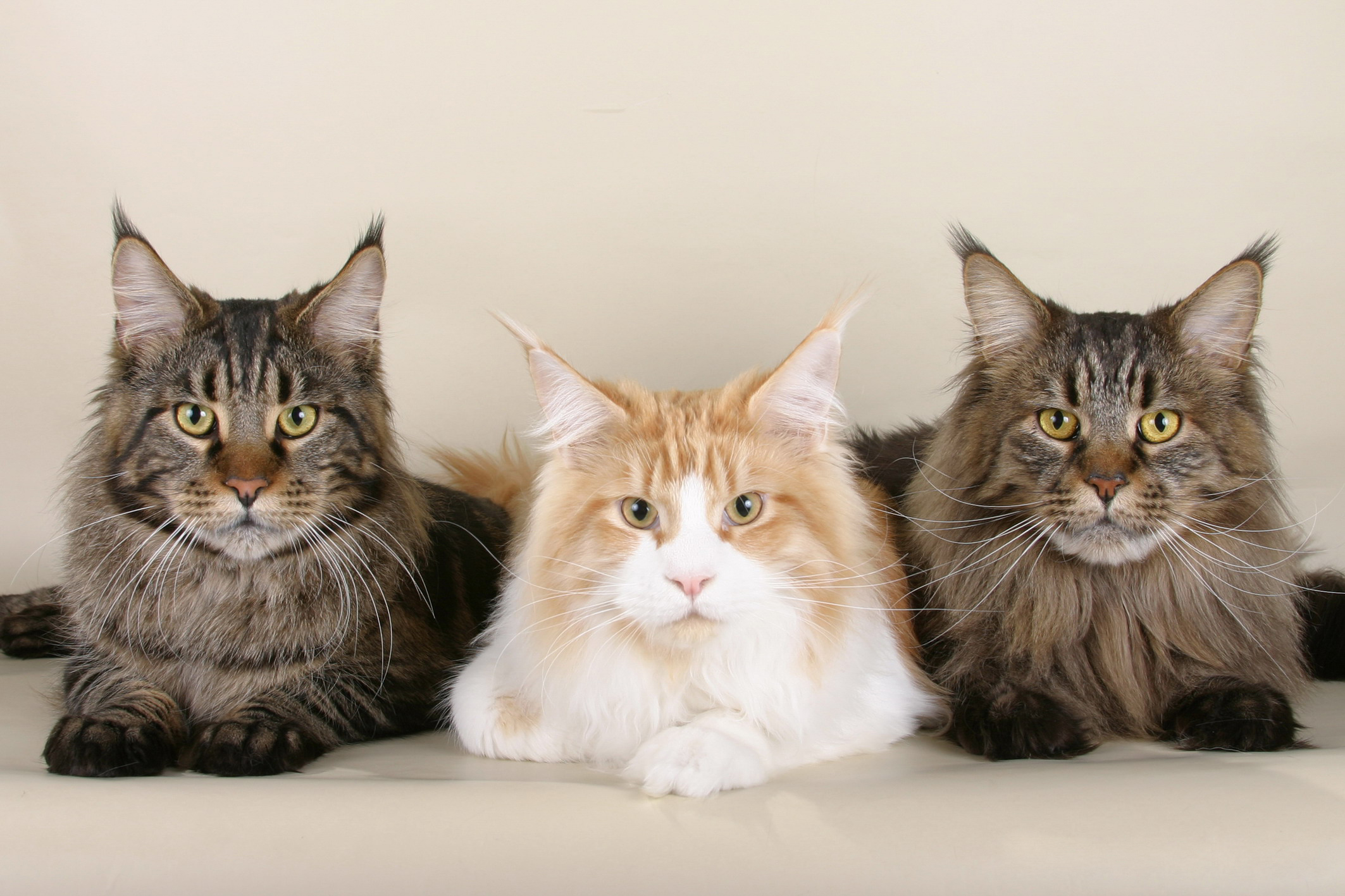
Maine Coon gallery
Frequently asked questions about the Maine Coon
How long does a Maine Coon live?
▾
How much does a Maine Coon weigh?
▾
Where does the Maine Coon breed come from?
▾
How much exercise does a Maine Coon need?
▾
Is the Maine Coon good with children?
▾
Who is the Maine Coon NOT recommended for?
▾
What health problems does the Maine Coon have?
▾
How much does a Maine Coon weigh?
▾
Is it true that it behaves like a dog?
▾
How much coat care does it need?
▾
Which genetic disease is the most important?
▾
Is it suited to a flat?
▾
Related and similar breeds
Learn more about cats
Practical veterinary guides to support your Maine Coon.
Sources and references
Content compiled from official breed standards and leading veterinary sources.
Do you have a Maine Coon?
Add them to Mizuu and we will remind you what is due for their breed and age: Genetic test for Hypertrophic Cardiomyopathy (MYBPC3 mutation), check-ups and vaccines.
Add my Maine CoonFree. Create your account in a minute and come back here.
Want to adopt a maine coon?
There are maine coons in rescue shelters looking for a family. Filter by breed in the catalogue.

