


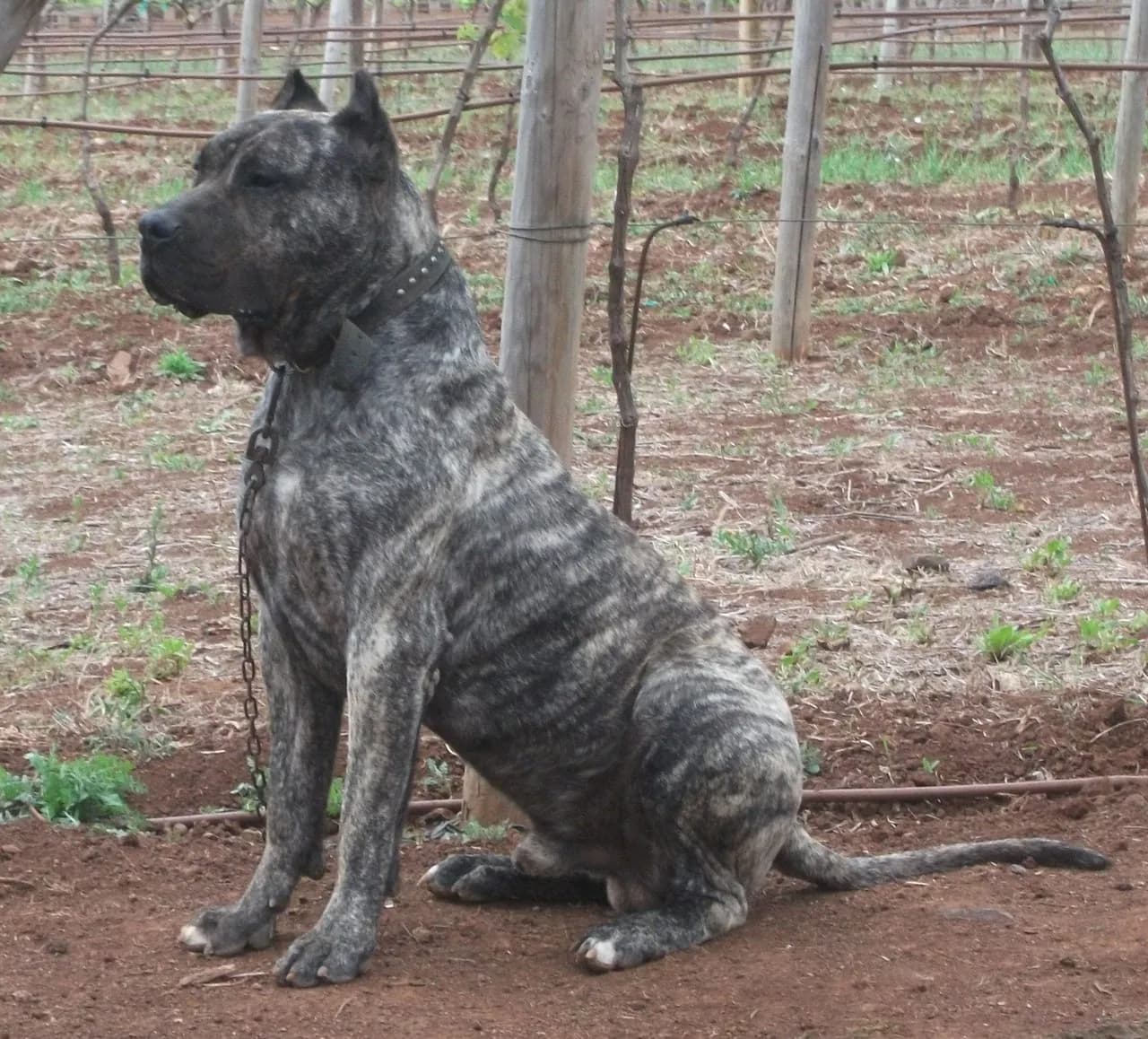
Dogo Canario (Presa Canario)
A molosser native to the Canary Islands. A livestock guardian. Balanced, dominant, loyal temperament. PPP (potentially dangerous dog) in Spain. Firm training is essential.
Foto: Wikipedia Commons · CC BY-SA
Mizuu editorial teamupdated on October 14, 2026Not yet reviewed by a vet. Are you a vet? Review itReport an error
Ideal for
- Very experienced families
- Anyone who devotes time to socialising
- Homes with a garden
Reconsider if
- ×First-time owners
- ×Flats without exercise
- ×Homes with same-sex dogs
Let me know when there are dogs for adoption
We only write when a verified shelter posts one. One email a day at most.
Is the Dogo Canario (Presa Canario) a good match for you?
Indicative rating from 1 (low) to 5 (high).
Estimated cost of ownership
60-100 €/month
Food: 35-55 € · Vet and prevention: 15-25 € · Liability insurance (dangerous-dogs) and accessories: 10-20 €
History and origin
A breed native to the Canary Islands developed for guarding and herding. A mix of European molossers with the Majorero Bardino. Recognised by the FCI in 2001.
Recognised by the FCI. In Spain it is subject in some cases to the potentially dangerous dog (PPP) regulations (see Law 50/1999 and regional legislation). Its historical selection for guarding work calls for early training and broad socialisation so the temperament is channelled positively.
Temperament and character
Calm, decisive, watchful. Dominant with other dogs. Devoted to its family. Low tolerance of hostile strangers. It needs daily mental stimulation — scent games, food-stuffed Kongs and short trick sessions channel its energy better than physical exercise alone. It responds best to positive reinforcement: physical punishment generates fear, anxiety and reactivity — coercive methods are NOT recommended by veterinary behaviourists. Sensitive to its family's mood: it picks up on tension and takes it on.
Living together
PPP in Spain (potentially dangerous dog): legal requirements. Children: with its own, respectful ones. Other dogs: dominant.
Life stages of the Dogo Canario (Presa Canario)
Each stage has its own care priorities. Life expectancy: 9-11 años.
Puppy
0-15 months
Firm early socialisation, controlled growth and training.
Junior
15 months-2 years
Advanced obedience, moderate exercise and eye monitoring.
Adult
2-6 years
Prevention of gastric torsion and monitoring for dysplasia.
Senior
6+ years
Periodic joint, neurological and cardiac follow-up.
Care
Exercise 1.5 h/day. Professional training from puppyhood. Extensive socialisation. Weekly brushing. Diet control.
Feeding: quality food suited to life stage (puppy/adult/senior) and size. Weight control: obesity is the leading preventable cause of joint problems.
Vet: annual check-up with preventive blood work from age 5; twice a year from 7 (large breeds age sooner).
Care in detail
Nutrition
Quality food for large breeds suited to the life stage, with weight control and split into 2 meals.
Grooming
Short, very low-maintenance coat: weekly brushing.
Training
A calm, dominant molosser that is NOT for beginners: it requires professional positive training from puppyhood and very extensive socialisation to channel its guarding character.
Exercise
Around 1.5 hours of daily exercise, combining walks, play and mental work.
Breed-specific health
Hip/elbow dysplasia. Heart disease. Bloat. Epilepsy. Life expectancy 9-11 years. If you go to a breeder, ask for the parents' health tests relevant to the breed. When adopting, ask the rescue for an up-to-date vet report on the dog's current condition.
Health predispositions for this breed
Conditions this breed is more predisposed to. Knowing about them helps with prevention and early detection. A predisposition does not mean the animal will develop them.
Common diseases in dogs
Learn the symptoms, prevention and when to see the vet. Indicative information that does not replace a veterinary consultation.
Screening and prevention for the Dogo Canario (Presa Canario)
Recommended tests and screenings
- Hip and elbow dysplasia X-ray
- Echocardiography
- Neurological assessment in the event of seizures (epilepsy)
- Periodic preventive blood work
Prevention
Professional training and extensive socialisation from puppyhood, weight control, splitting meals into 2 servings against bloat, and strict compliance with the legal requirements for dangerous-dog breeds.
Check-up schedule
Annual check-up up to 5 years of age and twice a year thereafter, with cardiac and joint screening.
Warning signs
- !Lameness or difficulty moving
- !Abdominal distension with unproductive retching (bloat, an emergency)
- !Seizure episodes (epilepsy)
- !Coughing, fatigue or exercise intolerance (heart disease)
Dogo Canario (Presa Canario) gallery

Frequently asked questions about the Dogo Canario (Presa Canario)
How long does a Dogo Canario (Presa Canario) live?
▾
How much does a Dogo Canario (Presa Canario) weigh?
▾
Where does the Dogo Canario (Presa Canario) breed come from?
▾
How much exercise does a Dogo Canario (Presa Canario) need?
▾
Is the Dogo Canario (Presa Canario) good with children?
▾
Who is the Dogo Canario (Presa Canario) NOT recommended for?
▾
What health problems does the Dogo Canario (Presa Canario) have?
▾
Is the Dogo Canario subject to dangerous-dogs regulation?
▾
Is it suitable for someone without experience?
▾
Does it get on well with other dogs?
▾
Is it aggressive towards the family?
▾
Does it need a lot of space?
▾
Related and similar breeds
Learn more about dogs
Practical veterinary guides to support your Dogo Canario (Presa Canario).
Sources and references
Content compiled from official breed standards and leading veterinary sources.
Do you have a Dogo Canario (Presa Canario)?
Add them to Mizuu and we will remind you what is due for their breed and age: Hip and elbow dysplasia X-ray, check-ups and vaccines.
Add my Dogo Canario (Presa Canario)Free. Create your account in a minute and come back here.
Want to adopt a dogo canario (presa canario)?
There are dogo canario (presa canario)s in Spanish rescue shelters looking for a family. Filter by breed in the catalogue.

