


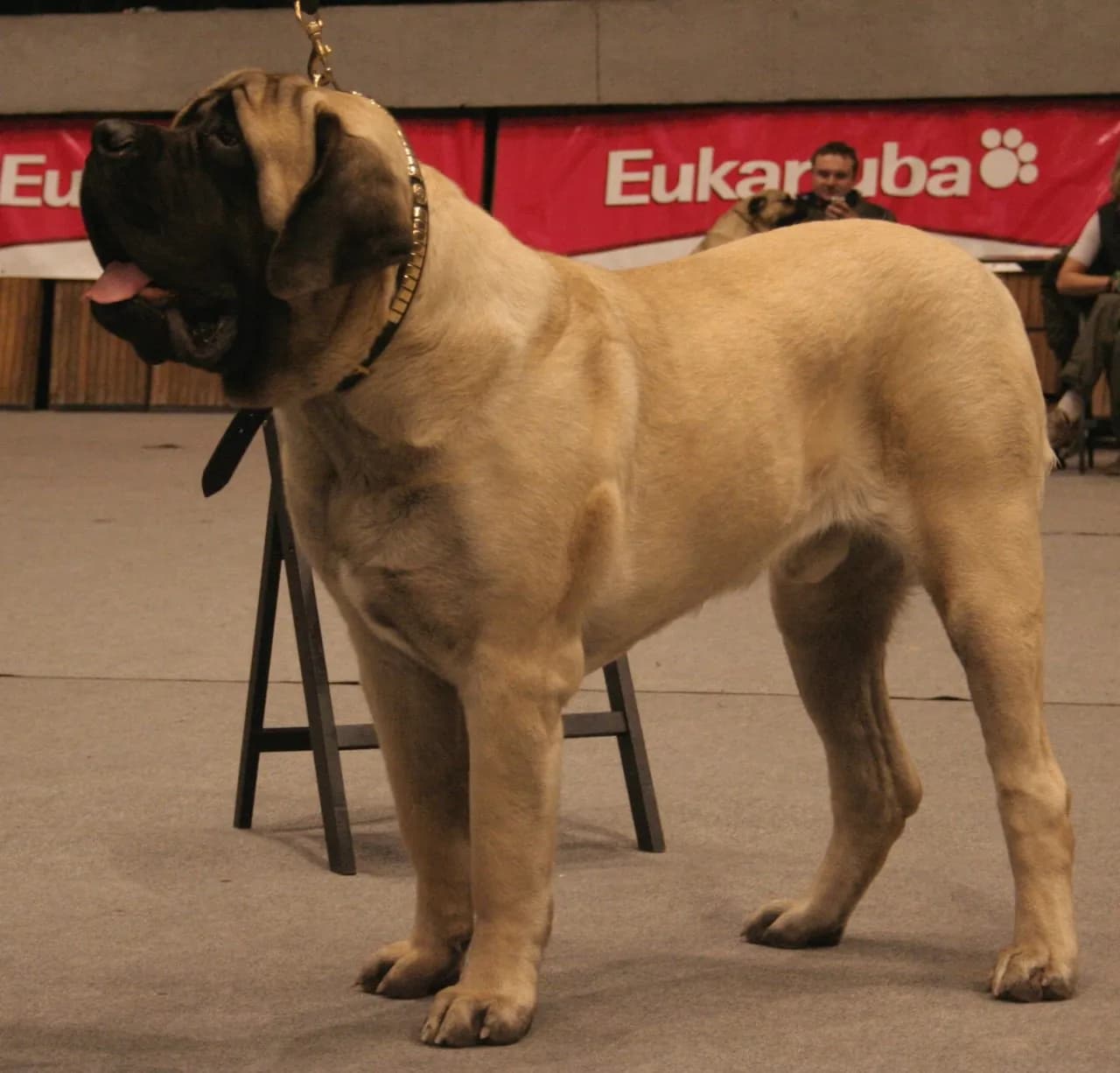
Mastiff Inglés
One of the most massive dogs in the world. A gentle giant. Calm, sweet temperament despite the imposing physique. A very short life.
Foto: Wikipedia Commons · CC BY-SA
Mizuu editorial teamupdated on October 14, 2026Not yet reviewed by a vet. Are you a vet? Review itReport an error
Ideal for
- Families with plenty of space
- Cool climates
- Those seeking a gentle giant
Reconsider if
- ×Small flats
- ×Warm climates
- ×Those unwilling to accept a very short life
Let me know when there are dogs for adoption
We only write when a verified shelter posts one. One email a day at most.
Is the Mastiff Inglés a good match for you?
Indicative rating from 1 (low) to 5 (high).
Estimated cost of ownership
120-200 €/month
Giant-breed food 60-100 €; public liability and health insurance 25-45 €; parasite control and prevention 15-25 €; vaccines and check-ups spread out 20-30 €. The large size drives up the cost of medication, anaesthetics and surgery.
History and origin
An ancient English breed, descended from Roman mastiffs. An estate guardian for centuries. Almost extinct in WWII; since recovered.
Recognised by the FCI within Group 2 (mastiffs). In Spain it is found on farms and agricultural holdings as a guardian, as well as in homes with space. Adults living to 6-10 years: the short average lifespan is a consequence of the extreme size and calls for specific care.
Temperament and character
Calm, devoted, brave. Excellent with children. Reserved with strangers without aggression. Sociable. Needs daily mental stimulation — scent games, food-stuffed Kongs and short tricks channel its energy better than physical exercise alone. Responds best to positive reinforcement: physical punishment causes fear, anxiety and reactivity — coercive methods are NOT recommended by veterinary behaviourists. Sensitive to the family's mood: it senses tension and picks up on it.
Living together
Children: excellent. Other dogs: tolerant. Cats: good.
Life stages of the Mastiff Inglés
Each stage has its own care priorities. Life expectancy: 6-10 años.
Puppy
0-1 year
Slow, controlled growth with a giant-breed diet; gentle exercise to protect the developing joints.
Young
1-2 years
Radiographic screening for hip and elbow dysplasia; split meals to prevent gastric torsion.
Adult
2-5 years
Strict weight control; echocardiography for cardiomyopathy risk; eye examination (entropion).
Senior
5+ years
Management of osteoarthritis and mobility; cardiac check-ups and monitoring for bone tumours; comfort and orthopaedic beds.
Care
Moderate exercise (45 min/day), avoid jumping during growth. Weekly grooming. Cleaning of the skin folds. Padded bed. Weight control.
Feeding: quality food appropriate to the life stage (puppy/adult/senior) and size. Weight control: obesity is the leading preventable cause of joint problems.
Veterinary care: preventive blood work from age 4-5 and check-ups every 6 months from 6 (giant breeds age sooner).
Care in detail
Nutrition
Giant-breed-specific food throughout growth (up to 18-24 months) to slow development and protect the joints. Split the daily ration into 2-3 servings and avoid intense exercise straight after eating.
Grooming
Short, low-maintenance coat: weekly brushing. Daily cleaning of the facial folds and dewlap to prevent dermatitis and infections.
Training
Socialisation and basic obedience from puppyhood, while it is still manageable: an 80 kg adult must walk on a loose lead. Positive reinforcement; it is sensitive and does not tolerate harsh methods.
Exercise
Low needs: 2 calm walks a day totalling 30-45 minutes. Avoid jumping and stairs during growth and never exercise it in the heat.
Breed-specific health
Dysplasia. Bloat. Cardiomyopathy. Osteosarcoma. Cystinuria. Life expectancy 6-10 years (very short). If you go to a breeder, ask for the parents' health tests relevant to the breed. When adopting, ask the rescue for a vet report on the current state of health.
Health predispositions for this breed
Conditions this breed is more predisposed to. Knowing about them helps with prevention and early detection. A predisposition does not mean the animal will develop them.
Common diseases in dogs
Learn the symptoms, prevention and when to see the vet. Indicative information that does not replace a veterinary consultation.
Screening and prevention for the Mastiff Inglés
Recommended tests and screenings
- Hip and elbow dysplasia radiographs (PennHIP/OFA)
- Echocardiography / cardiac Holter (cardiomyopathy)
- Annual ophthalmological examination
- Genetic test for cystinuria
- Complete blood count and biochemistry with thyroid function
Prevention
Controlled growth with a low-calcium giant-breed food to avoid overloading the joints; meals split into 2-3 servings and rest after eating to reduce the risk of gastric torsion (bloat); strict weight control and an orthopaedic bed.
Check-up schedule
Annual veterinary check-up until 4 years of age, then every 6 months with blood work and cardiac monitoring given the short average lifespan.
Warning signs
- !Bloated abdomen, unproductive retching or restlessness (emergency due to gastric torsion)
- !Lameness or difficulty getting up
- !Coughing, fatigue or exercise intolerance
- !Sudden lameness or bone swelling in a limb (osteosarcoma)
- !Crystals or blood in the urine
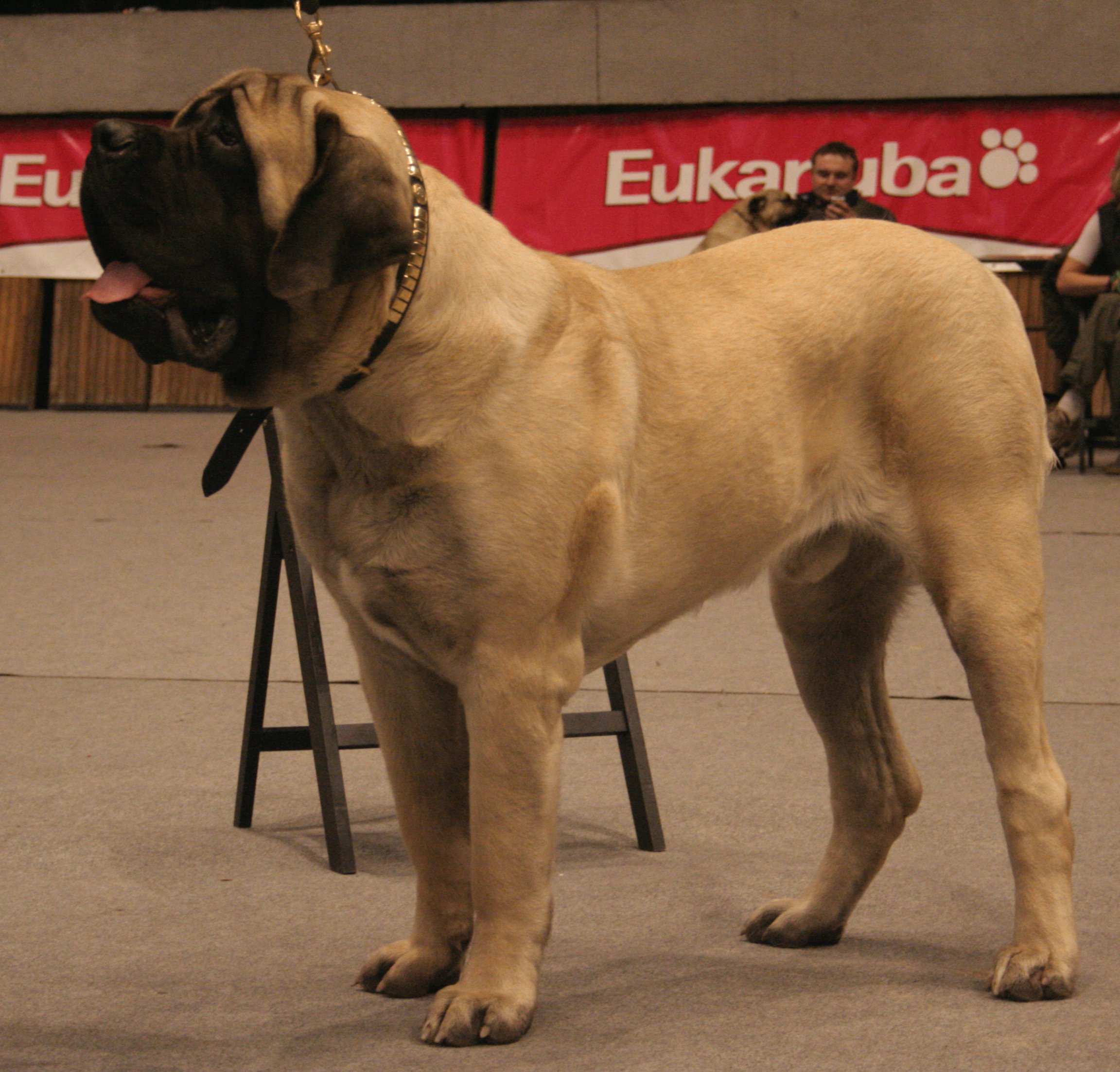
Mastiff Inglés gallery
Frequently asked questions about the Mastiff Inglés
How long does a Mastiff Inglés live?
▾
How much does a Mastiff Inglés weigh?
▾
Where does the Mastiff Inglés breed come from?
▾
How much exercise does a Mastiff Inglés need?
▾
Is the Mastiff Inglés good with children?
▾
Who is the Mastiff Inglés NOT recommended for?
▾
What health problems does the Mastiff Inglés have?
▾
How much does an English Mastiff eat per day?
▾
Why do they live such a short time?
▾
Is it good with children?
▾
Does it drool a lot?
▾
Can it live in a flat?
▾
Related and similar breeds
Learn more about dogs
Practical veterinary guides to support your Mastiff Inglés.
Sources and references
Content compiled from official breed standards and leading veterinary sources.
- WikipediaEnglish Mastiff ↗
- AKCMastiff ↗
- FCIFCI - Mastiff (Standard no. 264) ↗
Do you have a Mastiff Inglés?
Add them to Mizuu and we will remind you what is due for their breed and age: Hip and elbow dysplasia radiographs (PennHIP/OFA), check-ups and vaccines.
Add my Mastiff InglésFree. Create your account in a minute and come back here.
Want to adopt a mastiff inglés?
There are mastiff ingléss in Spanish rescue shelters looking for a family. Filter by breed in the catalogue.

